




Shaping New York’s underground: reflections on the East Side Access project
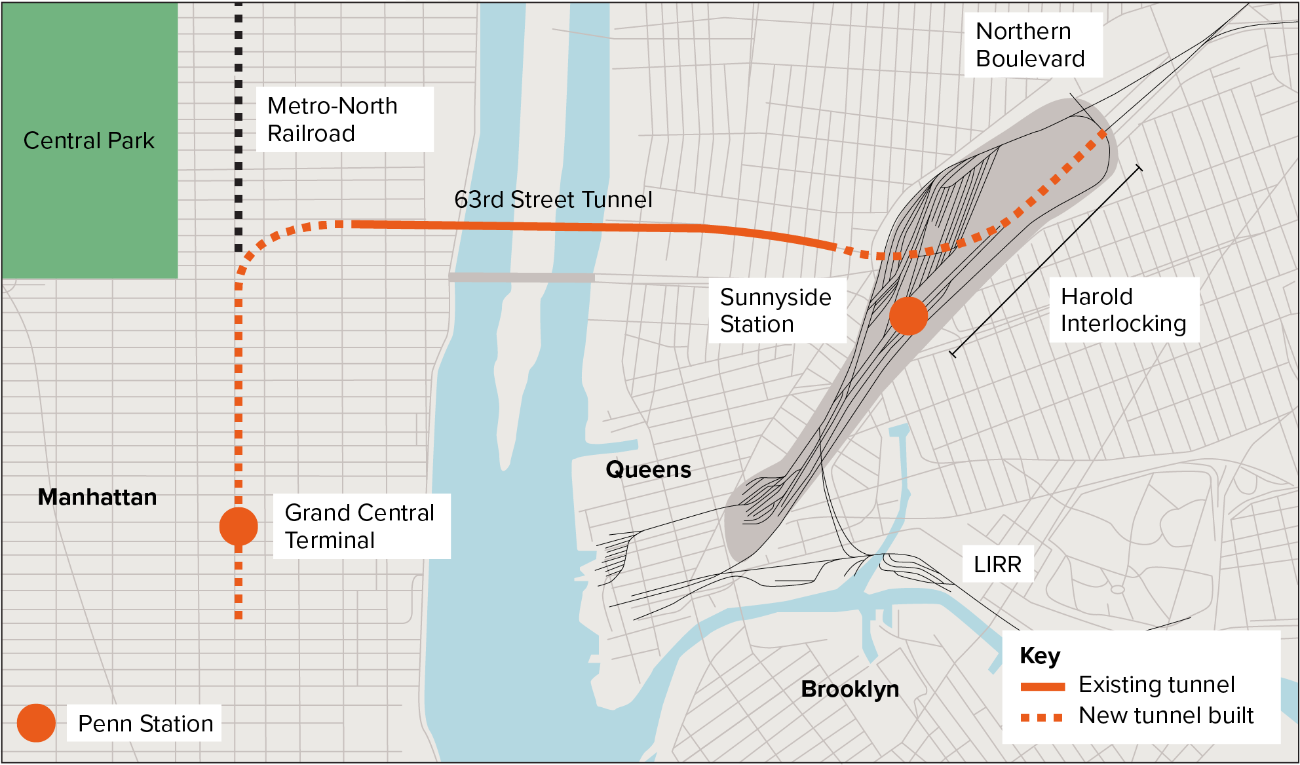
The Metropolitan Transportation Authority (MTA)’s East Side Access (ESA) project transformed the commuter experience in Manhattan – connecting the Long Island Rail Road (LIRR) to Manhattan’s bustling east side.
A major investment in New York City’s infrastructure, the project added 40 miles of new tracks, a new terminal, Grand Central Madison, underneath Metro North’s Grand Central Station to accommodate LIRR trains, and reduces travel time of up to 40 minutes for more than 160,000 passengers per day.
To honor the three-year anniversary of its full service to Grand Central Station, we caught up with four of our tunnelling experts in New York as they reflected on their years of work on East Side Access and how the project helped them grow into the engineers and leaders they are today.
Meet the experts
- Andy Thompson started on East Side Access as a package manager in 2006 and remained on the project in various roles until 2016. As the project grew, he transitioned to project executive, responsible for all the underground work.
- Frankie Perrone held many roles on the project over the course of six years. He started as a tunnel engineer and ended as a package lead for procurement, having worked in both Queens and Manhattan.
- Monica Paciorek started on East Side Access in 2010 as a project engineer in Queens and eventually Manhattan – working her way up over the course of six years to deputy construction manager for multiple contracts.
- Eric Prantil joined the project in 2011 as a project engineer and worked his way up to senior project engineer over the course of six years, working on both sides of the East River.
What was Mott MacDonald’s role on East Side Access?
Andy: Mott MacDonald was brought on in 2000 to provide support with inspection and planning because of our specialty tunneling experience. This was the first commuter railroad expansion in New York City for over a century, and it was an honor to be selected to work on it.
Eric: Over the course of 20 years, our role expanded into more than just tunneling work. I think what’s really impressive is that by the end of the project, our role had evolved into the core program management consultant delivery team.
Frankie: Our role spanned multiple contracts, and those contracts were successful because of the trust we had built with the owner, contractors, and project stakeholders. Some of the contracts we worked on were the largest and first to close out on the East Side Access program. We were brought on because of our global tunneling experience, but we were kept on because of the creativity, communication, dedication, and expertise of our people.
What are some lessons learned from the project? How did the team overcome challenges?
Andy: East Side Access was extremely complex, which is what makes it so impressive. We had to mine underneath live 60-mile-per-hour (96.6 kilometer-per-hour) track, and the ground conditions were highly variable. To mitigate the risk of soft ground settling underneath the tracks, we used slurry tunnel boring machines (TBMs) – something that had never been used in New York before.
Tunnel B/C, a new inbound and outbound tunnel required for the project, emerged right in the middle of Harold Interlocking, the busiest railroad interlocking in North America, and there was no access to the reception pit. We worked with the contractor, railroads, and TBM manufacturer to figure out how to overcome this challenge. We ended up mining the TBM to within 6 feet (1.83 meters) of the surface, shortening a six-month track outage to two weeks.
Working in Harold Interlocking was extremely challenging, we had to work around railroad operations and could not cancel trains. In Manhattan we had to minimize adding traffic, leading to some creative solutions like a completely separate schedule for concrete and explosives delivery.
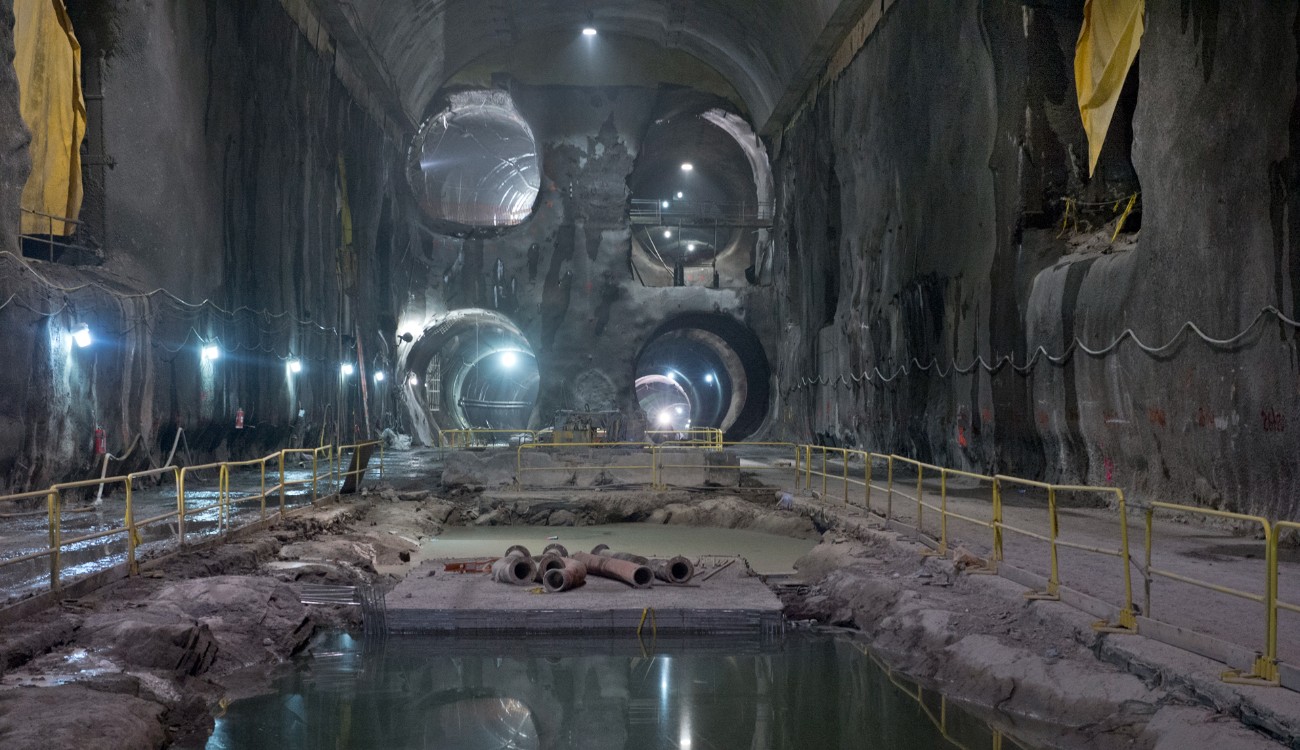
Frankie: What makes this project stand out is its unparalleled scale and complexity. We handled diverse tunneling operations across Queens and Manhattan, managing numerous packages and packing interfaces, maintaining community relations, and handling intricate technical work. The education I've gained from the East Side Access project is invaluable and unattainable through any other means.
Monica: Just having a sneak peak of the logistical challenges and understanding complex coordination with the rail roads has allowed me to confidently deliver on my other projects.
Eric: The level of technical work that we took on as construction manager helped us grow organically. Our commitment to creative problem solving and working with the contractors and designers to jointly develop solutions, in my opinion, is what set us apart, and we followed that ethos through to the end. We were in it to pull everyone together for the sake of the program.
How has your experience on the project shaped you into the engineers and leaders you are today?
Eric: For me, I was nine months out of school, and Andy and Frank had me come onto the project for six months. Six years later, I was still there. I tell everybody that my experience on East Side Access was my continued education.
Andy: For people recently out of college, being exposed to senior client leadership could be quite intimidating. As a leader myself, I had extremely high expectations of all the Mott MacDonald staff, and I am proud to say that no one let me down.
Monica: What stands out to me is how much trust and independence we had, as well as the support from everybody on the project. No matter the team, we were all equals, and we were all held accountable by our leadership – you had to know your stuff, be prepared to do the work, and have the same technical knowledge as the designer, client, and contractor. Sometimes that meant having information like accurate production rates, being able to question a contractor’s estimate to complete, and understanding the implications of a change from a cost and schedule perspective. Becoming knowledgeable about these topics and being held accountable for the information I was sharing with senior leadership, and seeing everyone work together to solve problems in real-time helped accelerate my development as an engineer.
Eric: One of the main things that I like to take away from the project is that our work is used as case studies for university-level curriculum. We have tunneling staff that take courses at the Colorado School of Mines and they’re pulling out references from the work and papers we did on East Side Access.
Monica: I still use the experience that I gained on East Side Access every day – no one can school you on what we did collectively.
Eric: The level of trust and responsibility that we were given by Andy, Frankie, as well as the support, is something that I provide on the projects that I now run on my own. I move to push younger engineers, and even some of the more senior staff, because once you push people in the right direction, those people grow.
What was it like to help bring to life such pivotal infrastructure for the New York metro area?
Monica: It can be challenging when you're in the day-to-day of the work to take a step back and see how much you enjoy it and appreciate what you’re doing, but I look back at my time on the project very fondly. The work was tough, but we had really good people all around us. Everyone pulled their weight – we trusted each other and that’s why we worked well together.
Frankie: Helping to bring such crucial infrastructure to life for the New York metro area fills me with immense pride, and the impact of this project will undoubtedly foster growth in the region for many years to come. As a commuter and user of the infrastructure, I now enjoy the benefits of the extensive hard work and dedication that went into this endeavor. From an engineer's perspective, my time on the project was incredibly fulfilling and rewarding. The challenges we faced and overcame, the teamwork, and the sheer scale of the project made it a truly once-in-a-lifetime experience that I will always cherish. It's likely that I may never again encounter a project of this magnitude and complexity in my career.
Andy: We had to create something that was fit to be in the shadow of what I think is one of the most beautiful stations in the world, and I think we achieved that. If you look at the new station, it's not a copy of Grand Central Terminal, but it's a mirror of its grandeur, and to me, we really nailed it.
Eric: We got the chance to help provide a single seat ride for Long Island commuters to the east side of Manhattan, that’s really big. Every time I walk through the terminal, I am very proud of what we helped achieve.
Monica: As a born and raised New Yorker, it was so exciting to work on the project and now be able to use it. There are not many projects that you work on that you get to say that.
Today, the team draws on the depth of experience gained from the ESA project.
- Frankie leads a dynamic group of specialist engineers and construction professionals contributing to major infrastructure initiatives like Virginia Department of Transportation (VDOT)’s I-64 Hampton Roads Bridge Tunnel Expansion.
- Andy is a leader on many of our global underground infrastructure projects, including the Chesapeake Bay Bridge-Tunnel (CBBT)’s Parallel Thimble Shoal Tunnel.
- Monica oversees a range of tunneling work that spans complex excavation and ground improvement techniques – she is currently working on MTA’s Grand Central Terminal Train Shed Priority Repairs 7 project.
- Eric is responsible for leading teams directly related to on-site engineering and construction management of large-scale heavy civil underground projects. He is currently working on the New York City Department of Environmental Protection (NYC DEP)’s Gowanus Canal CSO Cleanup.
Read the full East Side Access case study


Develop your own career with us
We are looking for enthusiastic, inspiring, and committed people to join our growing team.
