




How Suzanne Mathieson aims to change the world through improving rail connectivity
Rail geek. Role model. Mother. Mott MacDonald rail director Suzanne Mathieson is all three in equal measure and each have shaped her rail career, while also driving her to deliver greater impact too.
“I am probably the geekiest rail person on the board,” says Mott MacDonald rail director Suzanne Mathieson when describing her involvement with the Liverpool-Manchester Railway Partnership Board (LMRPB). Her input, alongside the other board members, was critical to the group taking a proposal to government in May 2025 for a new railway to connect Liverpool and Manchester to boost economic growth in the North.
The £15bn project is predicted to create 22,000 jobs during construction and the new stations will support regeneration that could unlock up to 500,000 new homes and tens of thousands of new jobs. It is not something that Suzanne ever thought she would be involved with but it fits well with her teenage desire to change the world, even if it is in a different way to how she expected.
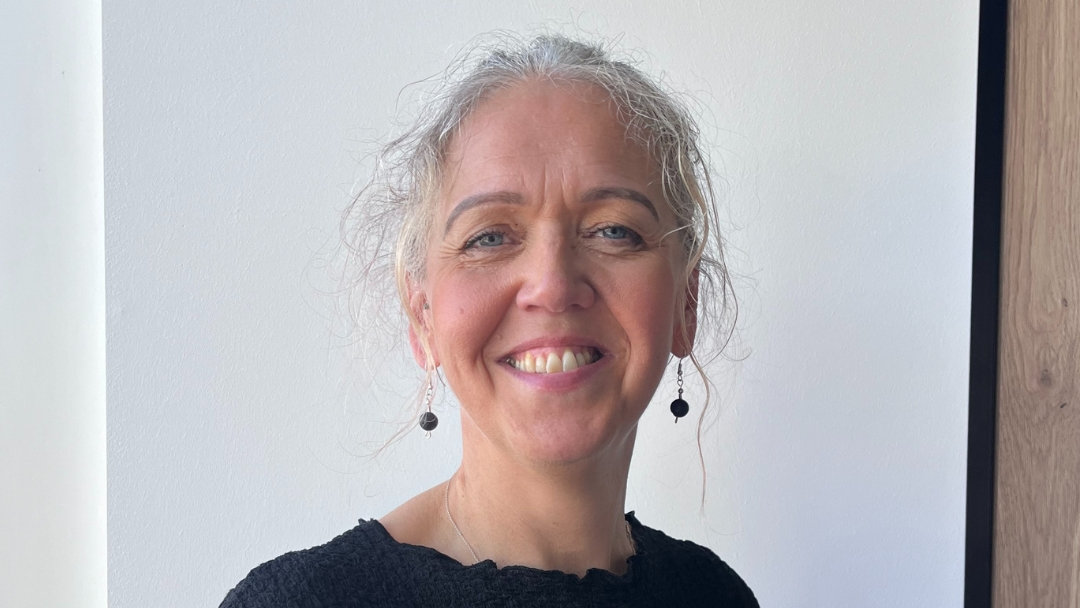
North West-born Suzanne, joined the board in autumn 2024 a few months after it was formed by mayor of Greater Manchester Andy Burnham and Liverpool City Region (LCR) mayor Steve Rotheram. For her, being invited to be part of LMRPB and use her three decades of rail experience to benefit her home region is a point of pride.
“I’ve worked in the rail sector for 30 years and the majority of that time has been in jobs in the South or Midlands,” she says.
“Watching infrastructure assets in the North deteriorate when you’ve seen other parts of the country get investment and the economic growth that results from that is hard. Having the opportunity to support the North to change that is really important to me.”
While it wasn’t something Suzanne had done before, it is clear that over the first year of being on the board her “rail geek” knowledge has brought a lot to the development of the plans. She says she has learned a lot from the other board members, who Suzanne says she might not have interacted with in her normal work, and they have similarly gained insight from her too.
There are 18 members representing business, universities, consultants, environmentalists and economists on the LMRPB. Local authorities along the route, as well as the Port of Liverpool, Manchester Airports Group and other stakeholder organisations are also included. “There is a real mix and breadth to give us the skillset we need to drive what we’re looking to do,” says Suzanne.
“Our role is to guide the project we have put to government and support the work being undertaken by both Transport for Greater Manchester and LCR, as well as review processes and documents. Essentially the board members act as advocates for the rail initiatives and region.”
Suzanne says that the railway is just the starting point and is the catalyst for growth in the region so it is essential to get that first part right. The board has been split into working groups and Suzanne is leading on the programme aspect where she is supporting on developing robust plans to ensure the proposals developed match the needs of the region and are deliverable.
Alignment with personal values
Suzanne’s work on the LMRPB is voluntary but aligns well with her work at Mott MacDonald which involves her in early development of publicly funded heavy and light rail schemes. Suzanne clearly thrives on being involved in the early stages, helping to shape the vision and her ability to do so comes from the experience she gained early in her career from operational planning.
Nonetheless, it was only a temp job that led Suzanne into the rail sector – an industry she had no family connection to or knowledge of its career potential for her.
“I wanted to change the world and initially thought about becoming a social worker but decided that wouldn’t have the impact I wanted so looked to work in local government,” she explains. This led her to complete first an HND and then a degree in public administration and managerial studies at De Montford University in Leicester. It was taking an administration role at British Rail while she looked for a permanent job following graduation that resulted in her long term rail career.
“My initial eight weeks in admin got extended and I started to get involved in the operational planning,” Suzanne explains. “Unexpectedly, I enjoyed the work and they offered me a permanent role just as I got an offer for a local government job.”
Suzanne’s decision changed the course of her career and resulted in her becoming the first female planner for the West Coast Main Line. It wasn’t just the work that had an impact on her, it was the people too and her colleagues from that time developed into friendships that she still maintains to this day.
“Most of the people I worked with came from railway families where generations worked in the sector, so they knew about the opportunities,” she says. “People who don’t have that background, like me, often don’t realise the potential that exists for different career paths and opportunities.”
For Suzanne, that career path spanned 28 years with the UK’s rail operator, first under British Rail, then Railtrack and later Network Rail before joining Mott MacDonald in 2023. Over that time her career moved from operational planning to asset management and energy projects with her final role in Network Rail seeing her working as director for the Crewe programme to coordinate and plan for integration of HS2.
Through her experience, she jokingly calls herself a “fake engineer” as her career journey has given her insight and she has picked up a lot of knowledge, which combined with her planning experience, means she can hold her own with engineering colleagues.
Suzanne has juggled her career progression with having two children, which she says “wasn’t always easy” and meant prioritising roles closer to home for a time when they were young. “I’ve been fortunate to have the right people to guide me,” she says and has combined that with always looking for opportunities to grow her knowledge and develop her skills. As a result, Suzanne is keen to act as a guide for others too and has a long history of participating in STEM outreach work and mentoring. “There aren’t just engineering and operational roles in rail, there are great career opportunities in finance and commercial,” she says. “But unless we go out and talk about them, we won’t bring new people into the sector.”
Suzanne also wants to attract more women into the industry and is clearly proud to be in a senior enough position to be a role model for others coming into the rail sector. “In 2002 there was a study that showed 16% of the workforce in rail were women and another study a few years ago showed that the number now is just 16.2%,” she says.
She is clearly disappointed that there hasn’t been a significant change in the gender balance in the last 20 years but believes that the working environment in the rail sector has moved forward. “There have been a lot of changes since I first joined the sector. We now have women’s PPE – there’s even pregnancy PPE available – and it is certainly less male-dominated than the mid 1990s but there is still a long way to go,” she says.
What is clear is that Suzanne wants to be part of the change, whether that’s for new rail investment, economic growth or equality. And, when it comes to delivering that change for the North, she has energy, passion and enthusiasm to bring to creating the solution. Suzanne may not have been born into a railway family but she is now a fully adopted member of it.


Subscribe for exclusive updates
Receive our expert insights on issues that transform business, increase sustainability and improve lives.