




UK ethnicity, gender and disability pay gap report 2025

Foreword
Equality, diversity and inclusion remain central to Mott MacDonald’s purpose and long-term success. We believe that creating a workforce that reflects the communities we serve strengthens our ability to innovate, collaborate and deliver the best outcomes for our clients. When our people feel respected, supported and able to contribute fully, our business is stronger as a result.
In 2025, we introduced three clear people commitments that set out what our colleagues can expect from us as an employer. One of these commitments focuses specifically on inclusion, reinforcing our intention to build a culture that is collaborative, fair and supportive, where everyone can succeed knowing they belong. This commitment underpins the actions we are taking across the business to create an environment in which difference is valued and opportunity is shared.
Publishing our gender, ethnicity and disability pay gap data continues to be an important part of how we hold ourselves accountable. It enables us to measure progress, be transparent with our colleagues and stakeholders and better understand where further action is required. Careful analysis of this data helps us identify the underlying drivers of pay disparities and informs the steps we take to address them.
This year’s reporting for the UK shows continued progress. We have seen a further reduction in our gender pay gap, alongside a decrease in our ethnicity pay gap. These improvements reflect, in part, increased representation of women and ethnic minority colleagues across the business, including at senior and leadership levels. While there is more to do, these trends demonstrate that our ongoing focus on inclusive recruitment, development and progression is having a positive impact.
Although only gender pay gap reporting is currently mandatory, we remain committed to voluntarily reporting on our ethnicity and disability pay gaps. We believe transparency in these areas is essential to building trust and driving meaningful change within our organisation.
We also recognise the important role we can play in contributing to progress across our industry. By openly sharing our data and the actions we are taking, we hope to support greater transparency more widely and encourage collective effort to address pay disparities across our sector. Through maintaining an open and honest view of our data, we continue to challenge ourselves to improve and to play our part in advancing inclusion beyond our own organisation.
- Pay gap reporting terms explained
- Ethnicity pay gap and representation
- Gender pay gap and representation
- Disability pay gap and representation
- Addressing Mott MacDonald’s pay gaps

Pay gap reporting terms explained
When looking at pay gap figures, it is important to remember there is a difference between equal pay and a pay gap.
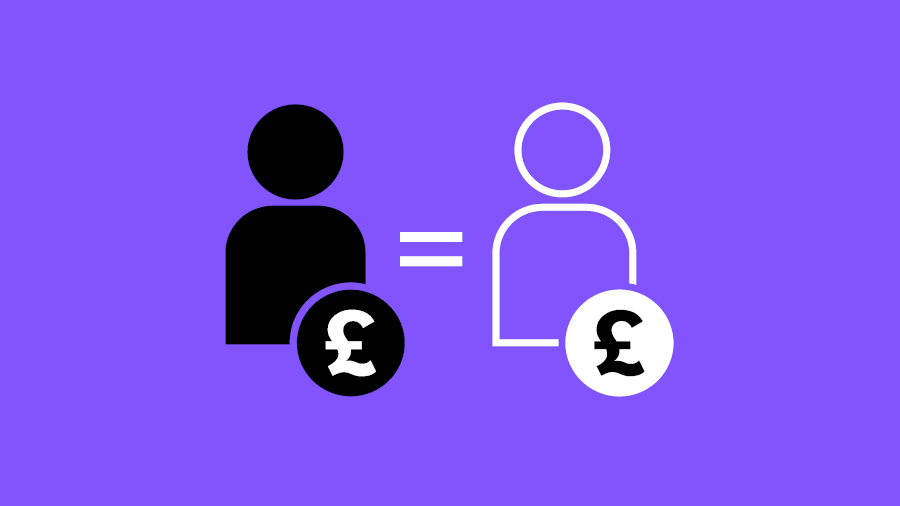
Equal pay
Equal pay means that a person in one group in an organisation and a person in a comparative group should not be paid differently for performing equal work.

Pay gap
A pay gap measures the difference between the average earnings of one group compared against the average earnings of another group. The difference is expressed as a percentage of the first group’s earnings.
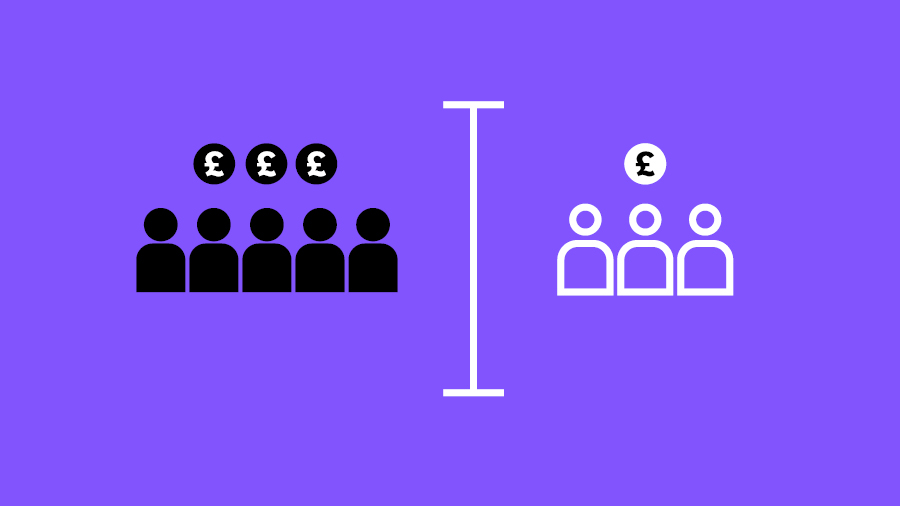
Mean pay gap
The mean pay gap is the difference between the average earnings of two groups.
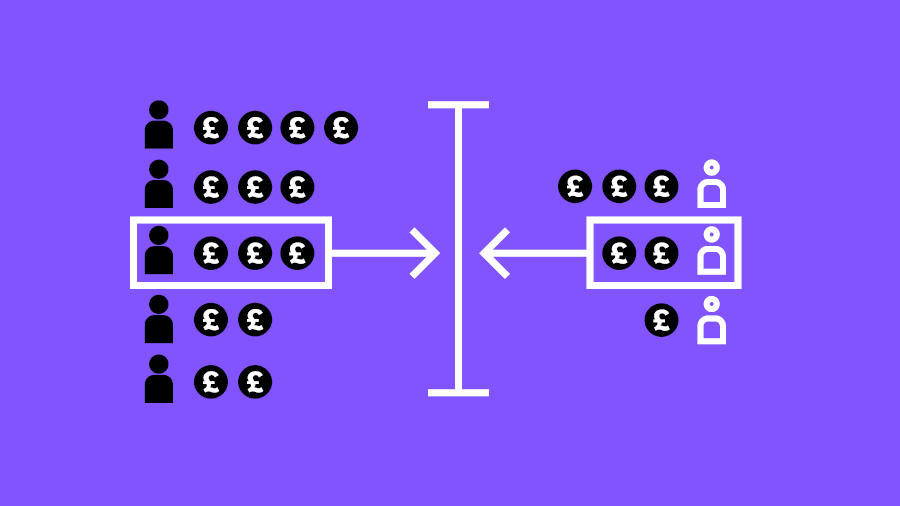
Median pay gap
The median pay gap is the difference in hourly pay between the mid-points of two groups’ earnings, when their salaries are listed by size.
Reporting populations
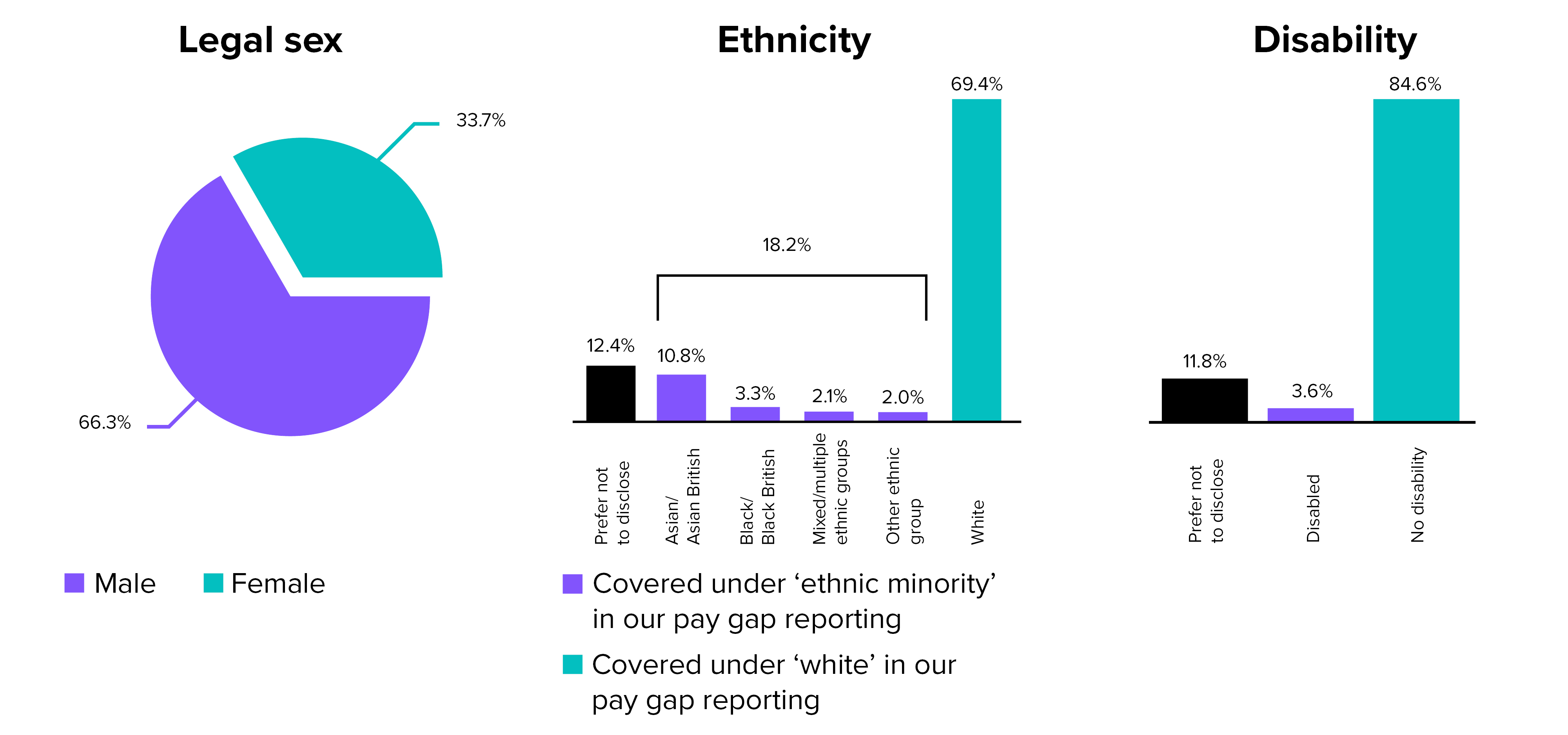
Mott MacDonald’s reporting is based on a UK employee population size of 7719 on 5 April 2025.
Please note throughout this report, numbers have been rounded to one decimal place. Sometimes, this leads to what appear to be discrepancies in data. This is solely due to the limitations of rounding numbers and is not a result of inaccuracy.
How pay gaps are calculated and reported
Gender, disability and ethnicity pay gaps have been calculated using the UK government’s statutory methodology for pay gap reporting. Mott MacDonald’s reporting is based on pay after salary sacrifice, as required by statute. The reporting period is 6 April 2024 to 5 April 2025.
Note on ethnicity reporting
Ethnicity pay gap calculations are based on those individuals who have chosen to declare their ethnicity and exclude those for which no data is held, due to lack of historical diversity monitoring, or who have selected “prefer not to say”. At the time the calculations were made, ethnicity data was held for 87.6% of Mott MacDonald’s UK colleagues. The breakdown of the reporting population by ethnicity is shown on the page below.
Ethnicity pay gap calculations are based on ethnic minority colleagues collectively, rather than divided by specific ethnic groups. The decision was taken to combine data because of the smaller numbers of different ethnic minority groups within the organisation. As pay gap calculations report on averages, the data is more meaningful when based on a larger dataset.
Note on disability reporting
Disability pay gap calculations are based on those individuals who have chosen to declare that they have a disability and excludes those we do not hold data for or who have selected “prefer not to say”. At the time of the calculations for this report, disability data was held for 88.2% of Mott MacDonald’s UK colleagues. The breakdown of the reporting population by disability is shown on the page above.
Note on gender reporting
Gender pay gap reporting is based on legal sex data. Although the terms “gender”, “male” and “female” are used for the purpose of this report, it is acknowledged that some people’s legal sex does not match their gender identity. Some people do not fit into binary gender and/or sex categories, including non-binary people and intersex people, and not all trans colleagues will hold a gender recognition certificate.
Although the requirement for reporting against legal sex may remain the same, Mott MacDonald has introduced a gender identity field within its HR system, which allows collection data on gender identities beyond male and female. Pending higher completion rates, this field will enable a better understanding of employee demographics and to report pay gaps internally on gender identity, as well as legal sex.
Ethnicity pay gap and representation
Ethnicity pay gap 2025
Mott MacDonald’s median and mean ethnicity pay gaps have decreased in the past 12 months.
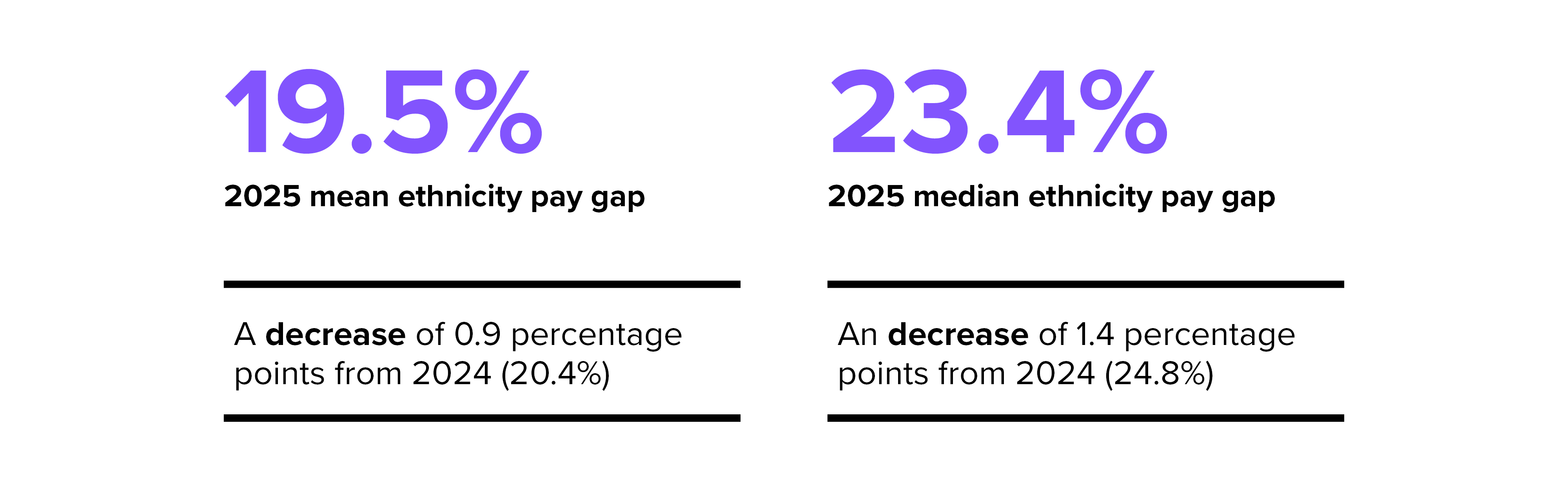
The ethnicity pay gap at Mott MacDonald is impacted by lower representation of ethnic minority colleagues in senior positions and higher representation in junior roles. Over the past 12 months there has been an increase in ethnicity representation from 17% to 18.2%, including an increase at mid-management and senior levels, which would have contributed to a decrease in the ethnicity pay gap.
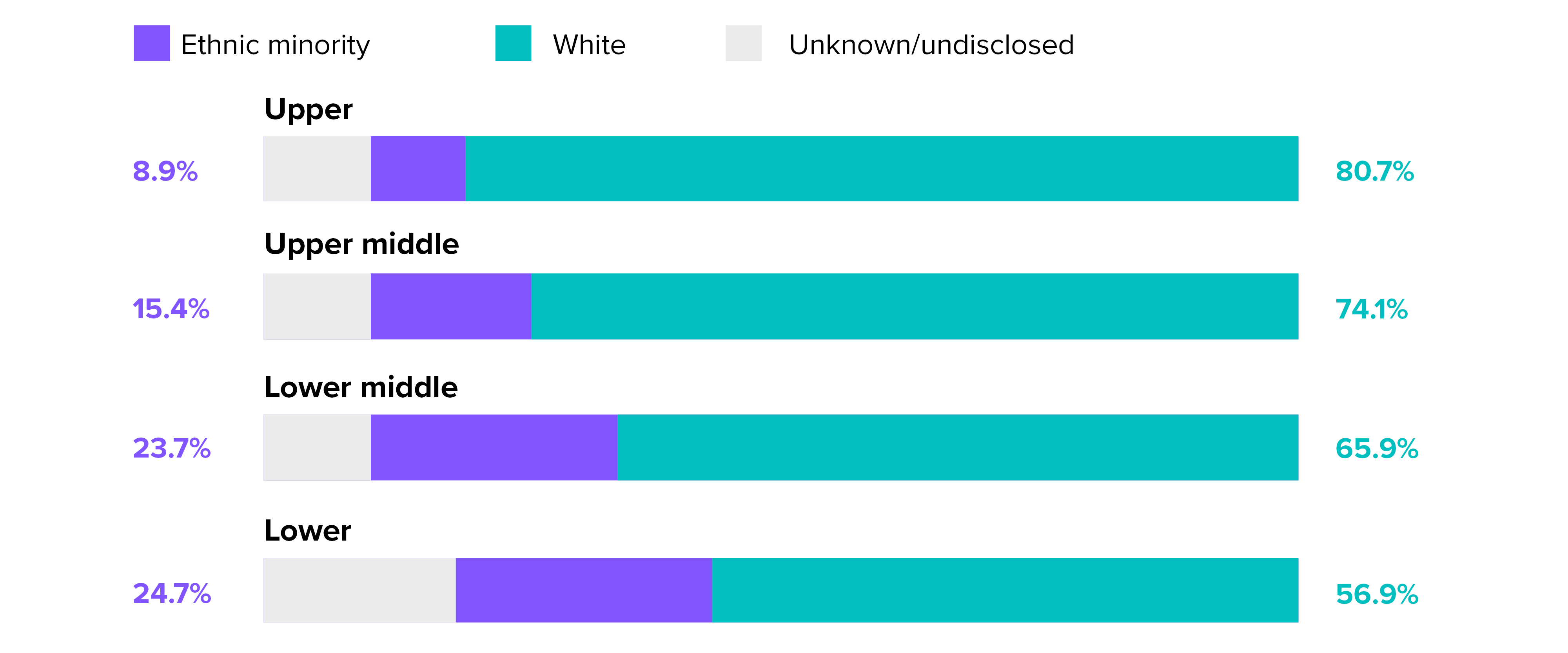
Compared to the previous reporting period, ethnic minority representation increased by 1 percentage points at the lower quartile and by 1.4 percentage points at the lower middle quartile. It also increased by 1.3 percentage points at the upper middle quartile and by 1 percentage point in the upper quartile. This resulted in the mean and median hourly pay rates of ethnic minorities increasing, therefore increasing the pay gap.
Small changes, big impact
When comparing a smaller group with a much larger group, changes outside recruitment, retention, salary review and promotion still have a significant impact on mean and median pay gaps. Some of these changes cannot be controlled. For example, because pay gaps are derived from hourly pay figures, a change in annual benefits, such as increased pension payments or salary exchange for annual leave, will show as a reduction in pay.
The shape of the workforce
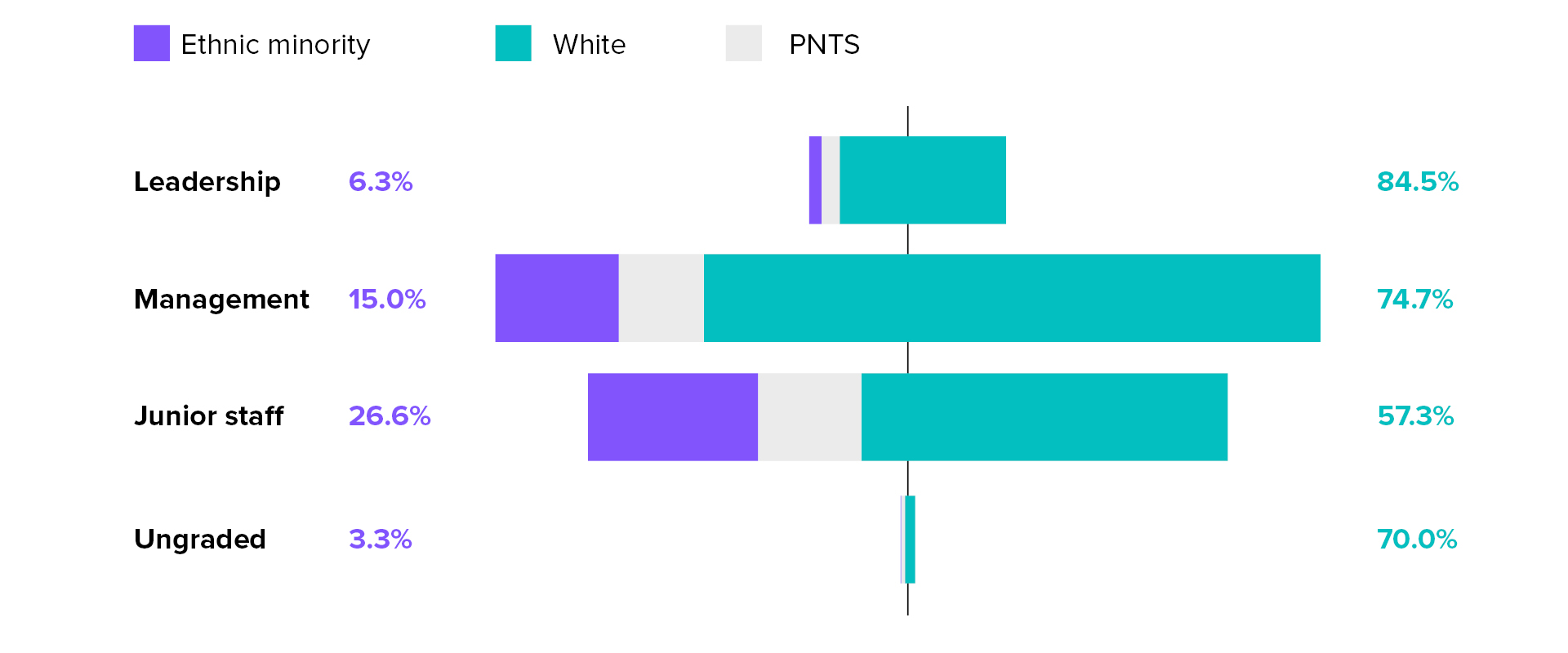
The shape of Mott MacDonald’s workforce significantly impacts its pay gaps. Based on the business’s internal grading structure, employees have been grouped into “junior staff”, “management”, “leadership” and “ungraded”, as shown in the graph. Ungraded colleagues are those who are paid hourly or non-payroll, and as such are not included in Mott MacDonald’s grading system.
Since 2024, ethnic minority representation has increased within junior staff, management and leadership populations and decreased within ungraded populations:
+1.3% at leadership level
+1.9% at management level
+0.9% at junior staff level
-1.5% in the ungraded population
Representation per quartile
Pay quartiles are used to show how the representation of white and ethnic minority employees varies throughout the organisation. They are created by ordering the population based on hourly pay from lowest to highest and then dividing it into four equal groups.
Mean ethnicity pay gap per quartile
Mott MacDonald’s ethnicity pay gaps per quartile are much smaller than the overall ethnicity pay gaps. This supports the conclusion that overall ethnicity pay gaps within the business are predominately caused by over-representation at more junior levels and under-representation in senior positions. The larger ethnicity pay gap in the upper quartile is caused by lower representation of ethnic minority employees at the most senior levels. Mott MacDonald is working hard to improve this and recognises that the high retention rate in senior positions means that change will be gradual.
| 2021 | 2022 | 2023 | 2024 | 2025 | |
| Upper | 6.6% | 5.2% | 5.9% | 4.1% | 4.1% |
| Upper middle | 1.2% | 0.7% | 0.6% | 0.6% | 0.8% |
| Lower middle | 0.8% | 1.0% | 1.2% | 1.5% | 1.3% |
| Lower | -1.1% | -0.2% | 1.6% | -1.5% | -1.4% |
Ethnicity bonus gap
Percentage of ethnic minority and white employees receiving bonuses in 2025
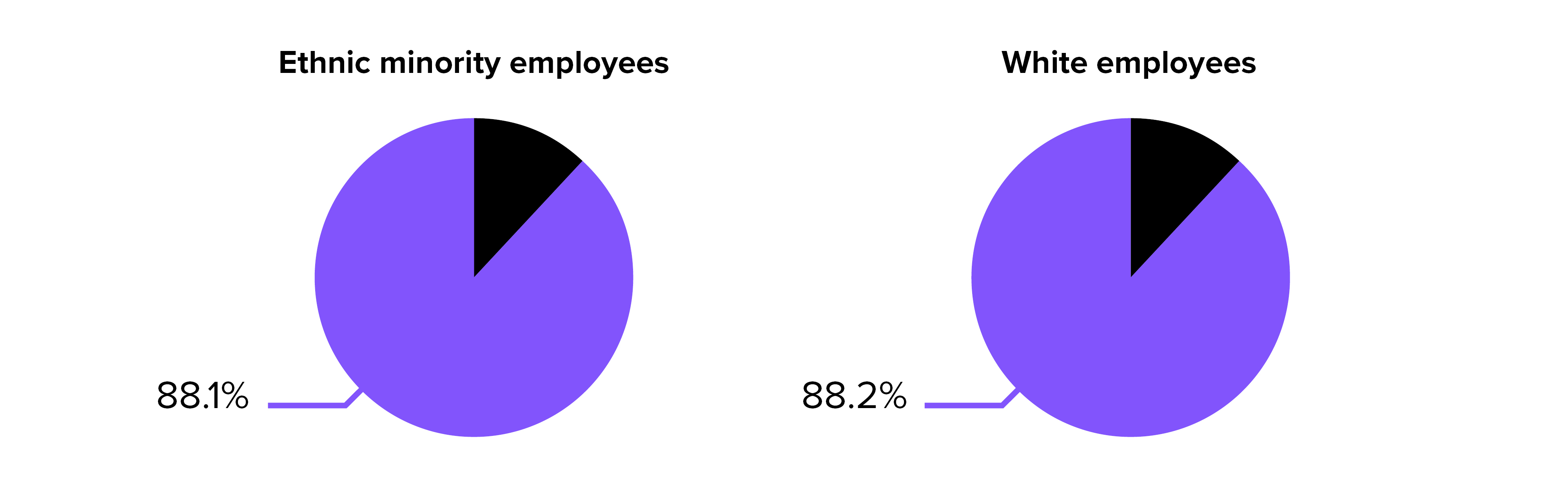
The difference between the proportion of white employees and ethnic minority employees receiving a bonus is 0.1 percentage points, a decrease from 8.3 in 2024.
Bonus Gaps
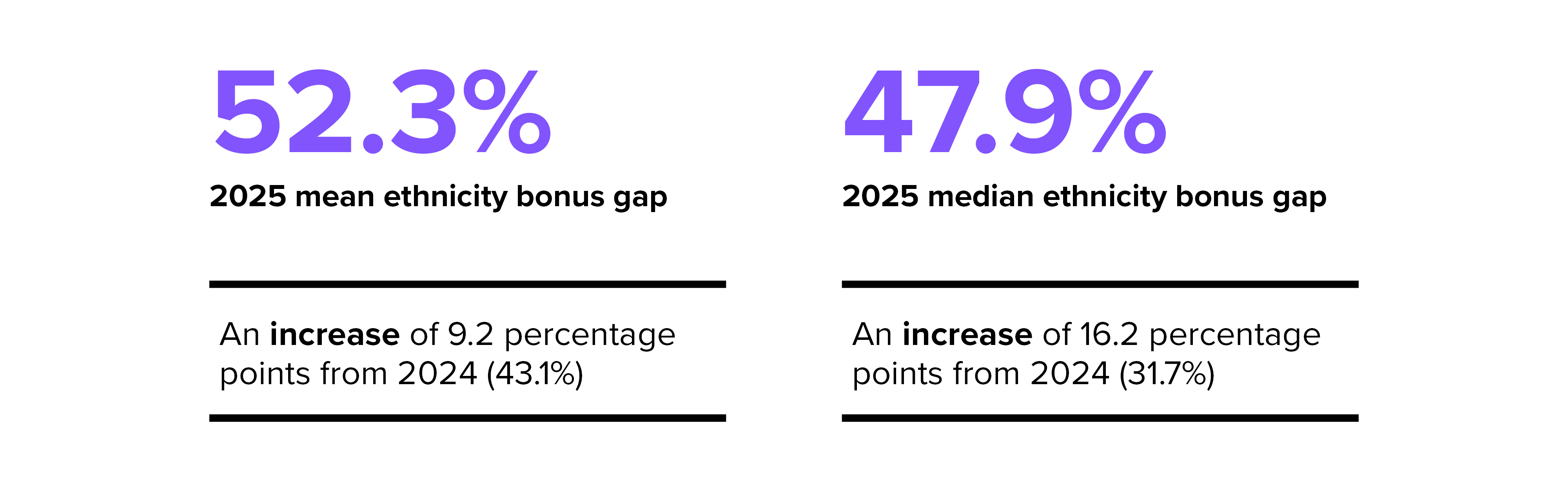
In the past 12 months Mott MacDonald’s median ethnicity bonus gap has increased by 16.2 percentage points while the mean ethnicity bonus gap has increased by 9.2 percentage points.
Mott MacDonald’s global performance bonus scheme sets performance bonus payments as a percentage of base salary rather than as a discretionary allocation. While this ensures consistency of approach and a more meaningful bonus payment, it means that the average performance bonus payment for employees in the upper quartile is higher. As there is a lower representation of ethnic minority employees in this quartile, it impacts our ethnicity bonus gaps.
The increase in the ethnicity bonus gap is driven by changes in the distribution of bonus recipients rather than access to bonuses. Equalisation of bonus participation meant a greater number of ethnic minority employees at lower pay levels received bonuses, reducing the ethnic minority average bonus value. Because bonuses are paid as a percentage of base salary, this compositional effect widened the mean and median bonus gaps despite improved representation at senior level.
Gender pay gap and representation
Gender pay gap 2025
Mott MacDonald’s gender pay gaps have decreased slightly in the past 12 months.
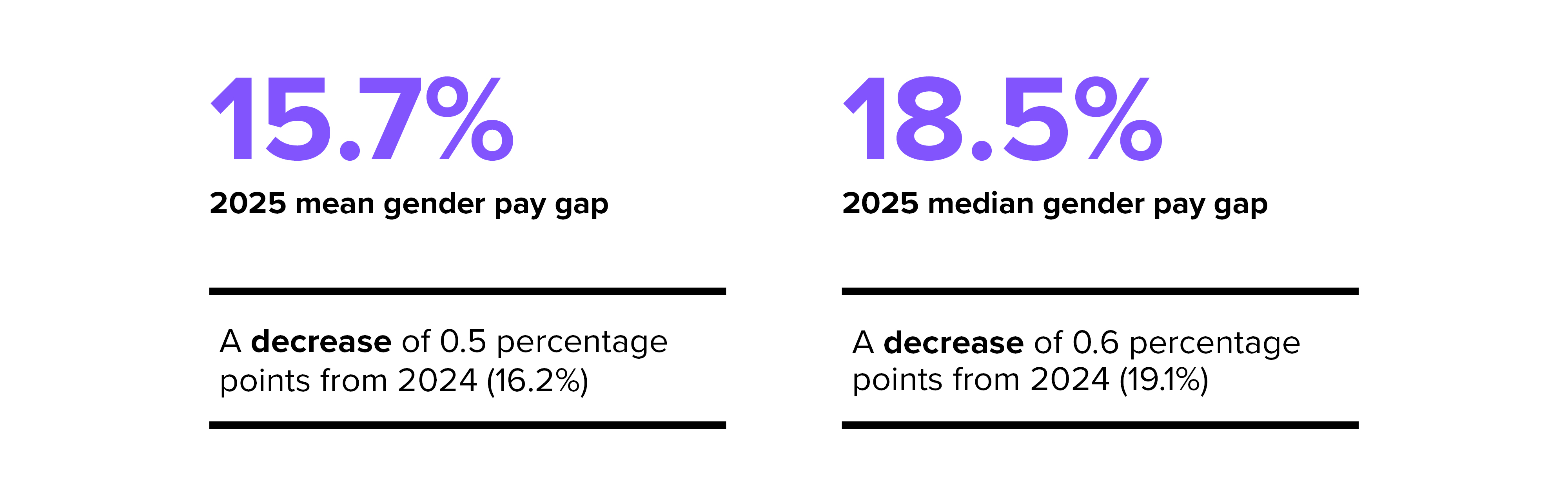
Representation of women increased by 0.5 percentage points in 2025 and a higher increase at more senior levels has contributed to a positive shift in Mott MacDonald’s gender pay gaps.
As the female population within the business continues to grow, specifically in the higher quartiles, the pay gap is likely to continue to reduce.
The shape of the workforce
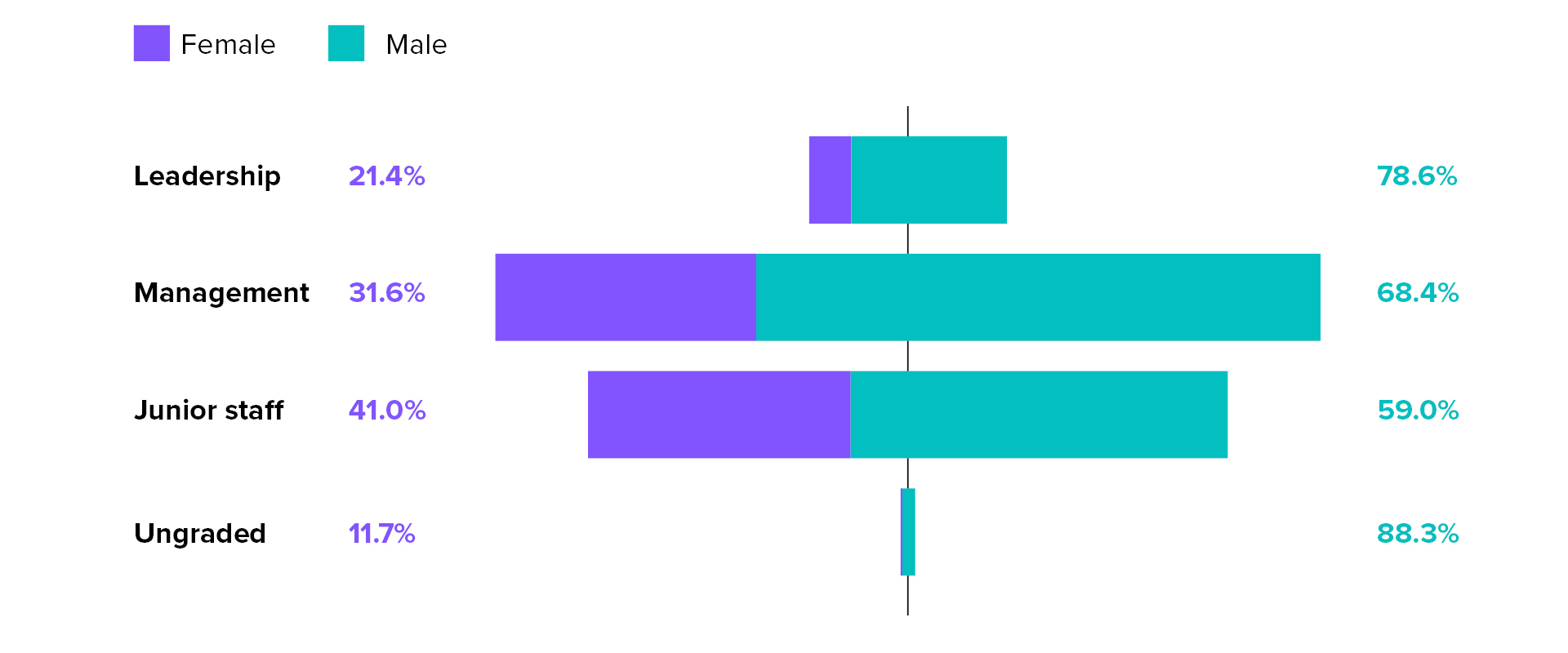
The shape of Mott MacDonald’s workforce significantly impacts its pay gaps. Based on the business’s internal grading structure, employees have been grouped into “junior staff”, “management”, “leadership” and “ungraded”, as shown in the graph to the left. Ungraded colleagues are those who are paid hourly or non-payroll, and as such are not included in Mott MacDonald’s grading system.
Since 2024, female representation has increased within all staff populations though the increase is higher at more senior levels:
+1.6% at leadership level
+1.1% at management level
+0.2% at junior staff level
+1.9% within the ungraded population
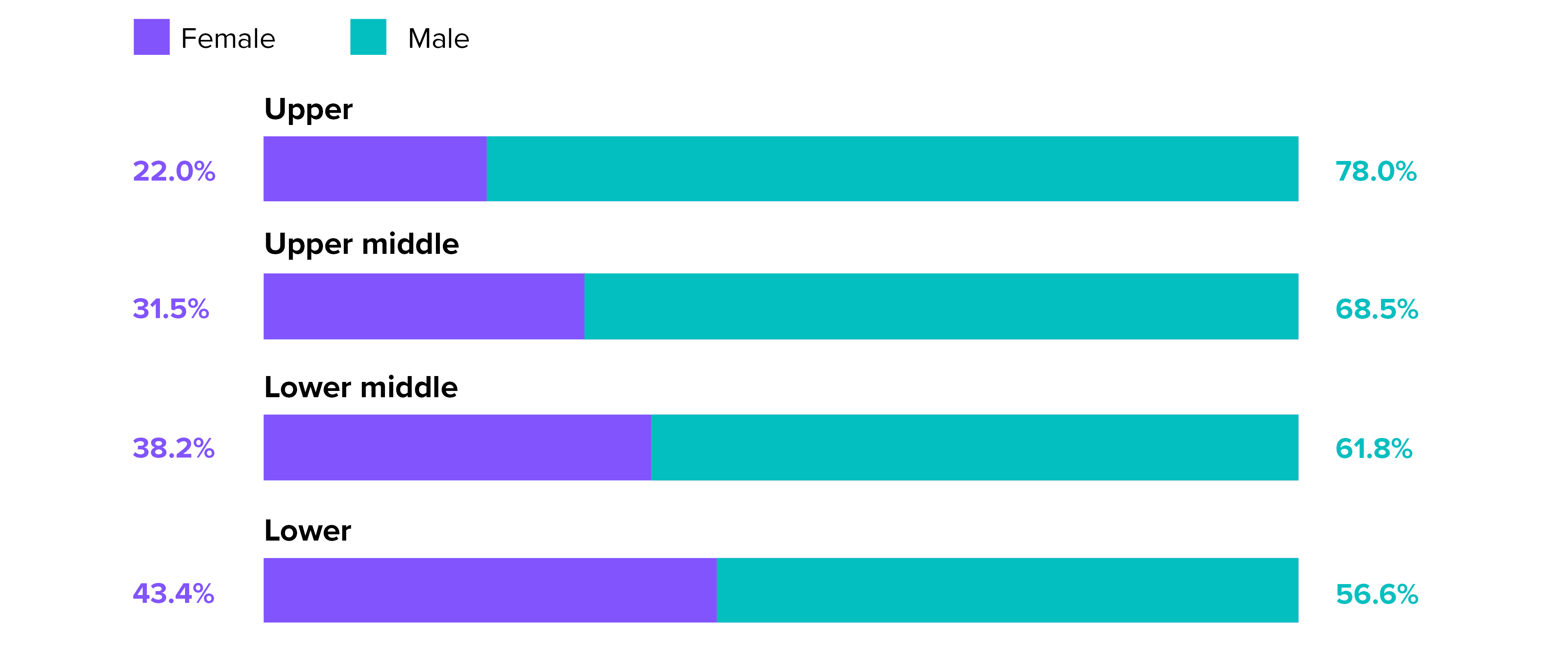
Representation per quartile
Pay quartiles are used to show how the representation of female and male employees varies throughout the organisation. They are created by ordering the population based on hourly pay from lowest to highest and then dividing it into four equal groups.
Mean gender pay gap per quartile
Mott MacDonald’s gender pay gaps remain smaller when reviewed within each pay quartile. The gender pay gap remains largest within the upper pay quartile as a result of lower representation of female employees at the most senior levels.
| 2021 | 2022 | 2023 | 2024 | 2025 | |
| Upper | 3.6% | 3.7% | 4.4% | 3.7% | 4.5% |
| Upper middle | 2.7% | 2.1% | 2.9% | 1.2% | 1.4% |
| Lower middle | 0.1% | 0.8% | 1.4% | 1.2% | 1.2% |
| lower | -0.5% | -0.5% | -0.9% | -0.9% | 0.9% |
Gender bonus gap
Percentage of male and female employees receiving bonuses in 2025
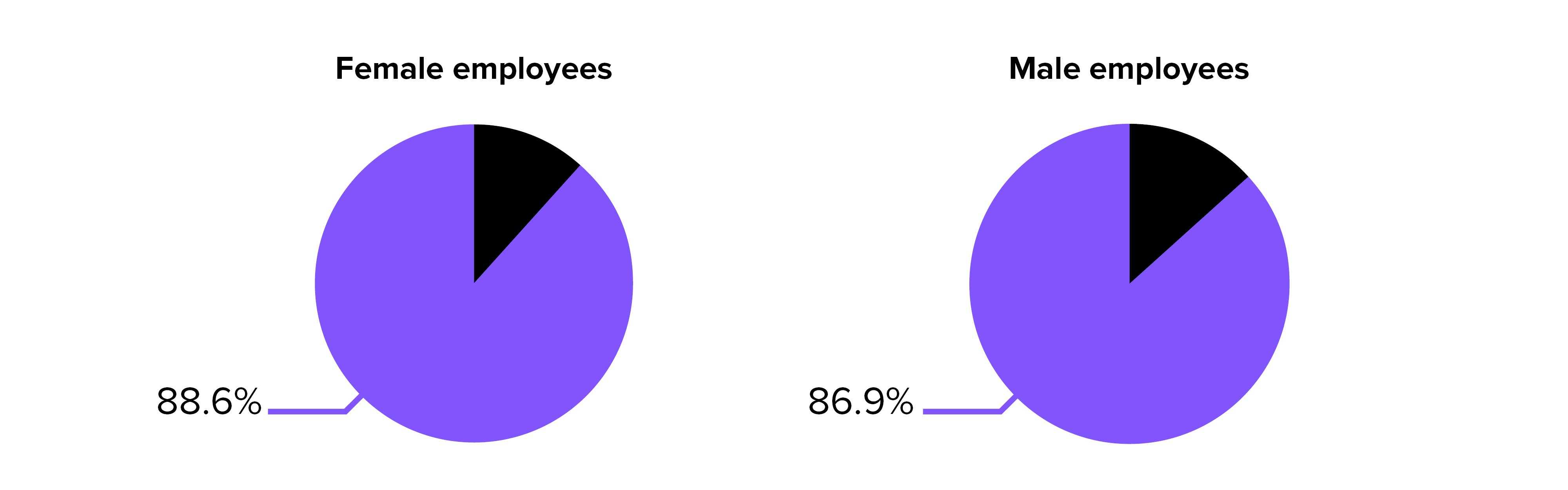
Overall, more people received a bonus in 2025 than in 2024. The difference between the proportion of men and women receiving a bonus in 2025 was nearly 2 percentage point in favour of women, an increase since 2024 when it was 1. This may have resulted in a positive shift towards closing the mean gender pay gap.
Bonus gaps
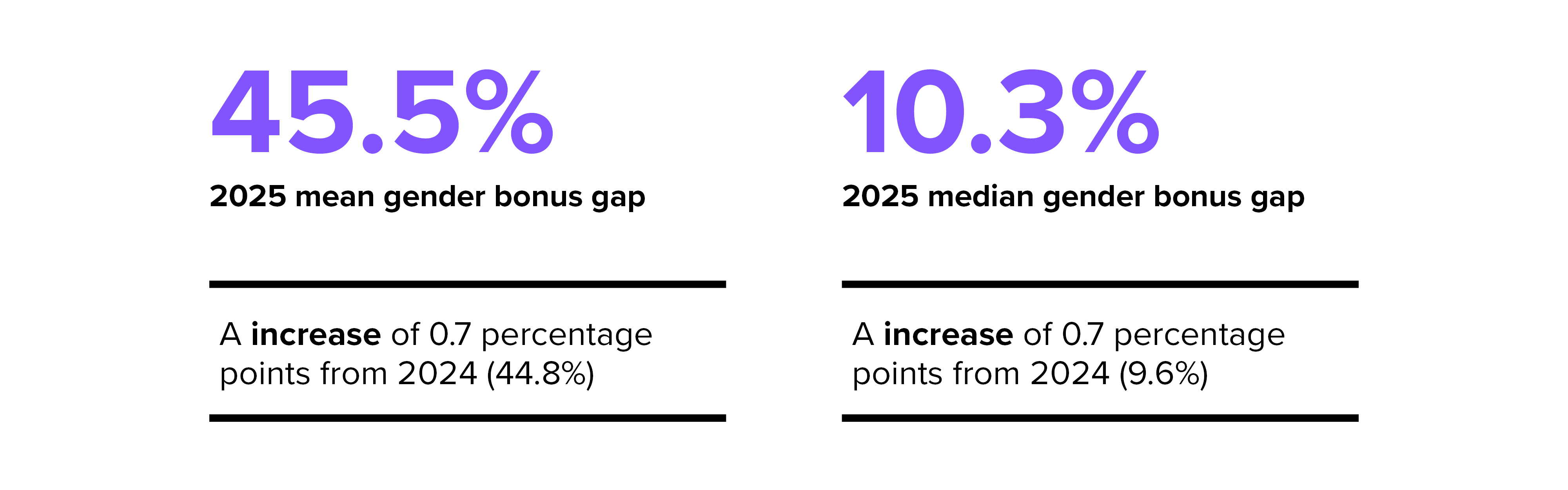
The lower representation of female colleagues in the upper quartile impacts Mott MacDonald’s gender bonus gaps. The mean gender bonus gap slightly increased this year. This may reflect changes in bonus participation. A higher proportion of women received a bonus this year, and the additional women receiving bonuses were more likely to be outside the highest-paid roles. As bonuses are paid as a percentage of base salary, this widened the distribution of bonus values for women and reduced the average and median bonus value, contributing to a slightly increase in the bonus gap despite improved senior representation.
Mott MacDonald’s median bonus gap is lower than the mean bonus gap because, while the middle rate will fluctuate slightly with population changes, it is not affected by the upper quartile who receive the highest bonuses.
Disability pay gap and representation
Disability pay gap 2025
Mott MacDonald’s median disability pay gap has increased in the past 12 months and the mean pay gap has only slightly decreased.
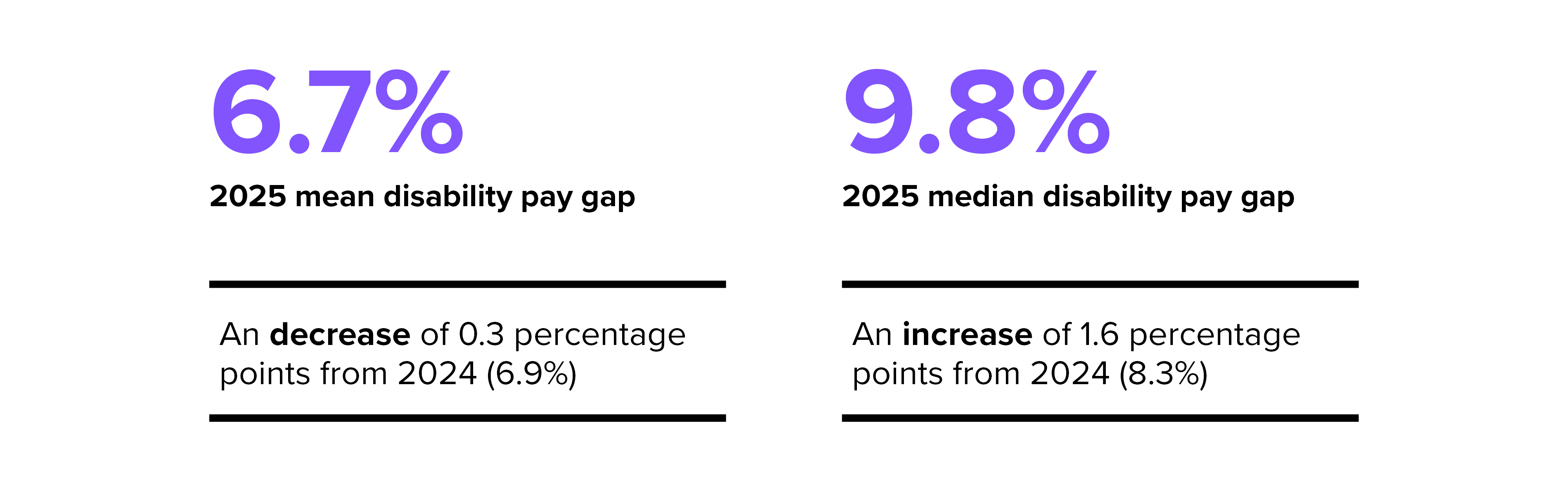
There have been a small increase in the median and a decrease in the mean disability pay gap. The disability pay gaps are mainly caused by the lower representation of disabled colleagues in senior positions and a higher representation of disabled colleagues in junior roles. In 2025, representation of disabled colleagues stayed the same at 3.6%.
The slight decrease in the mean pay gap reflects changes at the higher-paid end of the workforce, where a small number of higher-paid disabled colleagues can have a disproportionate impact on average pay outcomes.
The median disability gap is based on the middle point in each population. Changes in the disabled population within the business could impact where that middle figure falls and it can fluctuate year on year.
The shape of the workforce
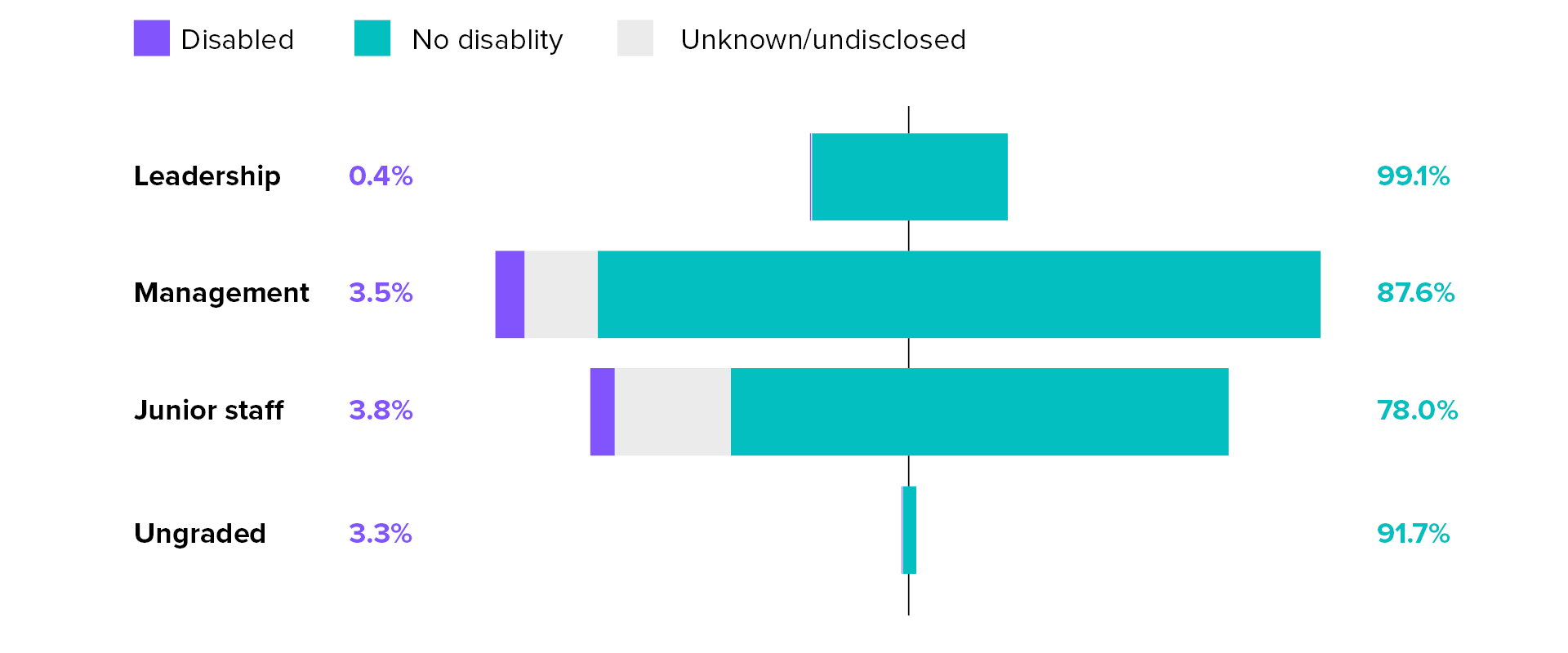
The shape of Mott MacDonald’s workforce significantly impacts its pay gaps. Based on the business’s internal grading structure, employees have been grouped into “junior staff”, “management”, “leadership” and “ungraded”, as shown in the graph to the left. Ungraded colleagues are those who are paid hourly or non-payroll, and as such are not included in Mott MacDonald’s grading system.
Since 2024, disabled representation has increased within junior staff populations and decreased in all other populations:
+0.1% at junior staff level
-0.2% at management level
-2.8% at leadership level
-4.0% within the ungraded population
Representation per quartile
Pay quartiles are used to show how the representation of disabled and non-disabled employees varies throughout the organisation. They are created by ordering the population based on hourly pay from lowest to highest and then dividing it into four equal groups.
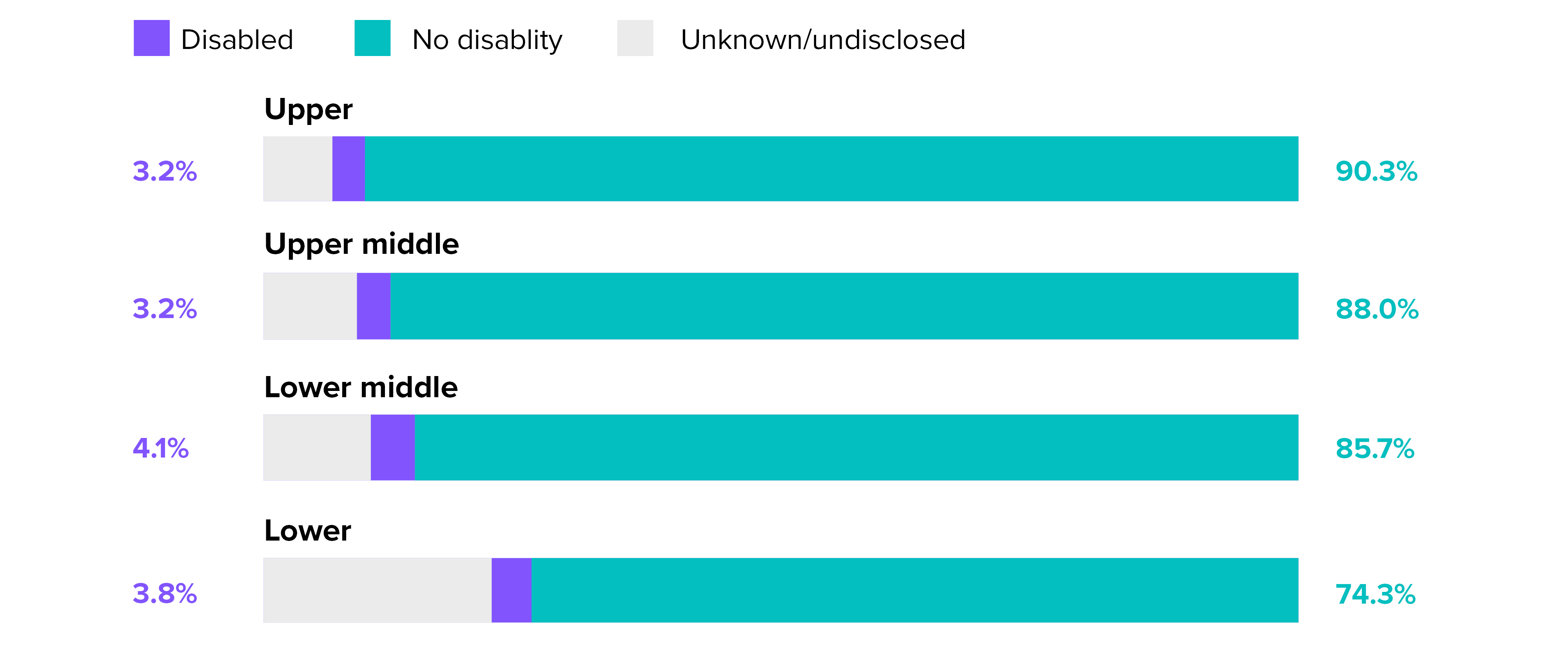
Mean disability pay gap per quartile
The disability pay gaps per quartile are much smaller than they are at an overall level.
| 2024 | 2025 | |
| Upper | -0.5% | 2.3% |
| Upper middle | -0.7% | -0.9% |
| Lower middle | 1.1% | 1.3% |
| Lower | 1.3% | -0.8% |
Disability bonus gap
Percentage of disabled and non-disabled employees receiving bonuses in 2025
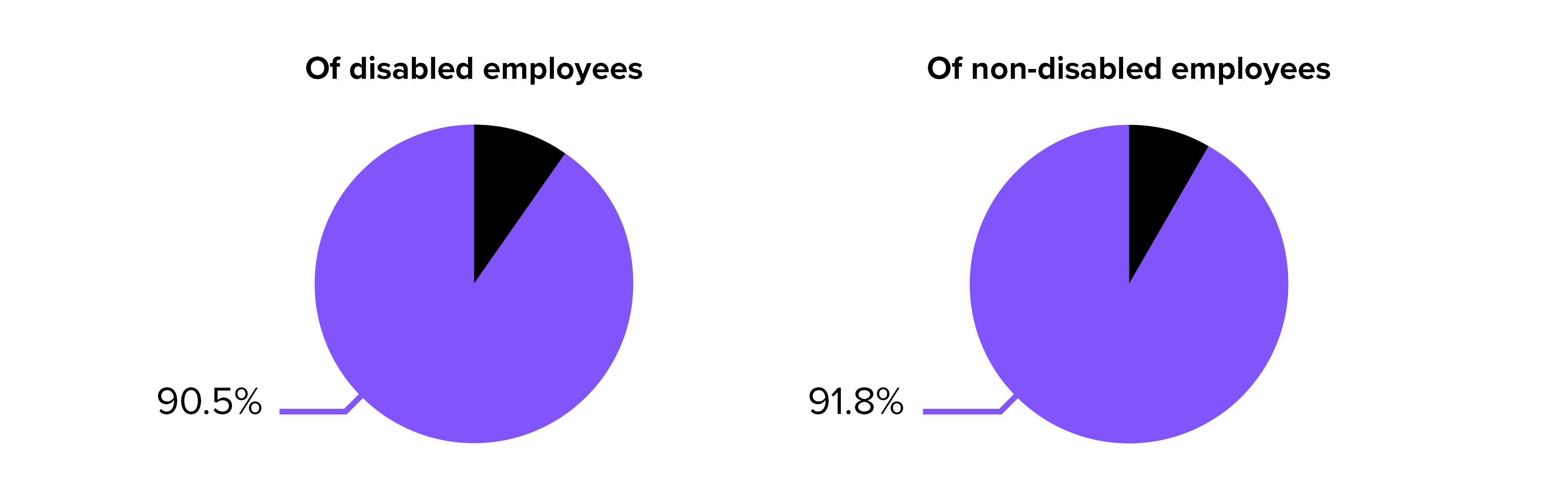
The difference between the proportion of disabled employees and non-disabled employees receiving a bonus is 1.3 percentage points with a smaller number of employees declaring a disability receiving a bonus. The difference has increased since 2024 when the disparity between the two groups was 0.1 percentage points.
Bonus gaps
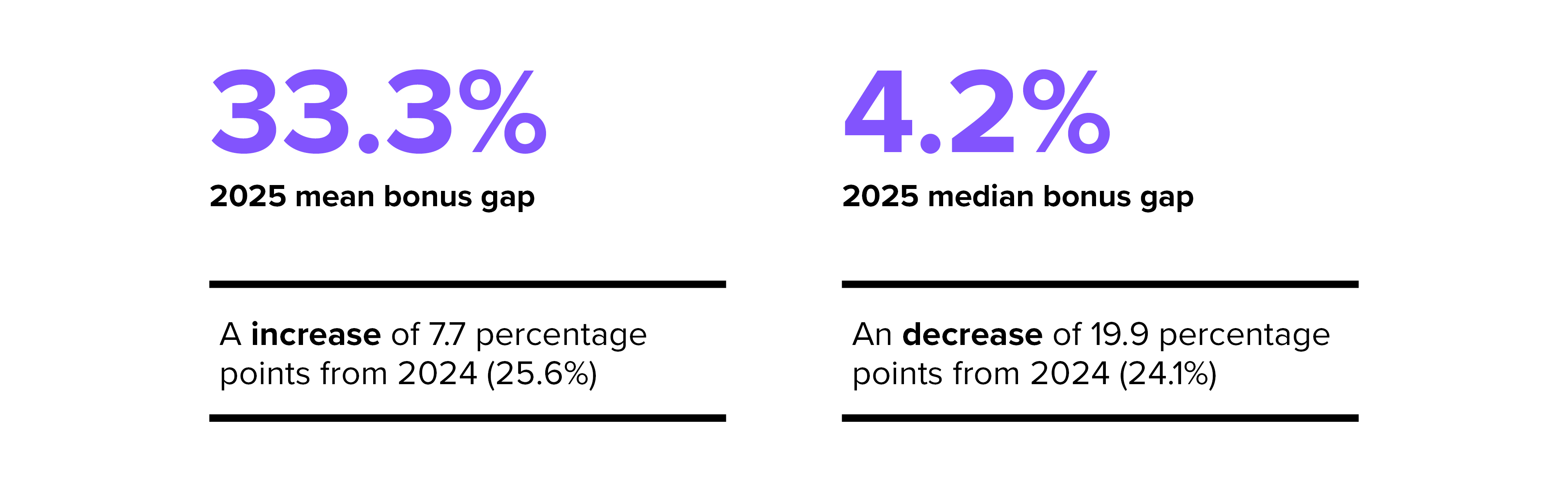
The business’s global performance bonus scheme sets payments as a percentage of base salary rather than as a discretionary allocation. While this ensures consistency of approach and a more meaningful bonus payment, it means that the average performance bonus payment for employees in the upper quartile is higher.
As there is a lower representation of disabled employees in this quartile, there continues to be a disability bonus gap. A decrease in representation of disabled staff at more senior levels in 2025 would have contributed to an increase in the mean disability pay gap.
The median disability bonus gap reflects the bonus received by the colleague at the midpoint of the distribution. As this is based a single position within the dataset, relatively small changes in population or bonus values can result in noticeable year-to-year fluctuations. This means that the median bonus gap can change significantly between reporting years, even where there is limited underlying change in overall pay or bonus structures.
Addressing Mott MacDonald’s pay gaps
Mott MacDonald’s pay gaps are largely due to the underrepresentation of female, disabled and ethnic minority talent in its business, specifically in senior positions. Actions to close these gaps focus on
- attraction and recruitment
- retention and engagement
- and development and progression
Fostering a supportive, respectful and inclusive environment while also building equality, diversity and inclusion (EDI) employee competencies will also help narrow existing pay gaps.

Attraction and recruitment
Progress
Over the past year Mott MacDonald has built on previous actions in this area to ensure that recruitment practices remain inclusive and equitable, while also supporting the mission to build a diverse and empowered workforce.
In 2024, a comprehensive review of talent acquisition processes and practices was undertaken. Alongside identifying areas for further development, efforts were also made to ensure that everyone involved in any stage of the talent acquisition pipeline understands Mott MacDonald's approach and the reasons behind it. In 2025, the outcomes of this review were launched and embedded across the business, ensuring a consistent and inclusive approach to recruitment at all stages of the hiring process.
The business has developed an inclusive hiring policy statement supported by comprehensive guidance covering all stages of the recruitment process. During 2025, this guidance and associated tools were rolled out across the organisation, ensuring that hiring managers and the talent acquisition team have a shared and practical framework to support equitable recruitment.
This includes:
- Job description templates with embedded EDI considerations
- Integrated structured scoring matrices
- Interview assessment forms
- A library of competency-based questions
The talent acquisition team and hiring managers continue to have access to unconscious bias and inclusive hiring training. In 2025, this training and ongoing support were reinforced as part of the business-wide rollout, with the talent acquisition team supporting hiring managers throughout all stages of a requisition.
At the start of any new requisition, a member of the talent acquisition team holds a kick-off meeting with the hiring manager. The conversation covers inclusive hiring and ensures everyone has a clear understanding of the essential criteria candidates will be assessed against.
Other key measures which continue to be a part of Mott MacDonald’s approach to inclusive recruitment include:
- Job advert reviews: Using gender decoders to ensure job advertisements are neutral and inclusive in language. Job adverts also clearly highlight Mott MacDonald’s commitment to EDI and agile working ethos.
- Enhanced accessibility: As a Disability Confident Employer, Mott MacDonald provides reasonable adjustments and guaranteed interviews for disabled candidates meeting essential criteria.
- Updated entry criteria: At graduate level, the requirement for a 2:1 degree and Master’s qualifications have been removed for most roles, reducing barriers for candidates from lower socioeconomic and ethnic minority backgrounds.
Alongside these actions, Mott MacDonald reviewed and enhanced its early careers recruitment processes during 2025 to further support inclusive and equitable entry into the organisation. This included reviewing attraction, assessment and selection practices to help reduce potential barriers for candidates from underrepresented groups and to ensure a consistent and inclusive experience across early careers programmes.
In parallel, the business continued to strengthen its data capture and reporting capability to support more informed decision-making. Improvements to how workforce data is collected and analysed have enhanced the organisation’s ability to better understand representation and outcomes across different groups, supporting more targeted action and monitoring progress over time.
Partnerships and collaborations
Mott MacDonald’s talent acquisition team also explores multiple partnerships and collaboration opportunities with the aim of making intake processes more equitable and inclusive.
Current initiatives include:
- Expanding outreach to non-Russell universities and institutions with higher ethnic minority representation
- Running a STEM Returners programme to support women and other individuals on career breaks returning to the workforce
- Taking part in the 10,000 Black Interns scheme, a programme that offers paid internship opportunities
- Working with the Association for Black and Minority Ethnic Engineers providing transition events for early careers students moving from university into the workplace, as well as events focused on 9–17-year-olds to encourage them into the engineering profession
- Supporting the East London Business Alliance by offering mentorship to young black men in London who aspire to get into the construction industry
Going forward - recruitment
Equitable and inclusive intake processes are vital for ensuring diversity within Mott MacDonald’s talent pool. In 2026, we aim to achieve the following:
- Continue our partnerships with key external organisations that support hiring from under-represented groups – for example, participating in programmes like 10,000 Black Interns, STEM Returners, Flexa, Career Transition Partnership (CTP) for veterans, the Tent Partnership for refugees, Forces Employment, and myGwork (LGBTQ+ professional network). These partnerships will help attract diverse candidates and build our long-term talent pipeline.
- Implement a candidate feedback system (e.g. post-interview surveys) to assess candidates’ perceptions of inclusion and fairness in our process and use insights to improve the candidate experience.
- Benchmark our recruitment and hiring practices against industry peers and identify gaps or areas for improvement to ensure we remain competitive in inclusive hiring.
- Improve access and availability of EDI data via dashboards for reporting purposes.
- Continue building the capability and capacity of our Talent Acquisition (TA) team to champion inclusive hiring at every stage. This includes advanced training for recruiters, sharing best practices, and regular reviews of job postings and interview processes for bias.
- Pilot a business unit initiative to source talent from new industries or non-traditional career paths.
Retention and engagement
Progress
To retain diverse talent, the business needs to ensure it creates a positive engagement culture and builds EDI competencies across the workforce. Mott MacDonald wants to give colleagues a platform to engage where they feel that their contributions are valued. It is also important that employees have the knowledge, skills and experience to deliver positive EDI outcomes and challenge unfair practices.
In 2025, mandatory training on preventing sexual harassment and effective bystander intervention was rolled out, alongside an updated Dignity at Work policy that emphasises zero tolerance for harassment.
Inclusive leadership training was also delivered for senior managers, improving inclusive leadership capability at leadership levels.
Collaboration with the wellbeing team, also resulted in the development of resources and delivery of webinars on psychological safety and mental health.

Employee voice
Mott MacDonald’s five employee EDI networks focus on disability inclusion and accessibility; gender inclusion; LGBTQ+ inclusion; parent and carer inclusion; and race and cultural inclusion. At unit level there are also EDI champions and EDI committees which help drive the agenda within their respective business units. Network and business unit EDI action plans and initiatives are developed in alignment with the wider EDI strategy to ensure a cohesive approach and avoid duplication of labour.
The network and unit committees play a key role in enabling the business to foster an inclusive environment through meaningful engagement. Consultation with the networks on relevant business decisions helps ensure the lived experiences of the communities they represent are considered.
Mott MacDonald also supports network committees in their efforts to educate, mobilise action and offer peer support. Network activities make important contributions to overall colleague wellbeing, as well as to engagement with the EDI agenda. In 2025 the networks shared a wide range of real-life stories and lived experience to bring EDI to life, organised several informative webinars and champions worked together with the EDI team to develop and communicate guidance on a range of topics including a range of neurodiversity resources and developed practical conversation tools such as EDI moments and dilemmas to spark inclusion discussions within teams.
Menopause support
Mott MacDonald recognises that menopause can have a significant impact on wellbeing, engagement and retention, particularly for women at key career stages. In response, a range of support has been introduced to help colleagues feel supported and able to remain and thrive at work.
UK colleagues have access to confidential clinical and wellbeing support, including personalised menopause guidance through the Peppy app and specialist advice via the Employee Assistance Programme. Menopause awareness e-learning, webinars and guidance resources are available to build understanding and confidence across the workforce, including for people managers. Practical workplace support is also promoted, with guidance for managers and colleagues on reasonable adjustments and open conversations, supported by trained wellbeing and menopause champions.
Going forward - retention and engagement
Listening to employee voices, building competencies and refining the approach to retention and engagement are essential to addressing Mott MacDonald’s pay gaps. In 2026, the business aims to:
- Explore new avenues for employee feedback and improve the quality of qualitative data collection to better understand workplace needs.
- Deliver a full-year calendar of EDI campaigns, observances, and learning events
- Launch a refreshed EDI induction programme for all new colleagues (and a version tailored for people managers), ensuring that from day one employees understand our inclusion expectations, available resources, and the importance of inclusive behaviour.
- Develop and roll out inclusive leadership workshops and resource guides for both current and aspiring people managers.
- Develop and widely communicate a “People Manager’s Inclusion Hub” – a centralised repository of tips, checklists, and tools to help managers lead inclusively
- Build a cultural intelligence toolkit that provides practical information on working and communicating across different cultures.
- Continue to strengthen menopause support, building awareness and capability among colleagues and people managers through targeted learning, guidance, and access to specialist wellbeing and clinical support.
Development and progression
Progress
Mott MacDonald is consistently investing in its people’s development and continues to monitor planned improvements to career pathways and succession planning frameworks to ensure they support EDI aspirations. When it comes to the requirements and competencies of each role and level within the business, the business knows that greater transparency is key to giving all colleagues fair and equitable access to career advancement.
The business is committed to providing professional development opportunities for Early Career Practitioners and using data insights to deliver positive action development programmes for employees currently under-represented in the workforce.
All colleagues now have, as a minimum, four “Connected Conversations” with their line manager each year. These more frequent discussions on performance, career development and progression are designed to build stronger relationships and to empower colleagues to be their best. They ensure colleagues have opportunities to communicate their development needs to the business and have those needs met.
Inclusion of EDI performance goals as part of the Connected Conversation process recognises that everyone is accountable for the delivery of the EDI agenda. Since the roll out of these performance goals in 2022, there has been an increase in the number of employees setting an EDI performance goal in these conversations. By assuming individual responsibility, EDI principles can be more successfully embedded into everyday business practices to achieve transformational change.
Internal development programmes
In 2025 Mott MacDonald continued to promote its reciprocal mentoring scheme. Reciprocal mentoring means that each participant acts as both a mentor and a mentee with the senior participant providing career mentoring while also being mentored on an EDI topic, or topics, based on their EDI mentor’s lived experience.
To cultivate a diverse leadership pipeline, we invest in targeted development programmes and mentoring. Mott MacDonald runs a Women in leadership programme to prepare and sponsor more women for senior roles, addressing the historic underrepresentation of women in engineering leadership. In 2025, women earned 40% of all promotions – a share higher than their representation in the workforce – indicating that women are advancing strongly through the ranks.
In 2025, an ethnicity talent development Programme (Aspire) was developed to support the development of ethnic minority colleagues. This programme provides development, mentoring, coaching, and exposure to strategic projects for participants. It will be delivered throughout 2026.
Going forward - development and progression
It’s crucial that all employees are provided with equal opportunities to develop their skills and advance in their careers. In 2026, Mott MacDonald aims to:
- Deliver the pilot Ethnicity talent development programme called “Aspire.” This initiative will provide targeted development, mentorship, and exposure opportunities for high-potential employees from ethnic minority backgrounds, preparing them for leadership roles. We will track the outcomes and learnings from this pilot to inform future programmes.
- Continue to deliver reciprocal mentoring scheme and closely monitor its effectiveness.
- Empower individuals to take charge of their career growth by providing updated messaging and resources on career development. This will involve curating inclusive learning resources and equipping managers to support diverse talent.
- Share success stories of employees from underrepresented groups who have advanced within the company.
- Inclusive management guidance: Provide guidance and support to people.
