
Technology drives creativity and quicker, more cost-effective projects. A step change for our industry.
See how we connect innovation to outcomes.
Expert insights on issues that transform business, increase sustainability and improve lives
Here’s a snapshot of what we’re thinking about. Explore these highlights or view the full library to dive deeper into the ideas shaping our work.
Meet some of our passionate problem-solvers, constructive creatives and inspiring innovators
This year is the 200th anniversary of the invention of cathodic protection by Sir Humphry Davy
Our engineers have successfully pioneered its application to bridges and buildings
Cathodic protection can protect and preserve structures for decades into the future
Our materials specialists have been using cathodic protection to save structures for decades. As the technology celebrates its 200th anniversary we explore their pioneering work.
The discovery of cathodic protection 200 years ago remains critically important to the structures of today and tomorrow. In our latest podcast with Engineering Matters our award winning materials team describe how they have been pioneering the transfer of this technology since the 1990s, from ships and pipelines to bridges and buildings.
Their innovative work is extending the life of critical assets by decades. By doing so, not only are they saving asset owners all over the world millions of pounds in repair and replacement costs, they are also avoiding the consumption of resources and associated carbon emissions. Cathodic protection has a major role to play in sustainability.
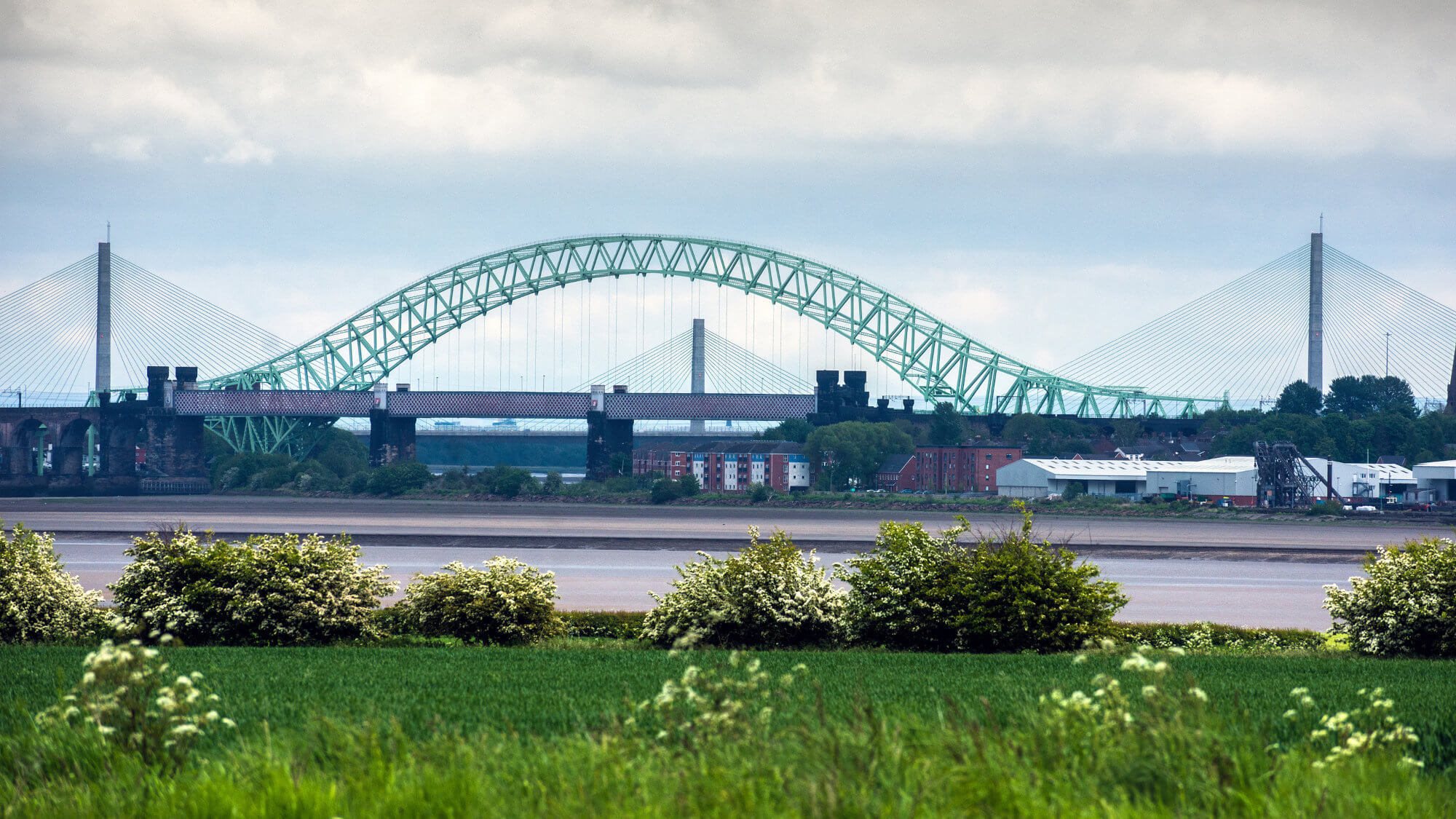
The podcast explores some incredible projects including the protection of a magnificent heritage structure, the Silver Jubilee Bridge, in northwest England. Originally known as the Runcorn-Widnes Bridge it was designed by Mott, Hay & Anderson in the 1950s and was completed in 1961. The original engineers James Kenneth Anderson and Vernon Bartlett could not have predicted a trend that came in after it was built: this was the use of de-icing salts. The chlorides in these went on to attack the concrete piers leading to corrosion of the steel reinforcement.
To save the structure Mott MacDonald had the novel idea of applying cathodic protection to the piers and bridge deck. The work was a great success, winning awards all over the world.
Listen now to find out more and hear from our experts: head of materials and corrosion technology Paul Lambert, divisional director Ray Langley, senior associate for materials Rudi Merola and graduate materials engineer Sairah Qureshi.
In 1924 Basil Mott highlighted the social progress enabled by infrastructure. His projects are still delivering value, showing why we need a long-term view of the infrastructure we build today, argues James Harris.
100 years ago Basil Mott put London’s transport at the heart of his ICE presidential address. 2024 president for the Chartered Institute of Highways & Transportation, Professor Glenn Lyons, considers what has changed since that speech.
Mott MacDonald has signed the advance market commitment (AMC) for next generation low carbon concrete, joining a coalition led by Innovate UK to accelerate the UK’s transition to net zero in construction and infrastructure.
Mott MacDonald has appointed Andy Clarke as development manager, UK and Europe for its Heavy Civil Infrastructure (HCI) division.
James Harris, group executive chair, Mott MacDonald, this week was signatory to an open letter to MPs in support of the UK governments Planning and Infrastructure Bill.
Our design expertise and seamless digital collaboration are ensuring the Sellafield site will continue to benefit from effluent treatment that reduces risk from high-hazard nuclear material.
The next generation of offshore wind turbines will be much bigger and more powerful than any of today’s models – and they’ll float.
The UK government’s target for making the energy system greener, more diverse and more resilient requires an ambitious programme of wind farm construction, alongside new transmission infrastructure.
Tideway is spending more than £4bn to build a 25km tunnel that will divert flows away from the river and convey them to a treatment works.
Our virtual library of standardised construction components has more than halved modelling and drawing time, delivering £3M in savings, while improving consistency and quality.
Digital innovations have radically accelerated the modelling and analysis of dynamic interactions between trains, track and rail structures on the UK’s High Speed 2.
Where the UK’s new HS2 high speed route crosses three existing lines, the operational line was closed for ‘offline’ construction of the new bridges, which were then moved into position in just hours.
Technological innovation was central to our role as lead designer on the £1.1bn scheme to extend the Northern Line by 3km.
More than £1bn will be spent on railway improvements between 2014 and 2022 in the North of England. One of these ‘Great North Rail Projects’ is the Ordsall Chord.
As one of BAA’s first-tier integrated suppliers, we were the design engineer for the $5.7 billion (£4.2 billion) project’s substructures and foundations.
Receive our expert insights on issues that transform business, increase sustainability and improve lives.