
Technology drives creativity and quicker, more cost-effective projects. A step change for our industry.
See how we connect innovation to outcomes.
Expert insights on issues that transform business, increase sustainability and improve lives
Here’s a snapshot of what we’re thinking about. Explore these highlights or view the full library to dive deeper into the ideas shaping our work.
Meet some of our passionate problem-solvers, constructive creatives and inspiring innovators
The risk of adverse impacts due to climate change is a growing challenge for NHS organisations, with the potential to disrupt services, damage facilities, and limit patient outcomes.
In 2025, NHS England published its Climate Adaptation Framework, tailored to the needs of the healthcare sector.
Watch our recent webinar to learn more about how Mott MacDonald’s expert team is helping NHS organisations to take informed and effective steps toward improved climate resilience.
Growing climate risk jeopardises healthcare outcomes. Our recent webinar explored how NHS organisations can utilise the NHS Climate Adaptation Framework and take practical steps to improve their resilience.
The impacts of climate change are placing a significant strain on the UK's healthcare system. From worsening climate shocks, such as increasingly severe storms, through to chronic impacts like prolonged periods of higher temperatures, the facilities and operational resources the NHS depends on are at risk. Research by the Royal College of Physicians indicates that a growing number of clinical staff are concerned about climate risk, with 90% of hospitals at risk of heat stress.
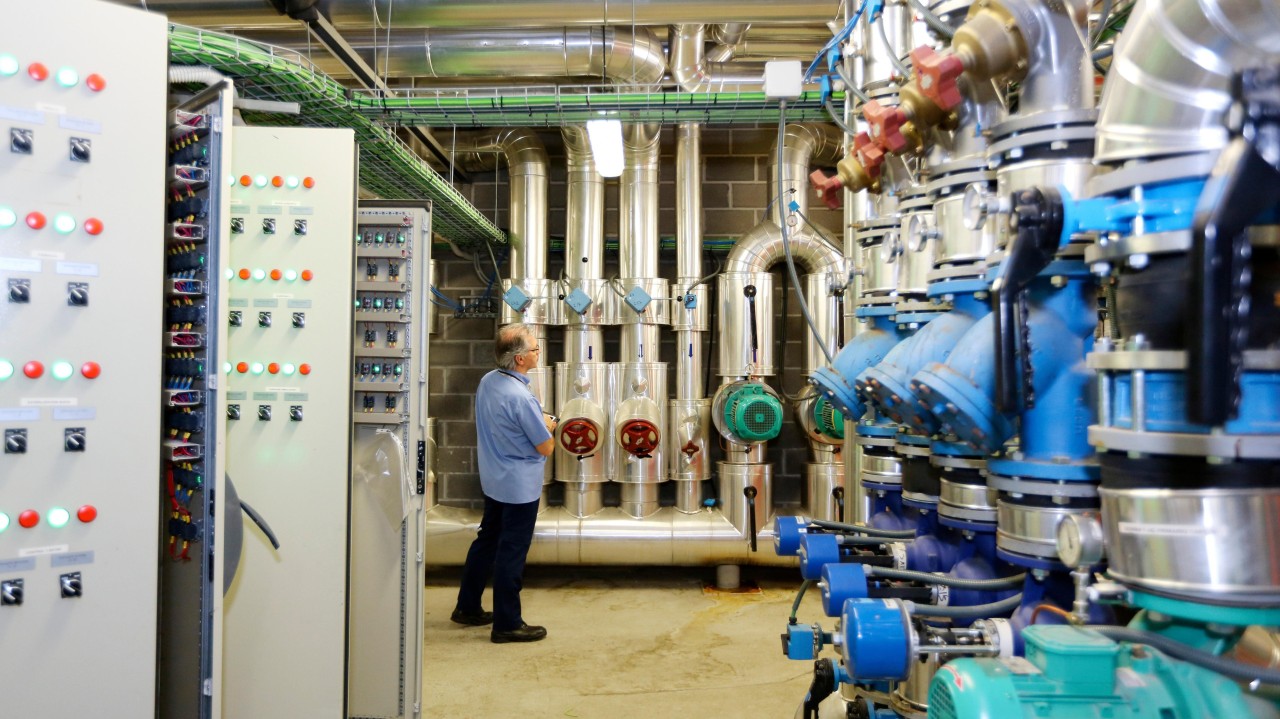
Successful adaptation is vital to protect patient outcomes now and in the long-term.
To address this growing challenge, earlier this year, NHS England published its Climate Adaptation Framework. Designed to meet the specific needs of NHS organisations, the Climate Adaptation Framework provides resources, tools and guidance to improve the resilience of health services in the UK.
Mott MacDonald’s recent webinar explored how NHS organisations can utilise the Climate Adaptation Framework to design, develop and implement best-practice plans.
Led by Mott MacDonald’s climate resilience and healthcare experts, we shared insights to help more healthcare professionals work toward a more climate resilient future. We know that every organisation has a unique context and challenges, so our webinar also explored practical advice to help more NHS organisations to review and target improvement in their capacity to achieve better adaptation, progressing through a maturity model.
NHS England’s Climate Adaptation Framework and its resources were funded by NHS England and NHS Greater Manchester, led by NHS England North West, North East and Yorkshire, and NHS Greater Manchester, and delivered by Verture and Sustainability West Midlands, with collaboration from a range of NHS colleagues, to support NHS organisations to adapt to climate change.
Mott MacDonald is supporting NHS organisations to explore the risks resulting from climate change, and develop and implement best-practice approaches to establishing robust climate adaptation and resilience plans tailored to the unique needs of the healthcare sector.
UK
Jonny Krzyzosiak
Climate resilience technical excellence lead
Delivering decarbonisation fairer and faster was the theme of Carbon Crunch 2025 in London this autumn. Keynote speaker Nigel Topping, the new chair of the Climate Change Committee, along with other speakers at the event explored why fairer matters and how going faster is critical to competitiveness.
In 2023, Mott MacDonald’s report Zero Emissions English Airports: Target Further Analysis, produced for the Department for Transport, explored the commercial feasibility of decarbonising airport operations across England.
How Port of Dover is leading the way on the drive to net zero was presented at Carbon Crunch 2025 in London and the session explored why decarbonisation strategies must be translated into tangible activities.
Government has set out a Clean Power 2030 plan to decarbonise the electricity sector. But there is more to reaching this target in a fast and fair way than just finance, technology and infrastructure, according to speakers at Carbon Crunch 2025 in London.
Energy-intensive infrastructure organisations are optimistic about the net zero transition but are calling for government support on alternative fuels and faster grid connections.
100 years ago Basil Mott put London’s transport at the heart of his ICE presidential address. 2024 president for the Chartered Institute of Highways & Transportation, Professor Glenn Lyons, considers what has changed since that speech.
Mott MacDonald, in partnership with CAG Consultants, has been appointed by Cambridgeshire County Council to develop a comprehensive local area energy plan (LAEP), creating a roadmap for the region’s transition to a low-carbon energy system.
A groundbreaking major project featuring pioneering technology to protect Leeds and surrounding areas from the risk of extreme flooding is now complete following support from a joint venture partnership between Mott MacDonald and BAM Nuttall.
Mott MacDonald has been appointed to the Welsh Government’s new Electric Vehicle Charging Infrastructure (EVCI) four-year framework that will support its ambition to ensure all electric vehicle users can access charge points easily.
Systems thinking enabled better stakeholder and asset owner collaboration to identify and act on shared climate risk in London.
Mott MacDonald has collaborated with Equitix, a leading global investor, developer, and fund manager of core infrastructure assets, to undertake a comprehensive Physical Climate Risk Assessment (PCRA) for its portfolio.
As a leading and trusted supplier on the Environment Agency’s Client Support Framework, we play a pivotal role in mitigating flood and coastal erosion risks while advancing the Environment Agency's net-zero aspirations.