




What fairer and faster means in practice for decarbonisation
Achieving a fairer transition is essential for maintaining public and business support for net zero policies.
The responsibility for a fair and fast transition extends beyond policymakers to everyone in the infrastructure and built environment sector.
Nigel Topping urged businesses to adopt emerging technologies and continue innovating to stay ahead on both profitability and net zero.
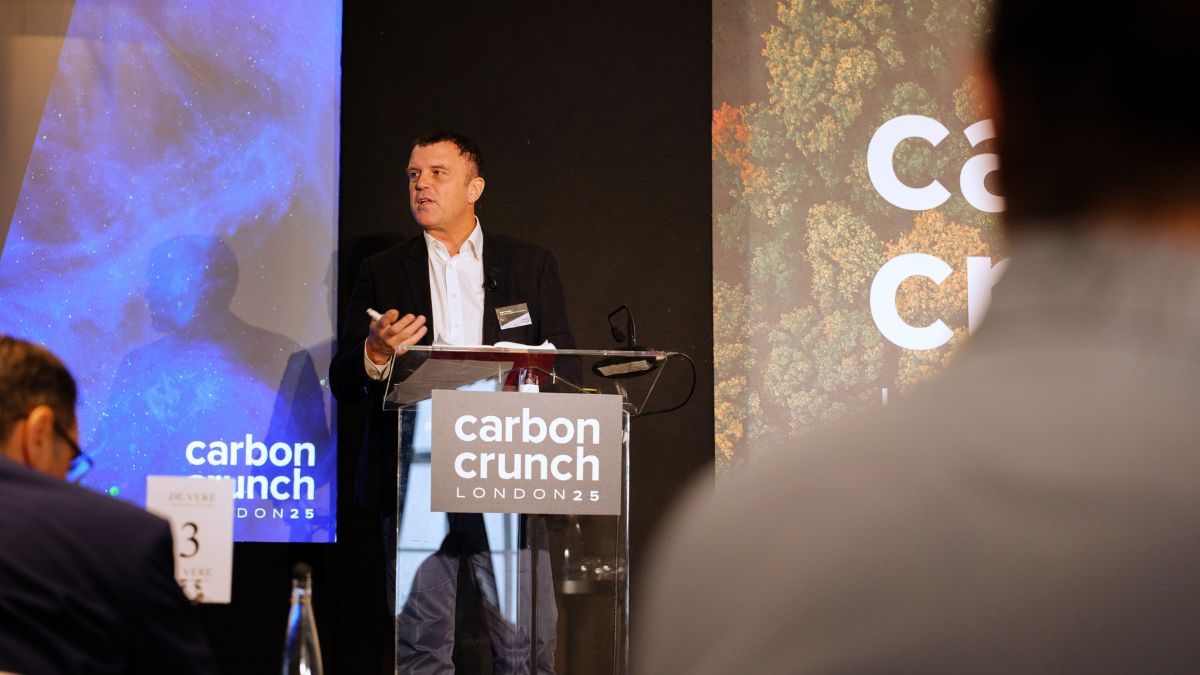
Delivering decarbonisation fairer and faster was the theme of Carbon Crunch 2025 in London this autumn. Keynote speaker Nigel Topping, the new chair of the Climate Change Committee, along with other speakers at the event explored why fairer matters and how going faster is critical to competitiveness.
“Today decarbonisation is bringing more than mitigation of the effects of climate change. It is creating improved public health, stimulating growth, generating quality jobs, bringing the prospect of lower energy prices and improved energy security, as well as reducing financial and social inequality,” Mott MacDonald UK and Europe managing director and member of the executive board Richard Risdon told the Carbon Crunch audience in his opening address which set the scene on the fairer and faster theme.
“The launch of Carbon Crunch in 2013 was about ‘why’ decarbonisation matters before later events moved onto what it means to make a change and ‘how’ that change might come about. In the last couple of years it has been about the ‘so what’ and considering what other benefits we can create on the drive to net zero. Focusing on how we unlock and deliver those co-benefits will take away the argument from people who still don’t believe in climate change or the value of addressing it.”
According to Richard, these co-benefits are key to ensuring a fairer transition goes hand in hand with a faster transition too.
Understanding the practical challenge
Ensuring both a fast and fair transition to net zero was the focus for Carbon Crunch keynote speaker Nigel Topping, who moved into the role as chair of the Climate Change Committee (CCC) in summer 2025. Having served as the UN’s climate change high-level champion for COP26 and as the UNFCCC’s global ambassador on the “Race to Zero” and the “Race to Resilience”, as well as having nearly 20 years’ experience in the private sector, he brings practical experience to the CCC role. He told the Carbon Crunch audience that also gave him insight into what it means to deliver more fairly, as well as focus on making the drive to net zero happen faster.
“The first half of my career was in running manufacturing businesses in the north of England and then globally,” he explained to demonstrate his grounded understanding of fairness. “While there is an ethical dimension to fairness, the pragmatic view of it really affects the permission which businesses and citizens give to government to steer the net zero transition. Clearly fairness is partly down to perception but if we get that wrong then you lose permission.”
The point around consent was also raised by Electrify Britain director of policy and advocacy Ben Westerman in his presentation at the event. “There is a real feeling currently that the transition is not benefitting people and it is being done to them, rather than for people,” he said. “If we lose the public’s political consent, then the transition is in peril. It’s not just about physics or finance, it’s about the political economy of the net zero transition.”
Policy focus needed
In the UK, Nigel believed there was still broad support for action on climate change but also cautioned that this continued support depends on the detail of policies around decarbonisation.
The CCC has supported government to navigate this fairness challenge by looking at the distributional impacts of likely bundles of policy to drive net zero, particularly around the cost of living on different demographics and household types. “This is really valuable research and it underpins the technological pathways to net zero with social science,” explained Nigel.
“We also convened citizen panels to really understand what people are thinking about the transition. This is where the need for a sense of fairness came out really clearly. There is a strong sense that polluter pays is a good idea, so those flying a lot should pay for the damage it causes and those burning a lot of gas should also address the impact. However, there is a flip side to that which impacts on fairness which means those that haven’t really caused a problem are also penalised, such as the family taking a holiday abroad once every few years.”
While there is a need for fairness, Nigel also pointed to the risks that come from the effects of climate change as a real reason to go faster. He added: “We are seeing evidence of that risk now with fires, droughts and more intense rainfall. This is a negative reason to go faster but there is a positive reason too – competitiveness.”
Nigel said that the infrastructure and built environment sector, along with other industries in the UK, should look at how it has redrawn the baseline over the last 10 years and driven change with growth in renewables and new technologies that we could not have conceived a decade ago. In that time the impacts of climate change have worsened but he urged business to continue innovating as that will not only address those impacts but ensure businesses remain competitive.
Fairness matters in terms of keeping hearts and minds on board and that will matter to our ability to go faster on the journey to net zero.Nigel Topping
Investing in new technology
Pointing to emerging technologies like hydrogen, geothermal, green cement and green steel, Nigel called for businesses to look at how to use these technologies today. “These are all still at the early stages but we need businesses to start to incorporate them into their work to stay ahead of the curve and make them part of the capex case,” he said.
“Making a top line case for investing in research and development is much easier if the business case focuses on how it will grow the business rather than just how it will save money.”
In conclusion, Nigel added: “Fairness matters in terms of keeping hearts and minds on board and that will matter to our ability to go faster on the journey to net zero. Going faster is essential as we are reaching the tipping point zone and we need to understand the impact on our daily lives and limited ability of technologies we currently have to mitigate if we go beyond the 1.5C increase in temperatures.”
The key message from all the speakers at Carbon Crunch 2025 in London was that climate change science isn’t going to change, so if businesses want to see a competitive advantage, they need to continue to innovate. Done well, this business success can translate into the societal benefits that are critical to making the transition to net zero fairer too.
Nigel’s message went a step further to underline that the responsibility for change extends beyond policy makers and industry leaders. He called for everyone in the infrastructure and built environment sector to play a role in delivering decarbonisation more quickly but to also factor fairness into that effort too.


Subscribe for exclusive updates
Receive our expert insights on issues that transform business, increase sustainability and improve lives.