




Why industry collaboration is vital to widen potential for nuclear powered data centres
The demand for data centres in the UK is expected to increase six-fold over the next decade, prompting interest in using nuclear power to meet this growing energy need sustainably.
Co-locating nuclear power stations with data centres presents legislative and logistical challenges, particularly around planning policy, population density and proximity to end users.
Industry collaboration is needed to provide research and evidence that could lead to future policy changes, potentially enabling nuclear power stations to be safely located near high-demand data centre sites.
Demand for data centres is growing and using nuclear reactors to power them is one way to ensure the increased energy consumption doesn’t affect the UK’s ability to deliver on net zero, while creating wider community benefits. Mott MacDonald development director for civil nuclear, Lewis McVey, outlines the challenges that need to be addressed to make the two technologies come together.
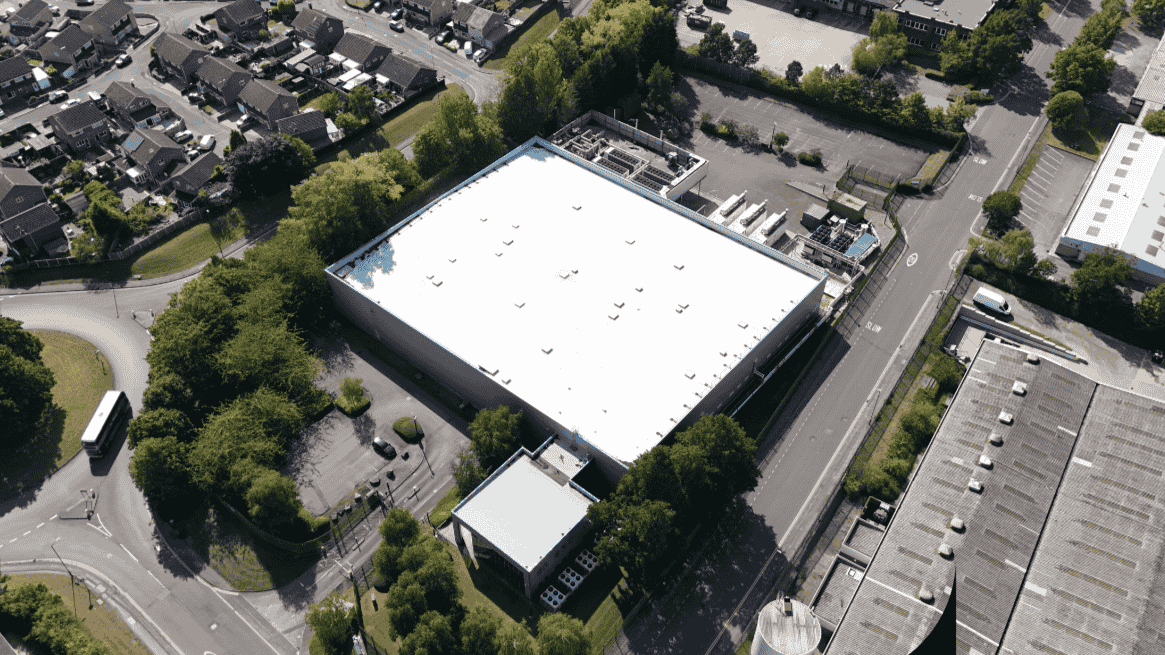
National Grid has forecast that energy demand from commercial data centres will increase six-fold over the next 10 years. When that growth is put in context of the number of data centres already in operation in the UK – a total of 523 – the scale of that energy demand becomes clear.
Given this expected increase, it is not surprising that hyperscalers such as Google, Meta and Amazon Web Services are looking to nuclear power; but co-locating nuclear power stations, whether conventional plants or small modular reactors (SMRs), with data centres requires careful consideration to overcome legislative hurdles. If these can be navigated successfully, the winners won’t only be the data centre owners and nuclear power developers – there are benefits for the communities around these new sites too.
Understanding the legislative landscape
Designation of the new EN-7 planning policy statement for nuclear energy generation last month created new potential for co-location. Nonetheless, it will not be as straightforward as the headlines earlier last year stating that EN-7 would enable nuclear sites to be built “anywhere across England and Wales” suggested when the consultation was launched.
The UK’s current 523 data centres are mostly located around London, yet the country’s existing nuclear power plants are situated more rurally and close to water to meet cooling needs.
The population density and the proximity to the end user will be key factors in determining whether a data centre can be co-located with a nuclear power facility. Other important local requirements will include grid connection, cooling requirements, transport and logistic infrastructure, environmental sensitivities and the ability to attract and retain a local workforce.
A sticking point for the “anywhere” approach comes down to the population density criteria. EN-7 transferred the role of determining whether a proposed site satisfies the Semi-Urban Population Density Criterion from the Office for Nuclear Regulation (ONR) to the Health and Safety Executive. However, the industry urged that the criteria of less than 1,000 people per square kilometre within a 30km radius of the nuclear power station should be reviewed.
Mott MacDonald’s expertise of applying previous planning policy statements to projects including Sizewell C, Hinkley Point C and nuclear defence work was critical to providing feedback to the consultation, particularly around addressing the population density issue.
Responses from the industry to the EN-7 consultation highlighted a collective view that new nuclear technologies could be safely located closer to more densely populated areas with 68% calling for the semi-urban criteria on population density to be relaxed. In response, the Department for Energy Security and Net Zero (DESNZ) said that there was not enough evidence to demonstrate that the risk is significantly different for new reactors and it was therefore prudent to stick with the historic criteria. However, EN-7 leaves the door open for future updates with a review promised every five years once more operational and underpinning evidence was available.
New nuclear technologies could be safely located closer to more densely populated areas with 68% calling for the semi-urban criteria on population density to be relaxed.
This presents the industry with a fantastic opportunity to collaborate on research that could widen the potential for nuclear power stations to be safely located alongside data centres in areas where demand is high for their services.
Nuclear power as a partner
SMRs in particular could be the perfect partner. Compared to traditional nuclear power stations, these reactors can be built with lower capital costs, shorter construction programmes, enhanced safety features and modular production. A typical SMR can generate around 300MW of consistent, carbon free, base load power and, like data centres, they can be developed in units, scaled up or down depending on demand.
Both data centres and nuclear power stations require cooling, which creates opportunities for thermal recovery. A 1GW data centre with an associated nuclear power plant could generate as much as 2.5GW of waste heat, enough to warm 300,000 homes. This could make a huge difference to deprived communities where the cost of heating takes up a large proportion of household income. Not only this, new clusters of data centres and power stations create jobs and secure massive inward investment, making them major regeneration catalysts. But maximising these benefits also requires collaboration between industry, local government and the communities affected.
With data centre owners looking to invest billions in the UK and renewed government commitment to nuclear power, the last 12 months has seen a lot of progress in this space; however, realising the full potential of this progress will call for industry collaboration to demonstrate that data centres can be powered safely and sustainably in the areas that need them most.
Sign-up here
Sign up for our Nuclear Know-How webinar series, designed for those who are solving nuclear’s biggest challenges. In February, March and April you can learn directly from Mott MacDonald specialists and clients as they share actionable approaches, new digital tools, and insights shaping the next generation of nuclear projects.
Register below to access all webinars and live discussions.


Subscribe for exclusive updates
Receive our expert insights on issues that transform business, increase sustainability and improve lives.