
Technology drives creativity and quicker, more cost-effective projects. A step change for our industry.
See how we connect innovation to outcomes.
Expert insights on issues that transform business, increase sustainability and improve lives
Here’s a snapshot of what we’re thinking about. Explore these highlights or view the full library to dive deeper into the ideas shaping our work.
Meet some of our passionate problem-solvers, constructive creatives and inspiring innovators
The Fengmiao Phase 1 Offshore Wind Farm (Fengmiao I) has successfully reached financial close, with Mott MacDonald supporting the project as lender’s technical advisor.
The project is a significant milestone for renewable energy in the country as the first of Taiwan’s Phase 3 offshore zonal development to achieve financial close and enter the construction phase. The Phase 3 offshore zonal development policy announced by the Ministry of Economic Affairs (MOEA) aims to add 15 GW of offshore wind capacity between 2026 and 2035.
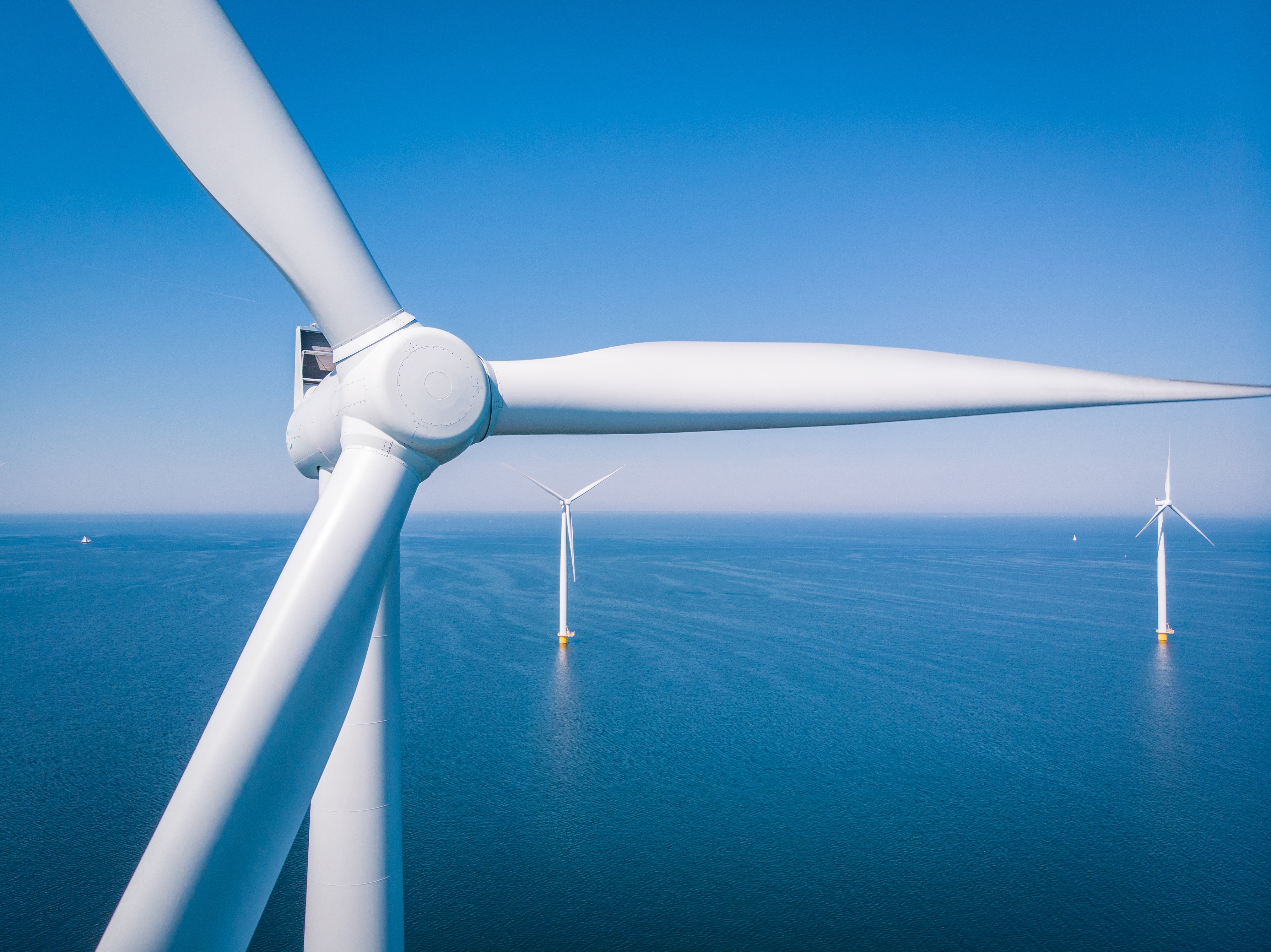
Located approximately 35 kilometres off the coast of Taichung City, the Fengmiao I will include 33 wind turbine generators with a total capacity of 495MW. Once operational, Fengmiao I will deliver a stable supply of renewable energy, moving Taiwan closer to its renewable energy targets.
Mott MacDonald’s extensive experience on offshore wind owner’s engineering and design projects globally, combined with deep local expertise and presence in Taiwan, was crucial for achieving a timely financial close. As lender’s technical advisor, Mott MacDonald was responsible for working closely with the Fengmiao I team over the course of a year and a half to rigorously and proactively identify risks and mitigations, avoiding costly delays to financial close.
Sam Carter, project manager and Mott MacDonald’s energy lead for Taiwan, said "Against a backdrop of globally challenging conditions for offshore wind over the past few years, Fengmiao I has developed a robust project that will make a significant contribution to advancing Taiwan's renewable energy targets. We look forward to continuing our support for the project during the construction phase."
The project now moves into the construction phase where Mott MacDonald will monitor the construction progress on behalf of the lenders.
Mott MacDonald’s energy sector leader for Asia, Philip Napier-Moore, explores the opportunities and challenges shaping ASEAN’s clean energy transition – and what must happen next.
Supporting the region’s journey to net zero and climate resilience is at the core of everything we do.
The responsible use of AI is paramount to bridging ASEAN’s digital divide and infrastructure deficit, unlocking sustainable growth and a brighter future for the region.
Mott MacDonald has acquired Merz Consulting, an Australian engineering and energy consultancy business specialising in power distribution, transmission and generation design and project delivery.
Jan will build on the consultancy’s rich history supporting offshore wind projects and providing integrated engineering and project management services across the project lifecycle.
James will help to deliver a net-zero offering across the Asia Pacific region, supporting clients as they develop and implement bespoke decarbonisation strategies, both in capital expenditure and operations, leveraging Mott MacDonald’s state of the art proprietary tools.
Mott MacDonald is lenders’ technical advisor on the project, working closely with Pattern Energy Group LP, Green Power Investment Corporation, and the lenders since 2020.
The Energy Policy and Planning Office (EPPO) of the Ministry of Energy in Thailand and the Government of the United Kingdom have jointly launched the Thailand 2050 Calculator, a bespoke energy and emissions model to assist Thailand in reducing greenhouse gas emissions in the country.
The Bulan Solar PV and battery energy storage system (BESS) is a landmark cross-border renewable energy initiative, delivering clean electricity from Indonesia to Singapore. It’s set to become one of Southeast Asia’s most ambitious green energy ventures.
Thailand’s climate goals are carbon neutrality by 2050, followed by net-zero greenhouse gas emissions by 2065. Carbon capture and storage (CCS) is one of the most promising pathways to achieving these targets.
The largest privately financed offshore wind energy project in Japan provides a model for others to follow as the country strives towards net zero.
Leading a feasibility study into large scale synthetic methane production required us to pull together a huge array of knowledge from our experts around the globe.
The Asian Development Bank unveiled its energy transition mechanism (ETM) at COP26. ETM is a blended-finance approach that seeks to accelerate the retirement of existing coal-fired power plants and replace them with clean power capacity.