




Green Cities and Infrastructure Programme

Project overview
Engineering cities for growth
Indonesia, Mozambique and Zambia all have infrastructure gaps that need to be plugged to support dynamic modern cities, which can drive economic growth. With growing urban populations, these countries need to build infrastructure capacity fast without sacrificing quality or long-term resilience.
Rigorous early planning and design will have a major impact on how well new and growing cities operate in future, their overall carbon footprint and whether they are livable places in 20 to 50 years’ time.
But like many low- and middle-income countries (LMICs), a shortage of infrastructure expertise in key areas, including transport, energy and the built environment, makes it difficult to develop and deliver a pipeline of investable projects.
25 countries across Asia and Africa have benefited
The Green Cities and Infrastructure Programme (GCIP) aims to leverage UK capabilities in cities and infrastructure development to support LMICs, largely in Asia and Africa, to deliver high-quality, climate resilient infrastructure.
As the partner with deep infrastructure development expertise on the UK aid-funded programme, Mott MacDonald is providing the governments of Indonesia, Mozambique, Zambia and a number of other LMICs with support to identify and prepare technically feasible projects with a clear business case, which can be delivered in line with international standards.
Working as part of an alliance led by PwC, we are channeling our best engineering and design expertise, digital capabilities, cross-sector coordination and climate know-how into this wide-ranging international development programme.
Integrated transport planning in Indonesia
Efficient, clean and safe public transport is critical for the future success of Indonesia’s cities. Road congestion causes mobility problems in and around major cities, which creates pollution, harms the productivity and wellbeing of the population and increases barriers to trade, tourism and economic growth.
GCIP is helping Indonesia’s regional governments to respond to immediate transport challenges as part of its ‘targeted offer’, while also developing longer-term urban mobility plans as part ‘deep offer’. Since September 2023, our transport experts have been providing early–stage analysis of the most practical and viable ways to improve public transport infrastructure.
Drawing on lessons from major UK transport projects and local experience delivering Jakarta’s mass rapid transit (MRT) system, we developed a feasibility study for a MRT system for Surabaya, the country’s second largest city.
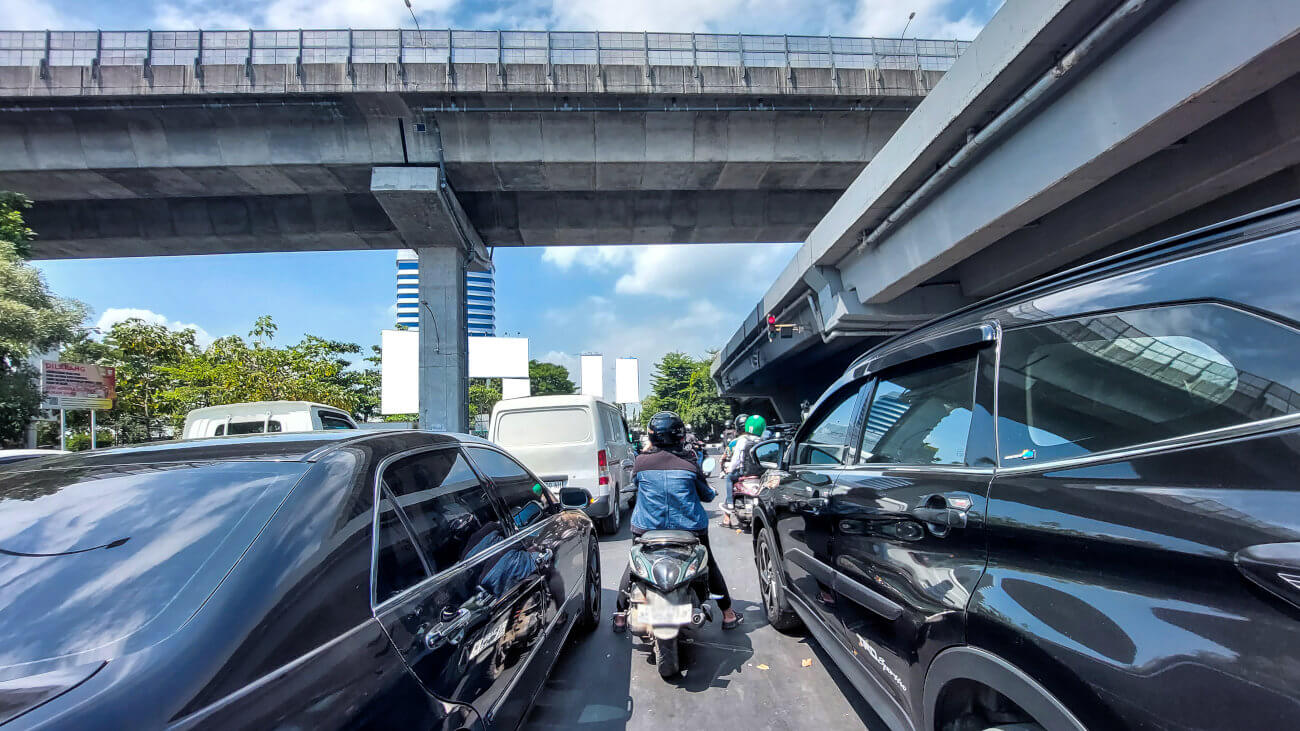
Other key work includes a transport study for Bali; a transport and mobility assessment of the Joglosemar Mobility Corridor between Jogya, Solo and Semarang; and flood risk assessments for multiple cities.
This work will be integrated into GCIP’s proposed ‘deep offer’ programme, which is focused on longer-term, systemic change. In each case, there is a strong focus on identifying projects that are technically feasible but also credible investments in the eyes of the national government and international funders.
By enabling UK infrastructure experts to play an early role in shaping infrastructure interventions at the start of the project lifecycle, GCIP has the potential to significantly improve the quality of outcomes.
For example, applying building information modelling leads to better project planning, leading to better cost and carbon estimations, and provides key stakeholders with greater transparency about project performance, leading to more informed decision-making.
Social inclusion and environmental impact are important criteria across all our work. For example, considering the broader environment in which transport systems are built can improve accessibility and affordability for all members of society. It can also mitigate negative impacts on local communities by building opportunities for people to increase the value of their land and by taking steps to reduce noise pollution.
City masterplanning in Mozambique
Mozambique’s coastal cities face the dual challenge of rapid urbanisation and the increasing threat of extreme weather events to people, property, the environment and the economy.
In cities that have developed without much centralised planning, such as Pemba, Nacala and Beira, there is a need for comprehensive urban masterplanning with a 20- to 50-year time horizon.
As part of GCIP’s ‘deep offer’, we have a particular focus on solid waste management, flood risk management and zonal planning, helping to prepare cities for climate disruptions through improved land use and creating better places to live and work.
For example, Nacala has many informal settlements that are usually flooded two or three times per year. By resettling these people in climate-resilient communities with reliable transport and communications networks, there is an opportunity to convert inner-city flood zones into attractive floodable parkland for people enjoy.
By taking a coordinated cross-sector approach, we can ensure water infrastructure and sanitation systems are integrated effectively within modern cities, helping to prepare for climate events, such as floods and storm surges, and mitigate the impact to interconnected urban infrastructure and livelihoods.
200+ employees across Mott MacDonald have been involved in GCIP work
Promoting energy security in Zambia
Zambia faces an acute shortage of power and urgently needs to transform its energy sector, starting by diversifying away from hydropower. Water shortages mean its hydropower facilities are unable to generate enough power to meet demand and an inadequate distribution network limits who can access power.
GCIP’s ‘deep offer’ in Zambia is focused on the energy sector and will be rolled out in phases as credible solutions are implemented and tangible benefits are demonstrated. We will help the government to identify, assess and fast-track viable projects to bring new sources of energy onstream over the next 18 months.
Our energy team has a track record of developing cost-effective, grid-scale solar installations and connecting them into distribution networks in challenging environments. We will also advise the government on policy and regulatory interventions to improve the efficiency and climate-resilience of the electricity sector so it can support economic development.


Subscribe for exclusive updates
Receive our expert insights on issues that transform business, increase sustainability and improve lives.