




1924-2024: seeing the long-term value of infrastructure
Basil Mott was inaugurated as president of the Institution of Civil Engineers in November 1924, recognising his achievements and contribution to civil engineering
He drew on 40 years' experience developing London's transport systems to highlight lessons, challenges and opportunities that resonate today
He emphasised the importance of innovation for unlocking investment in infrastructure
Well-planned infrastructure was socially and economically transformative, and delivered lasting value, he said
In 1924 Basil Mott highlighted the social progress enabled by infrastructure
His projects are still delivering value, showing why we need a long-term view of the infrastructure we build today, argues James Harris.
A century ago, Britain was the world’s leading industrial powerhouse and trading hub. And with a population of 7.5M, London was the world’s largest city. The UK, especially its capital, was a hot house of engineering innovation and activity.
At the heart of it was Basil Mott, founder of the company that still proudly bears his name.
On 4 November 1924 Mott was inaugurated as president of the Institution of Civil Engineers. By then he had chalked up 40 years’ experience shaping the capital’s infrastructure – particularly its transport systems.
In his presidential speech he used that experience to draw out lessons, highlight challenges and identify potential opportunities applicable to civil engineers in all sectors and locations. They resonate today.
Mott showed keen awareness of the virtuous cycle between engineering innovation, investment in infrastructure, economic growth and social development.
Social and economic outcomes
Mott showed keen awareness of the virtuous cycle between engineering innovation, investment in infrastructure, economic growth and social development.
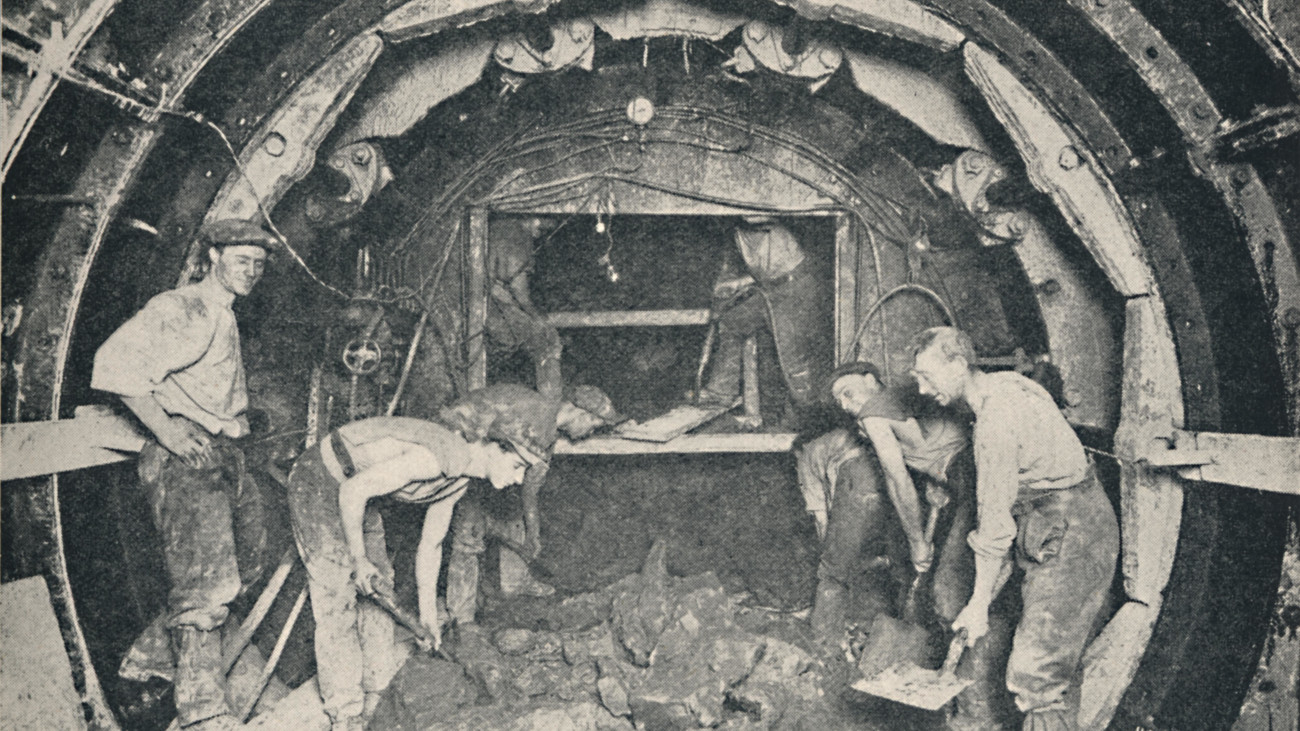
Advances such as the invention of the tunnelling shield by James Henry Greathead (who employed Mott in 1886 and became a mentor) unleashed underground construction and democratised transport.
“It is not really so very long ago since the only means of travelling from one part of London to another, for the vast majority of the population, was by walking,” Mott said.
It was only after the first deep level tube line was constructed using Greathead’s shield and opened in 1890 that mass transit for the majority became possible. The ‘two-penny tube’ was not only affordable, but clean: Mott himself was instrumental in specifying an electric traction system – the first ever for an underground railway.
Those innovations in tunnelling and electric traction ushered in a boom in metro construction that created a transport network that is still serving the economy and society.
Mott and his partners David Hay and David Anderson were tireless innovators, advancing the profession’s understanding of geotechnics and introducing new excavation and tunnelling techniques. They repeatedly developed ways to build more safely, more quickly and more cost-effectively.
Innovation by innovation, they persuaded developers and investors to back projects that had previously been thought impossible – major tunnels beneath estuaries and rivers, and in loose, variable and water-bearing ground.
A new golden age of innovation
Their quest for continuous improvement has been handed on through generations of Mott, Hay & Anderson and Mott MacDonald colleagues. A century after Mott’s presidential speech, information technology and data provide new ways to fill knowledge gaps, make sense of complexity and drive forward the performance of projects.
Using digital tools, systems and solutions, we are now more able than ever before to optimise outcomes by delivering the right projects in the right way, and by monitoring them once they are in use. This is an opportunity our industry must seize responsibly and swiftly.
Today, engineering has entered a new golden age of innovation, with digital tools, systems and solutions presenting us with the opportunity to vastly improve productivity both in how projects are delivered, and in how they serve the economy, the environment and society.
Through their use, we are now more able than ever before to optimise outcomes by delivering the right projects in the right way, and by monitoring them once they are in use. And this is an opportunity our industry must seize responsibly and swiftly.
Familiar challenges
But in his presidential address Mott called attention to challenges that are as critical today as they were a century ago.
He stressed the importance of broad-based collaboration. Without building and nurturing collaborative relationships between project stakeholders – politicians, developers, investors, special interest groups and citizens – it was difficult to build an effective business case for new projects, secure investment and win approvals, he noted. Failure to recruit support and align interests meant many potentially good projects never stood a chance of succeeding.
Mott also noted the need for collaboration to achieve integration between systems. He lamented the piecemeal development of London’s rail and tube lines, rather than as an integrated network. With well-planned route-coverage and user-friendly interchanges, London’s rail network could have served the capital’s economy and citizens better.
These points should remain front-of-mind for all involved in planning, delivering and managing infrastructure systems in the present day.
Lasting value
In 2024, the population of Greater London is approximately 9M – only 1.5M more than in Mott’s day. He charted the transformative effect of modern transport: the annual number of passenger journeys mushroomed from 220M across all modes in 1880 to 2.6bn in 1923, “nearly 1,000 millions more than the estimated total inhabitants of the world”. In 2023 the total number of journeys in London was 3.3bn.
Many of those journeys were made using infrastructure developed by Mott and his contemporaries. The long view from now to then reveals the social, economic and environmental value derived from investments in infrastructure made over 100 years ago.
It is reminder that we should take a long view of what we build now.
From transport to energy, water, buildings, flood protection, communications and wastewater infrastructure, the projects and programmes that Mott MacDonald is guiding from inception to operation all over the world will see many decades of service and deliver value long into the future.
About the author


Subscribe for exclusive updates
Receive our expert insights on issues that transform business, increase sustainability and improve lives.