
Expert insights on issues that transform business, increase sustainability and improve lives
Here’s a snapshot of what we’re thinking about. Explore these highlights or view the full library to dive deeper into the ideas shaping our work.
Meet some of our passionate problem-solvers, constructive creatives and inspiring innovators
In 2023, Mott MacDonald’s report Zero Emissions English Airports: Target Further Analysis, produced for the Department for Transport, explored the commercial feasibility of decarbonising airport operations across England. The analysis moved beyond technical readiness to focus on the real-world investment and policy challenges that will shape the sector’s journey to zero.
While the technology to decarbonise ground-based airport operations, such as electric vehicles, heat pumps, and battery-powered ground support, is largely available or within reach by 2040, the real hurdle is commercial. Airports face significant uncertainty around the costs, timing, and financing of the asset upgrades and infrastructure required. Fragmented responsibilities and inconsistent emissions reporting further complicate the picture, making it difficult for airports to plan and prioritise action.
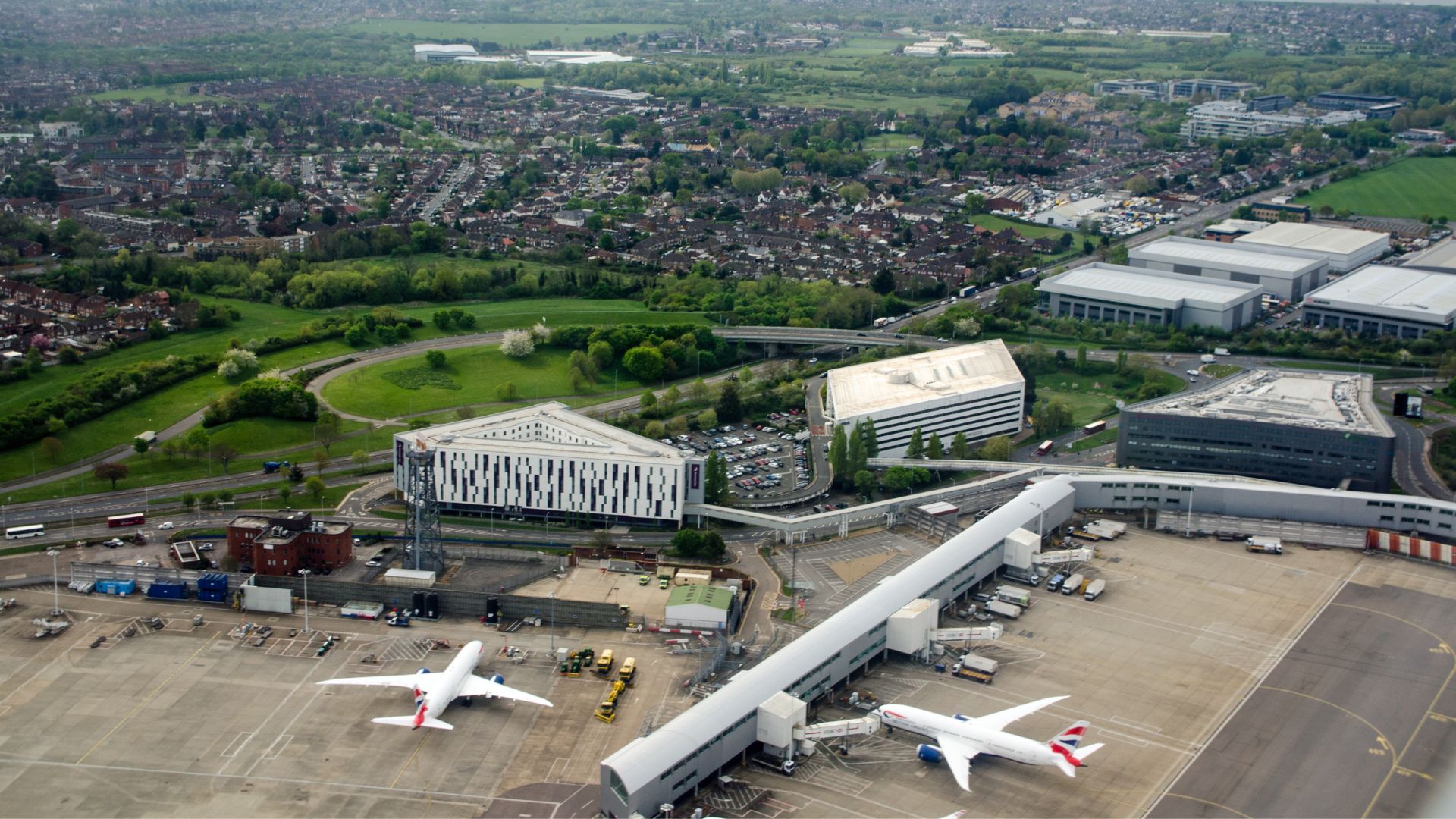
Analysis shows that more than half of emissions reductions could be achieved at close to zero net cost. Some of these reductions will be contingent on a capital programme of asset replacements requiring high expenditure up front. Electrification is the fastest route to progress, with switching to electric vehicles, electrifying heating, and battery-powered ground support for aircraft also offering immediate and proven pathways to cut emissions.
Data and accountability matter. Inconsistent reporting and split responsibilities between airport operators and third parties make it hard to track progress and allocate costs. A unified, whole-airport approach to emissions measurement and accountability is essential. Policy support is also critical. To unlock investment and avoid market distortions, government action is needed.
Decarbonising airport operations by 2040 is commercially feasible for much of the sector, but it won’t happen by accident. It will require coordinated action, smart policy, and a willingness to invest for the long term. Airports, government, and industry partners must work together to turn ambition into reality.
Download the full Zero Emissions English Airports: Target Further Analysis report to explore in more detail our modelling and findings.
Delivering decarbonisation fairer and faster was the theme of Carbon Crunch 2025 in London this autumn. Keynote speaker Nigel Topping, the new chair of the Climate Change Committee, along with other speakers at the event explored why fairer matters and how going faster is critical to competitiveness.
How Port of Dover is leading the way on the drive to net zero was presented at Carbon Crunch 2025 in London and the session explored why decarbonisation strategies must be translated into tangible activities.
Government has set out a Clean Power 2030 plan to decarbonise the electricity sector. But there is more to reaching this target in a fast and fair way than just finance, technology and infrastructure, according to speakers at Carbon Crunch 2025 in London.
Mott MacDonald’s recent webinar explored how NHS organisations can utilise the Climate Adaptation Framework to design, develop and implement best-practice plans.
Energy-intensive infrastructure organisations are optimistic about the net zero transition but are calling for government support on alternative fuels and faster grid connections.
Mott MacDonald has been appointed as Airports Masterplan Framework consultant by Matarat Holding to advise on airport development across Saudi Arabia.
Mott MacDonald, in partnership with CAG Consultants, has been appointed by Cambridgeshire County Council to develop a comprehensive local area energy plan (LAEP), creating a roadmap for the region’s transition to a low-carbon energy system.
Belfast International Airport has opened a new terminal extension, marking the completion of the first phase of its £100M, five-year investment programme.
A groundbreaking major project featuring pioneering technology to protect Leeds and surrounding areas from the risk of extreme flooding is now complete following support from a joint venture partnership between Mott MacDonald and BAM Nuttall.
The consultancy firm will provide owner's engineering and advisory services to Giga Storage on the Leopard Project in the Netherlands.
Gasunie manages and maintains the infrastructure for large-scale transport and storage of gas in the Netherlands and the northern part of Germany.
Mott MacDonald has been awarded a project on ‘Enabling Private Sector Engagement in Adaptation’ by the World Bank. The project will support the Government of Turkey in mobilising private capital for climate resilient investments.
Mott MacDonald has been appointed partner consultant, alongside lead consultant Royal HaskoningDHV, to produce an environmental impact assessment report (EIAR) and a natural impact statement (NIS) for the proposed 1GW floating offshore wind, Inis Ealga Marine Energy Park.
Mott MacDonald is working as Power 2 Gas solutions contractor to the North Sea Wind Power Hub (NSWPH) Programme consortium1 and supporting their ambitious approach to integrating renewable energy in northern Europe.
Mott MacDonald has been appointed by the NortH2 Consortium1 as its technical integration and optimisation contractor for the NortH2 project, a global flagship project for large scale green hydrogen production and the largest hydrogen project in Europe.
Systems thinking enabled better stakeholder and asset owner collaboration to identify and act on shared climate risk in London.
Advanced computer modelling – including bespoke systems – enabled us to evaluate all the options for a technically challenging project to expand Albania’s hydropower capacity.
Receive our expert insights on issues that transform business, increase sustainability and improve lives.