




NSPCC calls on property sector to embed children’s safety into placemaking
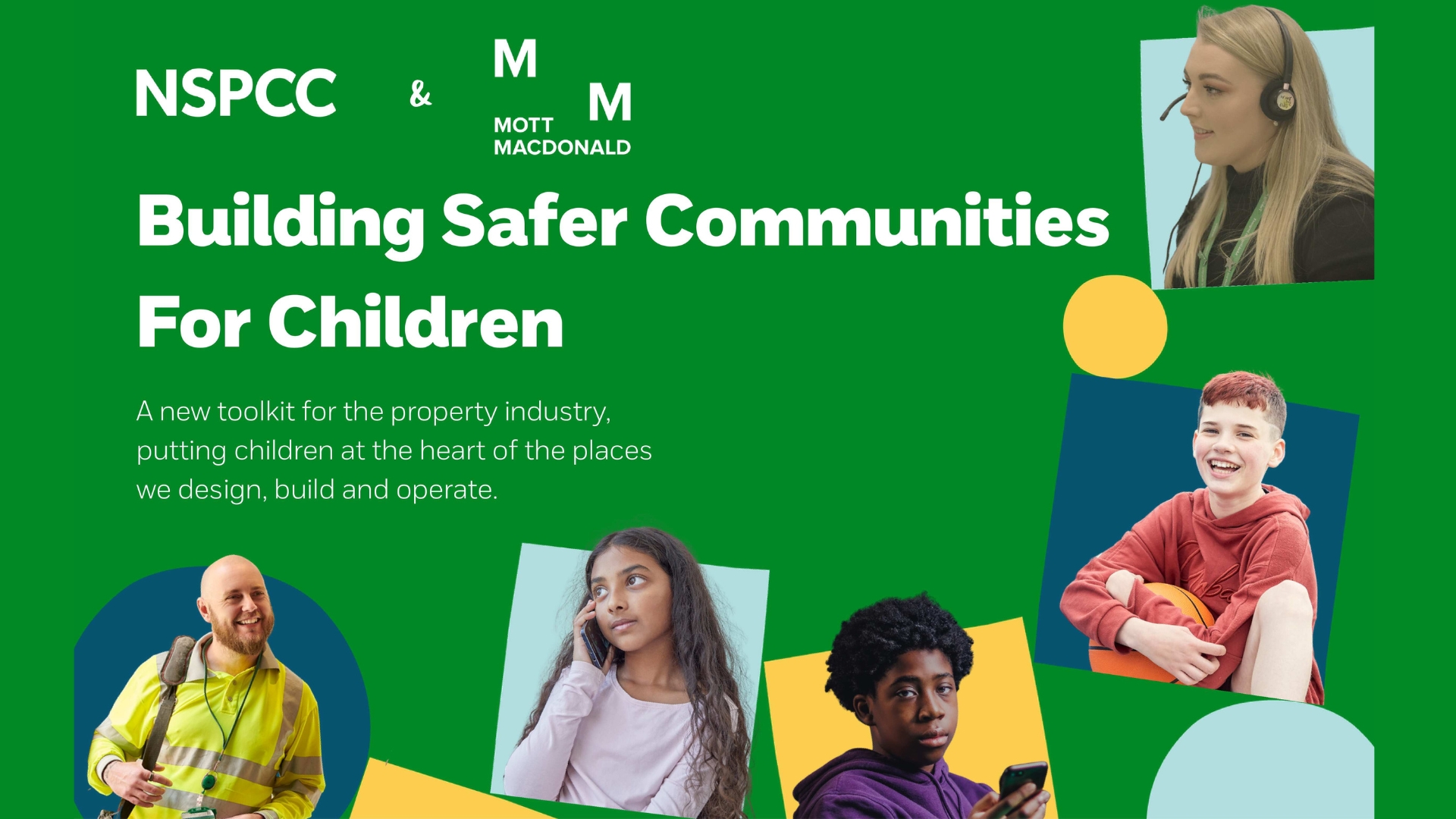
The NSPCC, in partnership with Mott MacDonald has published a major new report ‘Building Safer Communities for Children’, sponsored by Related Argent, calling on the property sector to make children’s safety a core principle of how places are designed, built and managed.
The report, co-authored by Mott MacDonald presents clear evidence that the built environment has a profound impact on children’s safety, well-being and sense of belonging. With more than 14M children and young people in the UK, it argues that developers, owners and operators play a critical role in reducing risk and preventing predictable harm.
Mott MacDonald took a systems-based approach to tackling the issues in the report, applying The Royal Institute of British Architects’ Inclusive Design Overlay structure throughout and taking a systems thinking approach to structure the output and recommendations, as the built environment affects a whole range of factors that have indirect impacts on children's safety.
Related Argent’s 180-acre Brent Cross Town regeneration project in north London features as a case study within the report, demonstrating how child-friendly design, stable housing, operational management and long-term governance can be embedded from the outset of a major mixed-use development. At Brent Cross Town, this includes delivering high-quality homes, 50 acres of parks and playing fields, designed with children at their heart, walkable streets, active ground floors and visible signals of care and oversight. Brent Cross Town’s Flourishing Index, referenced in the report, provides a measurable framework for tracking community wellbeing over time, including outcomes for children.
Key findings
The report sets out a practical framework for embedding safeguarding across the full lifecycle of development and long-term management. It identifies six causal pathways through which everyday decisions shape children’s safety and wellbeing – and clarifies who is responsible at each stage of the development and management lifecycle:
1. Housing Quality and Stability
Stable, good-quality homes reduce stress, improve health outcomes and lower safeguarding risk. Developers, housing providers, asset managers and local authorities are responsible for ensuring safe standards, secure tenure and long-term management.
2. Operational Practice
Day-to-day management of homes, streets and shared spaces shapes children’s lived experience of safety. Housing providers, asset managers, contractors and local authorities play a critical role in maintaining visible standards of care, rapid response and community trust.
3. Child-Friendly Design
The layout of streets, public realm, play spaces and active frontages influences children’s independence and sense of belonging. Developers, design professionals and planning authorities collectively shape neighbourhood form and quality.
4. Child Participation and Lived Experience
Children and young people must be visible in decision-making processes. Developers, local authorities, youth services and community organisations are responsible for creating meaningful mechanisms for engagement.
5. Evidence-Led Governance and Accountability
Clear governance structures, measurable standards and shared data improve early risk identification and long-term resilience. Owners, boards, asset managers and public bodies must embed safeguarding into oversight and reporting frameworks.
6. Contextual Safeguarding
Children’s safety is shaped not only by individual homes but by wider social and environmental factors. Collaboration between developers, local authorities, schools, health services, housing providers and the NSPCC strengthens protective systems around children.
The report finds that safeguarding failures are rarely the result of a single design flaw. Instead, they arise from fragmented responsibilities across these pathways. Stronger coordination between those shaping place, managing place, supporting children and shaping community reduces risk and improves outcomes.
Aligned with the RIBA design cycle, the report shows how child safety can be integrated from early strategy through to operation and stewardship, supported by clear accountability and measurable standards, with eight measures of success to help organisations track progress and ensure safeguarding is embedded consistently.
The built environment and property sector play a vital role in shaping safe, accessible and nurturing spaces where children can thrive.
James Beard, global lead for social outcomes at Mott MacDonald, added:
“The built environment and property sector play a vital role in shaping safe, accessible and nurturing spaces where children can thrive. As the places children live, learn and explore become increasingly complex, it is essential that those who design, build and manage them take proactive steps to include children and their needs at every stage of development.
“Mott MacDonald is proud to have developed the ‘Building Safer Communities for Children’ paper in collaboration with the NSPCC. It reflects our purpose: to use our expertise for the benefits of our clients and the communities they serve. Through the systems and environments that shape their daily experience, it will help ensure that every child can grow up in supportive, inclusive and resilient communities. We are confident it will help organisations put children’s safety and wellbeing at the heart of decision‑making.”
Chris Sherwood, ceo of the NSPCC, said:
“The property sector has the power to shape the environments children grow up in. Progress depends on embedding children’s safety into everyday practice, consistently and for the long term.
“In this paper we set out a clear call to action to every professional in the built environment: partner with the NSPCC - through small interventions or large - to ensure children’s safety is at the heart of the spaces you design, build and operate.”
Morwenna Hall, executive director, chief operating officer, Related Argent, said: “As developers and long-term stewards of places such as Brent Cross Town, we shape the environments children grow up in. That responsibility extends far beyond planning and construction and allows us to maintain standards, strengthen accountability, and help embed safeguarding into everyday practice across the sector.
“By embedding these principles from the outset and measuring impact over time, we can create neighbourhoods that genuinely support families. We also have a responsibility to influence best practice within the supply chains we operate; if we act collectively, we can strive to reduce predictable harm and create places where every child can thrive.”
The report can be downloaded here: NSPCC Building Safer Communities for Children - Digital.


