




Transforming urban mobility in Singapore with the Thomson East Coast Line

Project overview
This project is part of a broader initiative to improve urban mobility and connectivity, aligning with Singapore's Land Transport Master Plan 2040 (LTMP 2040). Upon completion, TEL will provide convenience to about one million commuters daily and alleviate crowding on the East-West and North-South Lines.
Over the past 12 years, in collaboration with the Land Transport Authority (LTA) Singapore, we have served as the principal designer for five of the seven new stations:
- Tanjong Rhu Station, approximately 18m underground
- Founders Memorial Station
- Katong Park Station, approximately 28m underground
- Tanjong Katong Station
- Marine Parade Station
Four of these stations have recently opened for public use, with the remaining stations slated to open in 2028 as a part of the Founder Memorial Monumental Development, which commemorates Singapore’s first-generation leaders.
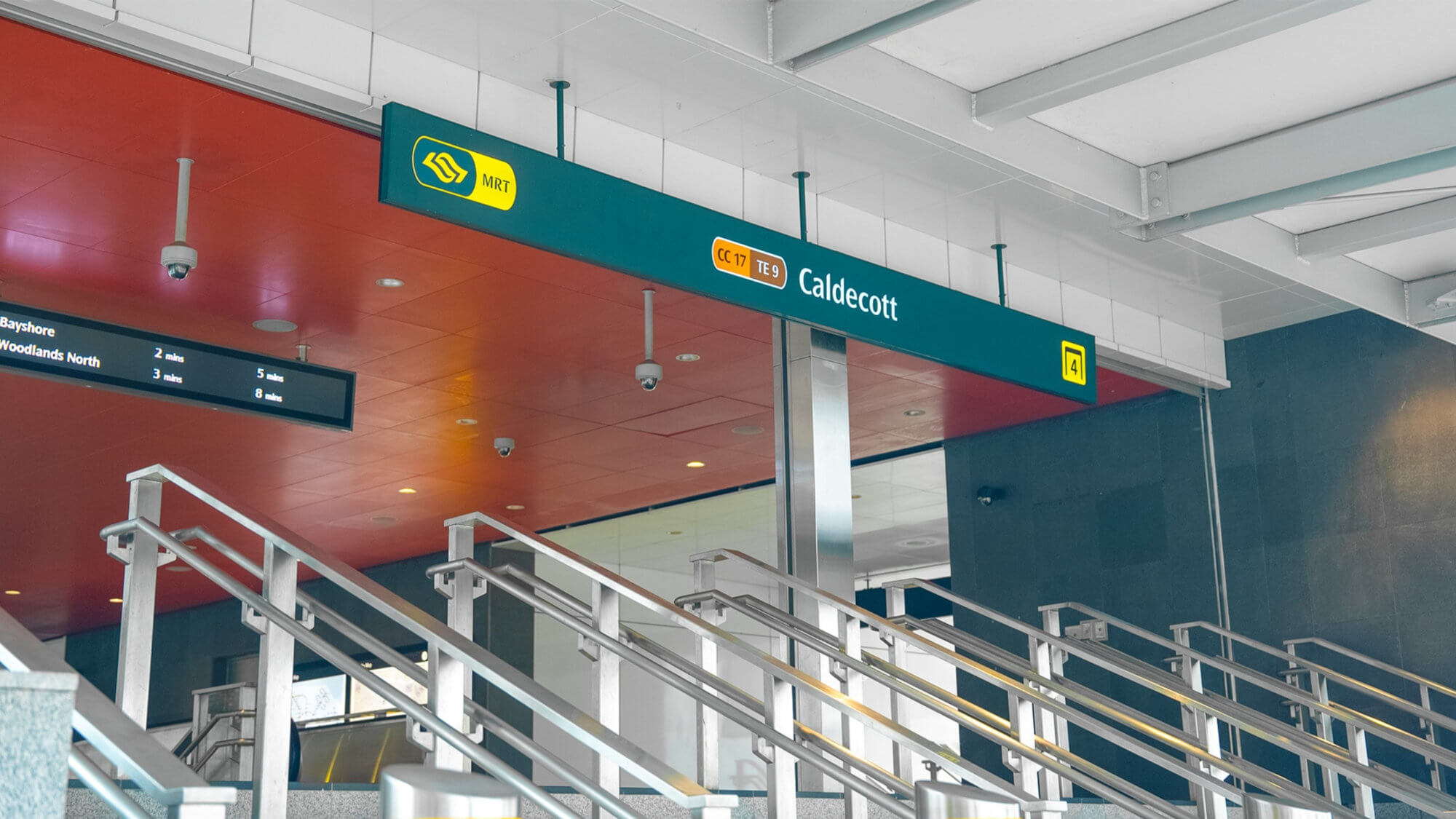
More than 300 of our team members have contributed to this highly technical and complex project, which will bring Singapore’s MRT within a 10-minute walk for 235,000 households and reduce travel time to the central business district (CBD) by half.
Scope of work
Our design responsibilities for Contract E1003 covered the stretch between Founder’s Memorial Station and Marine Parade Station, including:
- Three levels of underground structures,
- Five stations, connecting tunnels, entrances, and associated structures,
- Bored tunnels in both stacked and parallel configuration,
- Two vertical cross passages and one in-line tunnel drainage sump, and
- Building protection grouting for tunnelling work.
We used advanced 3D analysis software to study ground conditions and optimise tunnel and station layouts. Our designs underwent rigorous reviews and approvals at every stage, ensuring compliance with local standards and clarity for contractors.
Solving for space
One of the most complex challenges was constructing stations in congested residential areas in close proximity to existing developments and utilities, limited available land, and risks from busy aboveground traffic and a network of underground pipes and cables.
Space constraints meant we were unable to construct shafts to deploy the tunnel boring machines (TBMs). Additionally, there wasn’t enough space to construct the tunnels in the traditional side-by-side layout, as they would encroach on adjoining private land.
Furthermore, the tunnel alignment crosses an existing expressway and runs along the narrow Tanjong Rhu Road.
To overcome these challenges, we:
- Designed stacked tunnels with upper and lower TBM drives.
- Adjusted the original tunnel alignment to avoid affecting underground levels and existing structures, adopting a cut-and-cover tunnel design with a tight curvature.
- Developed a deep, slim station box to fit within the narrow road alignment.
- Used permanent diaphragm walls, pre-cast elements, top-down construction sequence, and tubular struts to reduce onsite scaffolding and formworks, as well as the need for splays, kingposts, bracings, and runner beams for the station works.
- Advised constructing the launch site at an empty site away from the construction site, allowing tunnelling works to commence at Katong Park Station and proceed to the next station(s).
This approach minimised excavation volume, reduced the station’s footprint, and avoided major traffic diversions.
Solving for soil
Ground conditions are one of the biggest considerations in tunnelling projects. Constructing part of the tunnel beneath a beach area with up to 40m of soft marine clay posed risks of ground collapse and settlement, which could significantly delay the project and compromise structural integrity.
To address this, our geotechnical strategy included:
- Studies of soil conditions and detailed terrain mapping using borehole data.
- Pre-excavation ground improvement using grouting to prevent water ingress and soil movement.
- Installation of ground improvement blocks to reinforce tunnel lining and control ground movement and settlement.
- Use of an Automatic Face Support System to maintain tunnel pressure and prevent sinkholes and blowouts.
- Equipping TBMs with sealing materials and full grouting capacity for emergency scenarios or maintenance.
Soil stability during excavation was crucial due to the stacked formation of the tunnels. Additionally, since the tunnels and stations were in popular recreational areas, future development potential had to be considered. Simply adding more soil to the thick layers of soft Kallang clay was not a viable solution, as it would increase weight and potentially cause ground settlement, impacting the tunnels.
Achieving the right balance was essential. To prevent over-digging, we meticulously tracked and weighed the soil removed and made daily crane adjustments. We also opted to construct the upper part of the station first, ensuring there was enough soil above the tunnel to maintain stability throughout the construction process.
Managing change over a decade
Over the 12-year project lifecycle, technology evolved rapidly, transitioning from paper-based workflows to digital platforms. Tracking and controlling these changes was essential to maintaining design consistency and accuracy. To manage this transformation, we upskilled teams, promoted digital adoption, and implemented a robust change management framework to track, assess, and approve design changes.
This framework included:
- Early scope definition and documentation,
- Regular design reviews and site inspections, to confirm design compliance and identify potential early design changes,
- An optimised change register to flag issues by severity,
- Continuous impact assessments on cost, schedule, and community,
- Appointment of an interface manager to resolve design overlaps, and
- Integration of updates directly into a BIM model.
One major change involved switching from complex shaft construction to simpler excavation techniques, which improved safety and reduced community disruption. Monitoring confirmed minimal wall movement, validating the design.
By identifying the need for changes early on, we could work with contractors to understand the impact of the change and help the client define a new approach while still meeting their goals.
Stakeholder and project management
Given the project’s scale and complexity, stakeholder coordination was critical.
Our contributions included:
- Stakeholder engagement: Working closely with the LTA, Master Planning Committee, local authorities, contractors, communities, and neighbouring consultants on adjacent projects.
- Technical advisory: Managing a multidisciplinary technical team covering civil, structural, geotechnical, environmental, traffic, mechanical and electrical, fire safety, and architectural disciplines.
- Community engagement: Explaining the project to local residents, addressing concerns, and negotiating fair land use agreements.
- Project management: Facilitating key engagements on everything from land use and tree removal to coordinating sewer works and power supply.
- Tender evaluations: Reviewing technical submissions to identify skilled and cost-effective build-only contractors.
- Design and construction quality assurance: Advising on key appointments and conducting material and job inspections using an ISO-compliant quality management system.
- Risk assessments: Identifying delays, structural risks, construction challenges, and health and safety concerns.
Designing for sustainability, inclusivity and accessibility
Contract T305 incorporated green concrete to reduce both embodied and construction emissions and used smarter construction methods to reduce costs and material use.
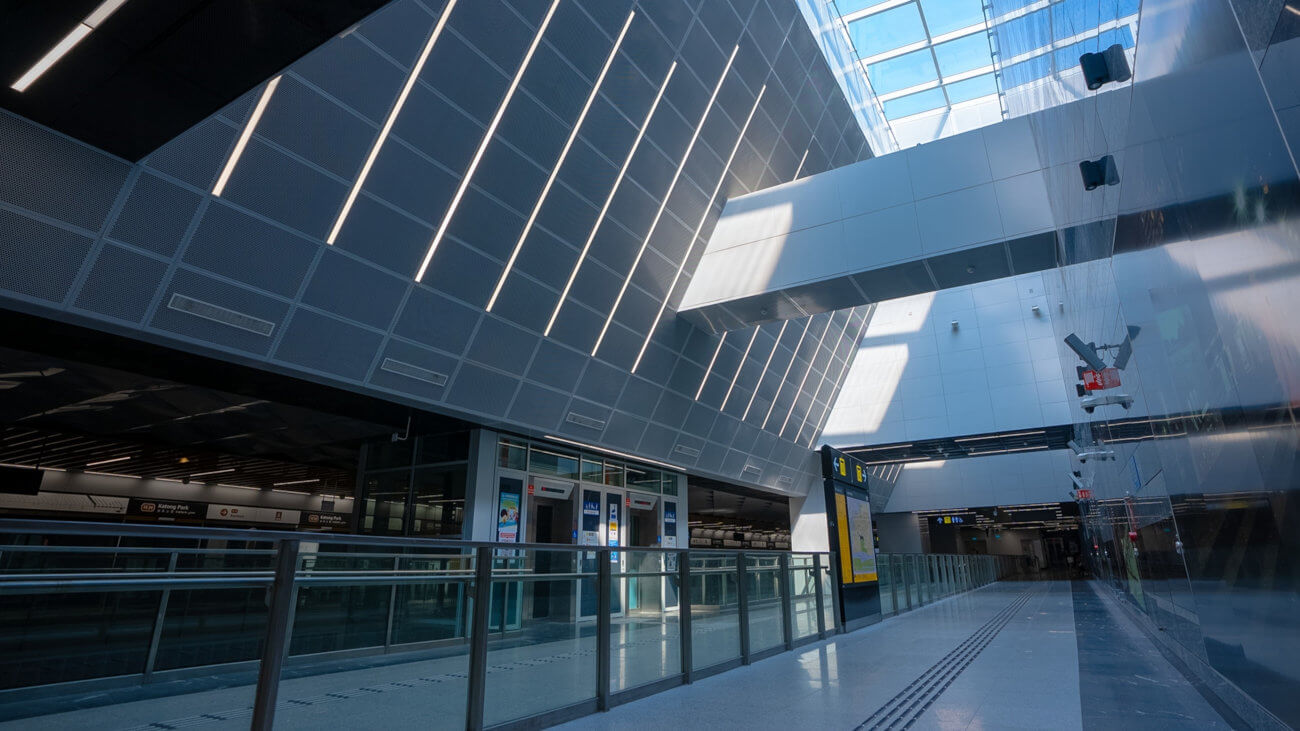
To reduce daytime energy consumption, we maximised the use of natural lighting via skylights (voids in concourse slabs for streaming in of natural light) and entrances. We also incorporated sustainable features, including water efficient fittings and reusing NEWater and air handling unit (AHU) condensate within the station’s mechanical and electrical (M&E) and drainage systems.
We also planned for future on-site road topping to reduce ponding and flooding and enhance climate resilience.
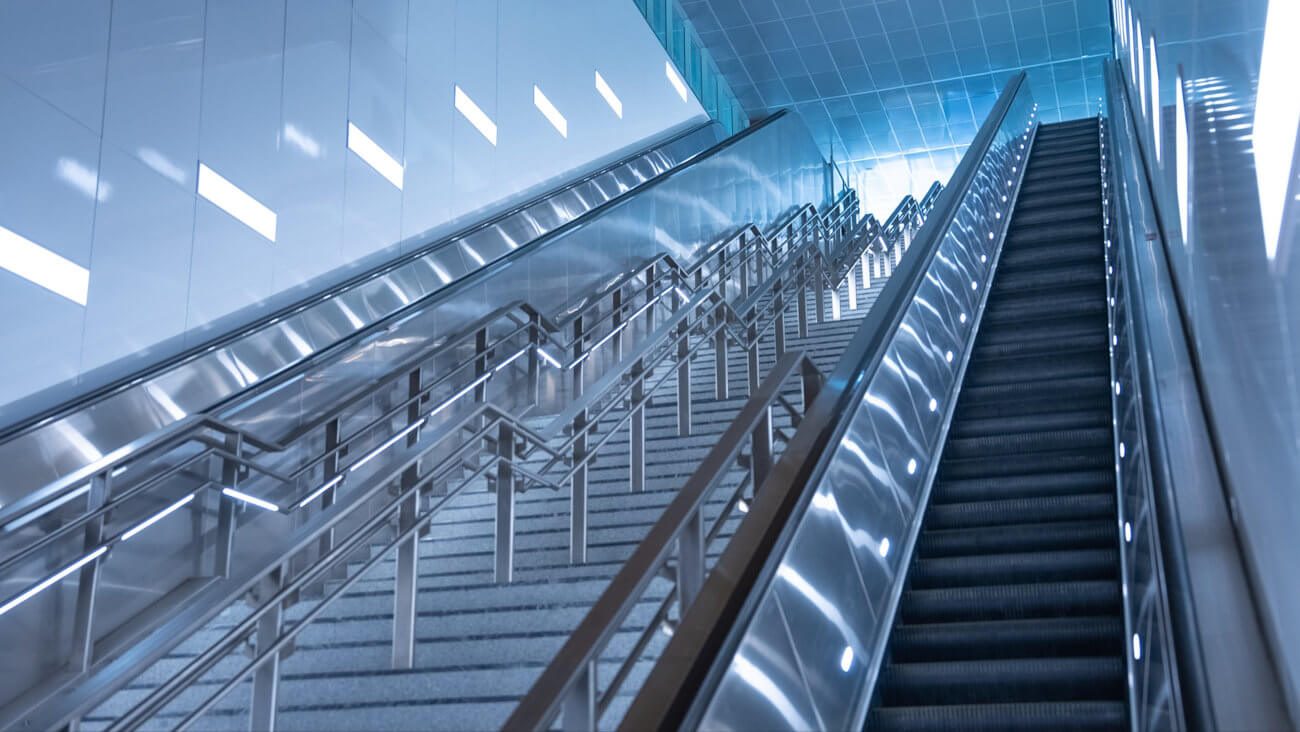
The stations are more elderly-friendly, and the escalators have floor-level lighting to show you which direction it is moving.
Inclusivity and accessibility benefits include:
- Barrier-free station routes and priority queues
- Wheelchair-accessible buses and elder-friendly bus stops
- Lifts at pedestrian bridges
- Braille signage and information displays for seniors and people with disabilities
- Nursing and quiet rooms at selected stations
- 150km of covered linkways and 1,500 new pedestrian crossings
- Dedicated cycling and walking paths
These efforts support Singapore’s Green Plan 2030 and contribute to the nation’s commitment to the UN Sustainable Development Goals.
Community impact and feedback:
“It’s very exciting because it’s so near my home. It’ll be easier for me to get to all the places I usually frequent, like Gardens by the Bay and the city.”
Madam Janice Lau, local resident
“We don’t open on Sunday, but we decided to do so today because of the good response. If business is good, we might consider operating on Sundays.”
Madam Winnie Lee, hawker centre vendor
“The stations are more elderly-friendly, and the escalators have floor-level lighting to show you which direction it is moving.”
Mr Tan, local resident
Stellar safety statistics
Safety was a top priority throughout the project. A dedicated risk management facilitator led safety reviews and committee meetings, ensuring safety was embedded in all aspects. Construction sequences were modelled in BIM and reviewed in workshops to identify and mitigate risks before work began. Strict inspection routines and quality checks were also part of the safety strategy.
This approach led to:
- Zero fatalities over four million man-hours of work,
- Only two reportable incidents, both addressed with corrective actions,
- Zero MOM demerit points, maintaining an excellent safety record with Singapore’s Ministry of Manpower, and
- Award-winning safety performance, recognised with 10 industry awards, including the Infrastructure Award at the IStructE Singapore Structural Awards 2024.
The project was also publicly praised by Singapore’s Prime Minister, Lawrence Wong, who described TEL4 as a symbol of national confidence and progress. Speaking at the opening ceremony, he said: “Here in Singapore, when we say we will do something, we make sure we deliver it. I hope the TEL4 opening gives all of us confidence and hope for the future – that working together, we can build a more liveable and sustainable Singapore.”
In addition, LTA’s deputy group director Soh Kin Meng said TEL4 is an “engineering marvel”.
He added: “One of the stations, Marine Parade Station, is as long as the tallest building in the world (but in a horizontal position). Most TEL4 stations were situated close to buildings and in challenging ground conditions such as marine clay. Mott MacDonald’s strong design support enabled us to overcome such challenges and deliver the TEL4 to the nation timely and safely.”
Engineering a connected future for Singapore
Reflecting on the many engineering firsts and the innovation of our teams, Vijay Vadivel, technical director and project manager for E1003 in Singapore, said: “Being involved in this project since 2013 and seeing it come to life is amazing. Despite complex challenges and evolving requirements, it has been a continuous engagement and effort by our team over these years toward the delivery of Contract E1003 for Land Transport Authority of Singapore. It sets a new benchmark for underground space utilisation and supports Singapore’s vision for a sustainable, inclusive, and connected future. Thanks to the hard work and dedication of all our team members at Mott MacDonald and our subconsultants – and congratulations to all.”
Gary Howard, transport market lead Asia, said: “We are incredibly proud to have supported the LTA in delivering Contract E1003, which is another major milestone in Singapore and LTA’s commitment to transforming urban mobility in Singapore, delivering a more efficient, reliable public transit system.”


Subscribe for exclusive updates
Receive our expert insights on issues that transform business, increase sustainability and improve lives.