



Risk management for complex underground infrastructure projects
Monitoring and protecting nearby buildings, utilities, and other infrastructure is critical to the success of any underground infrastructure project.
Clear responsibility for construction impact assessments, project risks, and instrumentation and monitoring is essential to help teams manage increasingly complex contractual interfaces.
Article
Managing risk in complex underground construction
Underground infrastructure projects are increasingly delivered in constrained urban environments. Construction often takes place near existing buildings, utilities, and transportation assets. Managing construction impacts in these settings not only requires technical expertise, but clear accountability and coordination across project interfaces, such as between a bored tunnel and cut-and-cover structures for transit stations.
Depending on project and owner requirements, these adjacent or overlapping construction works may be delivered under different contracts, further increasing the complexity of the interfaces and responsibilities. At the heart of successful underground delivery is a clear, coordinated approach.
Understanding impacts before they occur
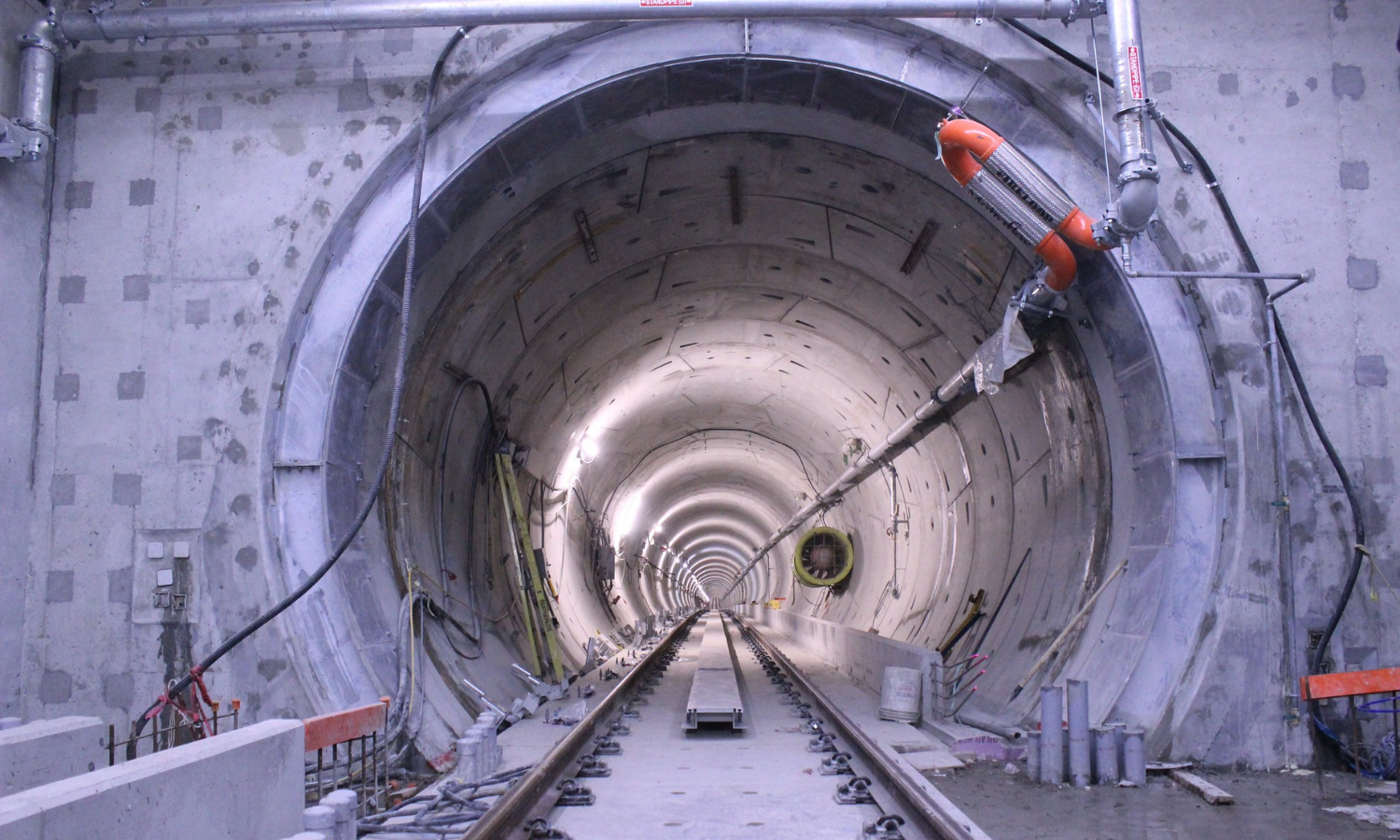
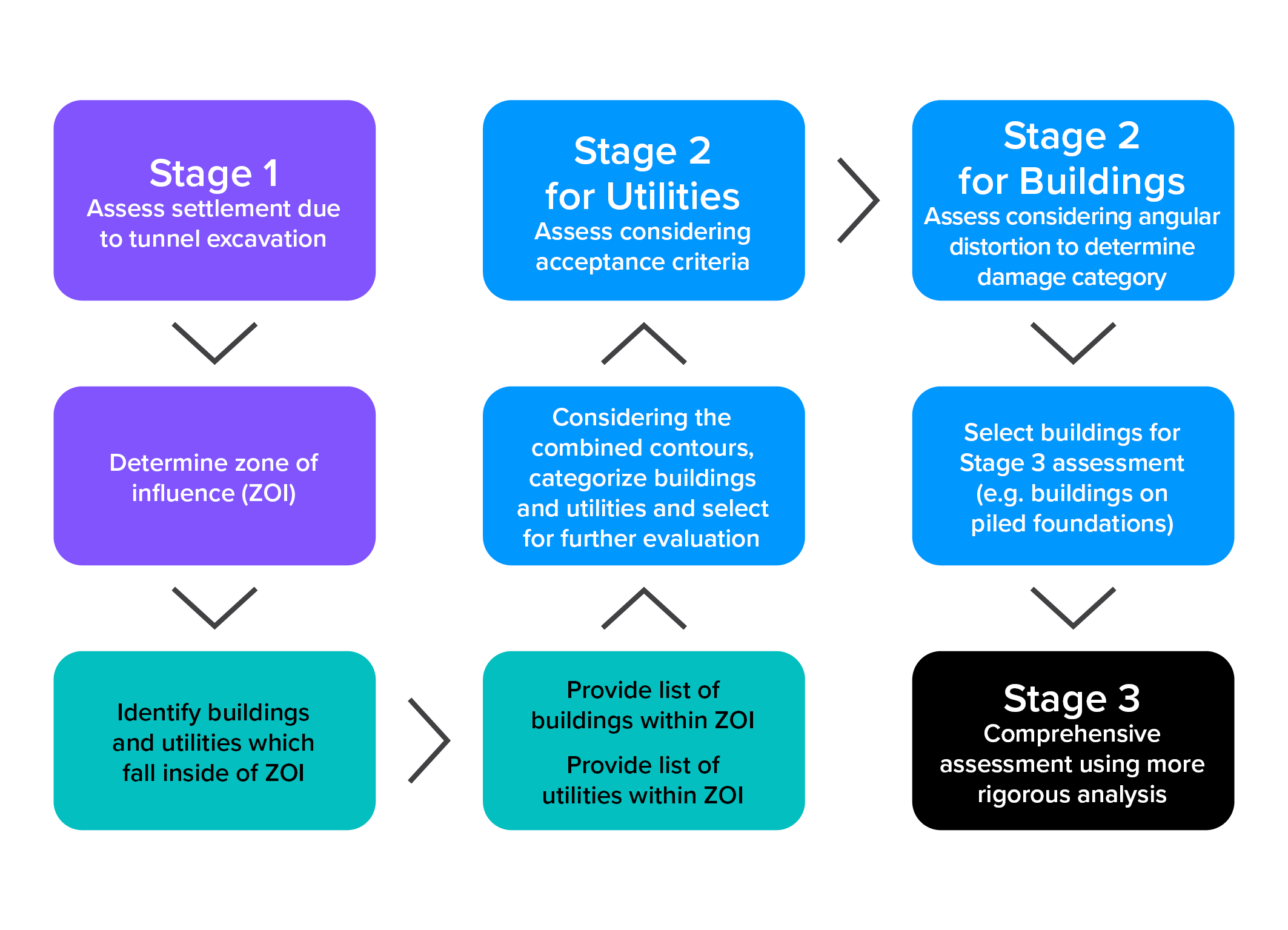
A robust, construction impact assessment framework like the one featured below is essential when multiple interfaces are involved. This typically begins with predicting ground movement with a settlement assessment and then defining the zone of influence (ZOI) – the area where construction activities may affect surrounding assets. Within this zone, buildings, utilities, and infrastructure are assessed to understand potential project risks, including asset damage, structural strain, and service disruption.
For more complex urban conditions – such as with multiple underground excavations – advanced numerical modeling is often required to capture combined settlement effects. Identifying these project risks is only the first step.
Construction Impact Assessment Framework: Three-Staged Approach
From assessment to action
Once project risks are identified and documented in a Construction Impact Assessment Report (CIAR), effective risk management processes translate them into clear, actionable monitoring strategies.
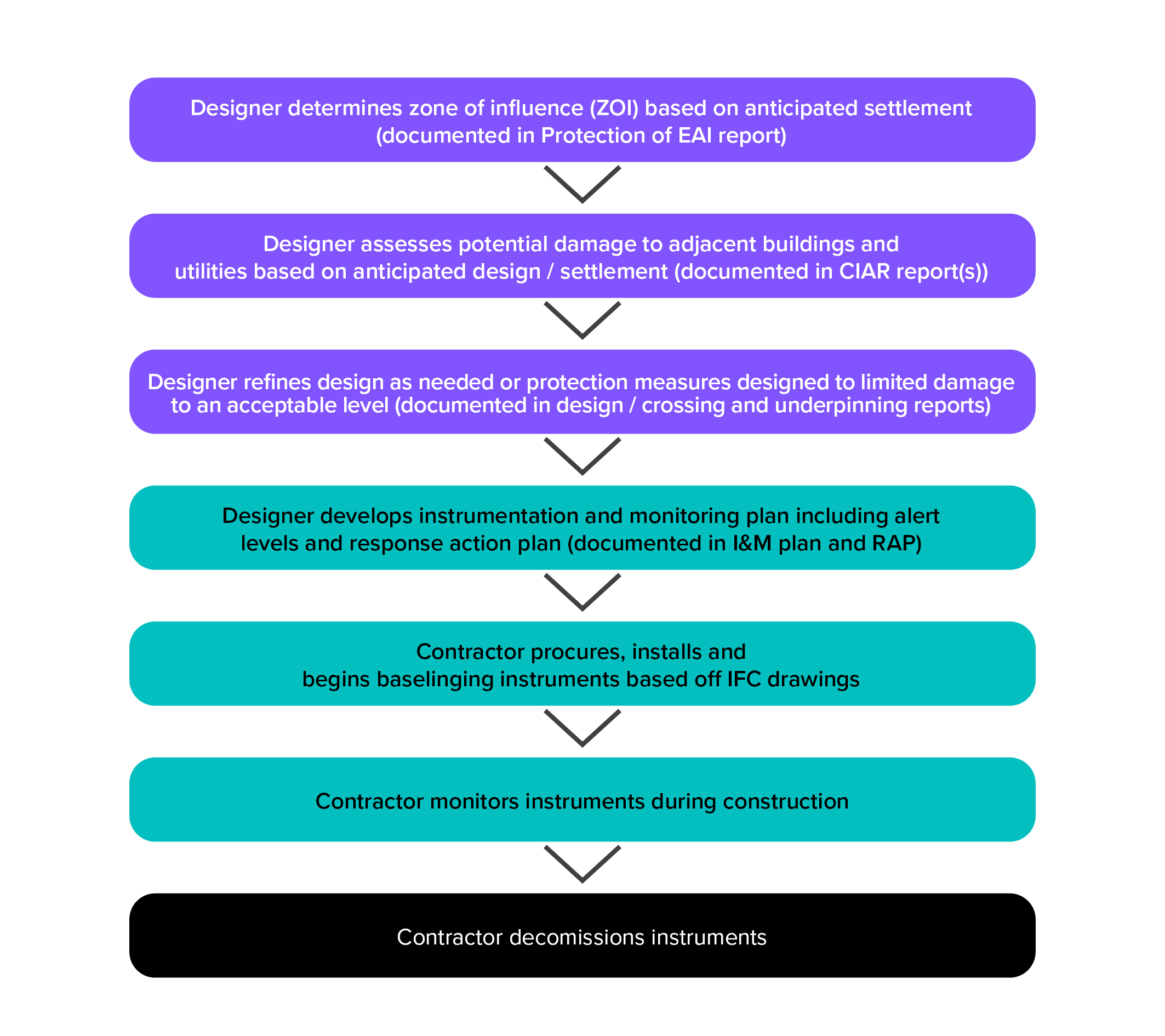
Instrumentation and monitoring (I&M) systems provide the data needed during construction to verify performance and trigger timely interventions. These systems typically include building monitoring, ground movement tracking, utility strain measurement, and vibration monitoring.
However, monitoring effectiveness is not defined by technology alone. It depends on how well alert levels and response actions are embedded within contractual frameworks. Each alert level should trigger a defined action and identify who is responsible for carrying it out. This helps teams respond appropriately without overreacting or missing early warning signs. These systems are most effective when all project parties work from consistent assumptions and shared data.
Instrumentation and monitoring plan development, installation, and decommissioning flow chart
An integrated approach
When multiple designers or contractors are involved in project delivery, inconsistent modeling assumptions can create gaps in accountability and risk visibility. On complex underground infrastructure projects, monitoring data is commonly managed through an online, web-based platform that enables real-time access and coordination. Establishing unified monitoring platforms and data transfer protocols, owned or governed by the project owner, can ensure consistency in data, improve transparency, and support informed decision-making across all stakeholders.
Similarly, defining responsibilities for assessment, design, installation, and monitoring early helps align expectations and reduce interface risk. In shared zones, assigning primary monitoring responsibility to a single party, such as the project owner, can provide greater clarity. Transparent access to data also supports coordination while allowing teams to remain flexible.
Precondition surveys and reliable baseline data further strengthen this approach, creating a shared understanding of existing conditions and enabling fair allocation of risk.
Delivering with confidence
Ultimately, the success of underground infrastructure projects depends on more than engineering excellence. It requires clear ownership of risk, coordinated delivery across interfaces, and reliable data presented in a clear manner to inform decisions in real time.
By aligning technical processes with contractual clarity, organizations can move beyond reactive risk management, creating safer, more efficient projects and building confidence among stakeholders and communities alike.
About the author

Subscribe for exclusive updates
Receive our expert insights on issues that transform business, increase sustainability and improve lives.