




Industrial excellence in Gujarat, India

Project overview
Project
Setting the standard for chemicals facilities in India
Safety was paramount in delivering a world-class greenfield alkoxylation facility for international chemicals firm Croda. The project set high standards for construction efficiency and operational quality, while protecting people, processes and assets.
The coastal town of Dahej in Gujarat is a major hub for India’s chemicals industry – the ideal location for Croda, a global speciality chemicals company, to establish a new greenfield facility.
Croda, a UK-based firm, required a world-class plant to strengthen its regional supply chain and serve rising demand for alkoxylation products across pharmaceuticals, personal care, consumer care and crop care markets. It set clear project priorities at the start: uncompromising safety standards, efficient project delivery and operational excellence over the asset’s lifecycle. From concept through to commissioning, Mott MacDonald worked in partnership with Croda’s project and operations team, providing detailed engineering, procurement assistance, cost estimation, construction management and commissioning support.

Racing the monsoon: fast-track contracting
Dahej is a major hub for India’s chemicals industry, but constructing a complex industrial facility in the region requires careful planning to manage seasonal risks. With the monsoon expected from mid June until September, it was vital to get construction sequencing right on the project to protect the programme.
Together, Croda and its project partners jointly reviewed the plans and agreed to re sequence civil works, separating foundations and substructure packages from the remaining superstructure scope. This enabled early tendering, faster mobilisation of people, materials and equipment and an early start on-site.
Through close collaboration, the project reached ground level, with critical foundations work completed ahead of the heaviest rainfall. This avoided a potential three- to four-month delay on the critical delivery path.
Putting safety first
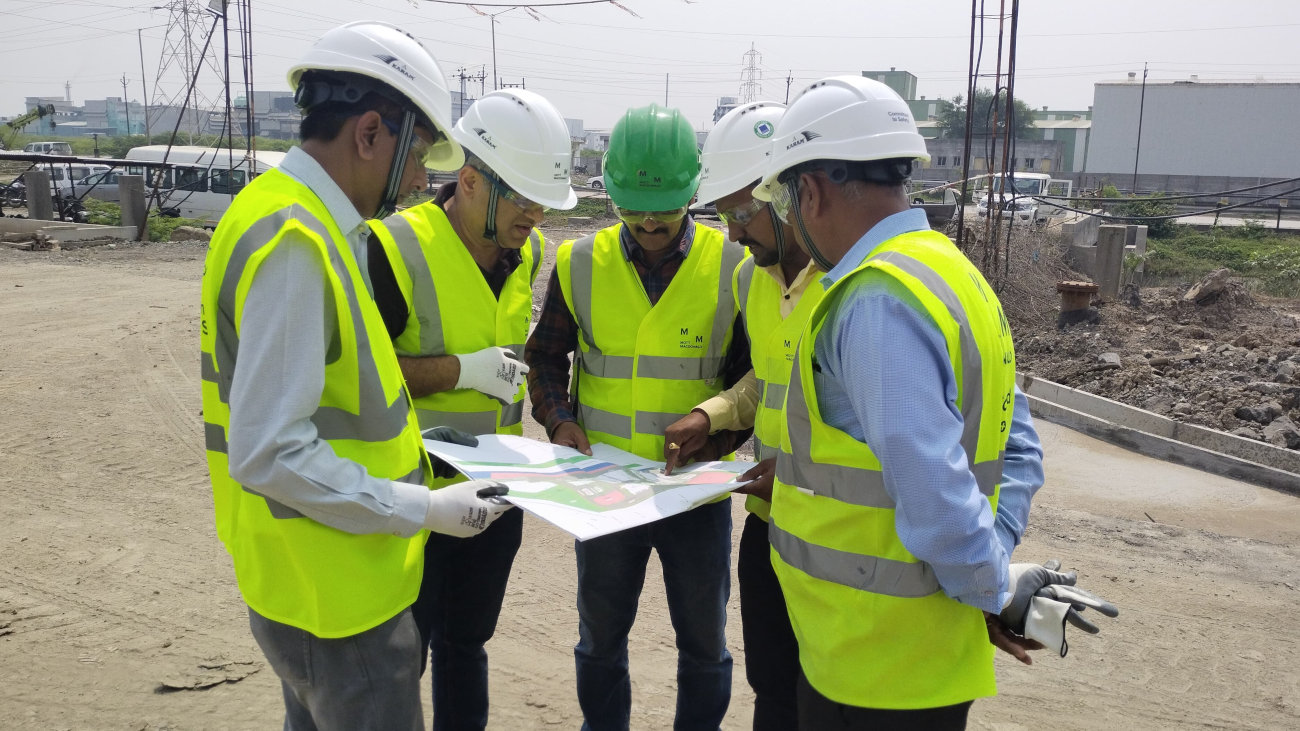
Safety was a central to Croda’s vision for the facility during construction and when planning for its operational life. A shared responsibility for safety was embedded across the project workforce, which guided every activity on-site and fostered continuous learning.
Rigorous inspections, strong contractor engagement, proactive reporting and thorough incident investigations were prioritised throughout construction. This led to approximately five million safe construction hours with zero lost time injuries.
This project demonstrated what can be achieved when safety is genuinely owned by everyone involved. Through close collaboration with Croda and the contractor teams, we built a strong culture of prevention, care and shared responsibility on site.Ameya Kulkarni
Project coordinator, industry division, Mott MacDonald
Project achievements
- Smart sequencing: re-sequencing works on the plant’s foundations and substructure enabled an early start in June 2023 and prevented an estimated three- to four-month delay.
- Exemplary safety: 5M safe construction hours with zero lost time injuries.
- Future ready: a digital wall with real-time information on employee wellbeing, security, health, safety and the environment for better visibility and faster decisions.
- Efficient operations: converged factory and office networks and streamlined warehouse operations cut duplication and manual handling.
Real-time risk monitoring
From day one, the plant was designed with practical digital tools to improve visibility of key safety and operational performance indicators. A digital wall displays integrated, real-time information on employee wellbeing, security, health, safety and the environment (HSE). Examples include air-quality read-outs, near-miss and hazard-spotting statistics and injury-free hours. Digital monitoring of these indicators enables proactive risk management and reduces manual intervention.
The plant also incorporates process safety monitoring, which provides continuous oversight of the hazardous epoxides used in the alkoxylation process. This is supported by fire, gas and flame detection systems that trigger immediate action to mitigate the risk of fires or explosions.
Security systems are also used to control access to the facilities, while thermal detection and CCTV help to identify temperature anomalies, improving the protection of people, processes and assets.
Behind the scenes, operations are digitalised with software by AspenTech, which helps to optimise industrial processes, improve batch consistency and enhance quality.
The facility also includes a warehouse management system, which simplifies the movement of goods on-site and integrates with enterprise software to streamline the dispatch of products and reporting. To achieve operational efficiency, factory and office systems also run on a converged network, reducing duplication and operating costs.
Murali Duvvuri, senior managing director, life sciences, Asia and India region, said: “India is a strategically important market for Croda, and this investment brings us closer to our customers while strengthening local manufacturing capability. The Dahej site enables us to deliver high-quality, sustainable solutions with greater speed, reliability and flexibility, supporting our customers’ growth and innovation needs.”
Good governance
Croda took a disciplined governance approach at all levels, which led to timely decision-making and effective risk management. The company established a shared responsibility with project partners for meeting mechanical and completion deadlines and it created space for joint discussion and problem solving.
Collaborative workshops during the advanced engineering and initial construction stages helped to compress execution timelines.
There was a regular cadence of monthly internal reviews and joint reviews involving Croda and its project partners as well as quarterly executive steering meetings. Digital reporting via concise dashboards also improved the predictability of outcomes. All project partners had visibility of schedule, cost and non conformance trends and a clear route for escalating issues.
Prioritising partnership
As India continues to expand its industrial and manufacturing base, projects like this demonstrate the importance of strong partnerships between asset owners and delivery teams.
The Dahej facility demonstrates how collaboration, shared values and early planning for operational performance can deliver long-term value.

Subscribe for exclusive updates
Receive our expert insights on issues that transform business, increase sustainability and improve lives.