
Expert insights on issues that transform business, increase sustainability and improve lives
Here’s a snapshot of what we’re thinking about. Explore these highlights or view the full library to dive deeper into the ideas shaping our work.
Meet some of our passionate problem-solvers, constructive creatives and inspiring innovators
Old Oak Common, almost 5km west of Paddington Station, first opened as a rail depot in 1906. Part of the site has been redeveloped as a new maintenance facility for Elizabeth line trains.
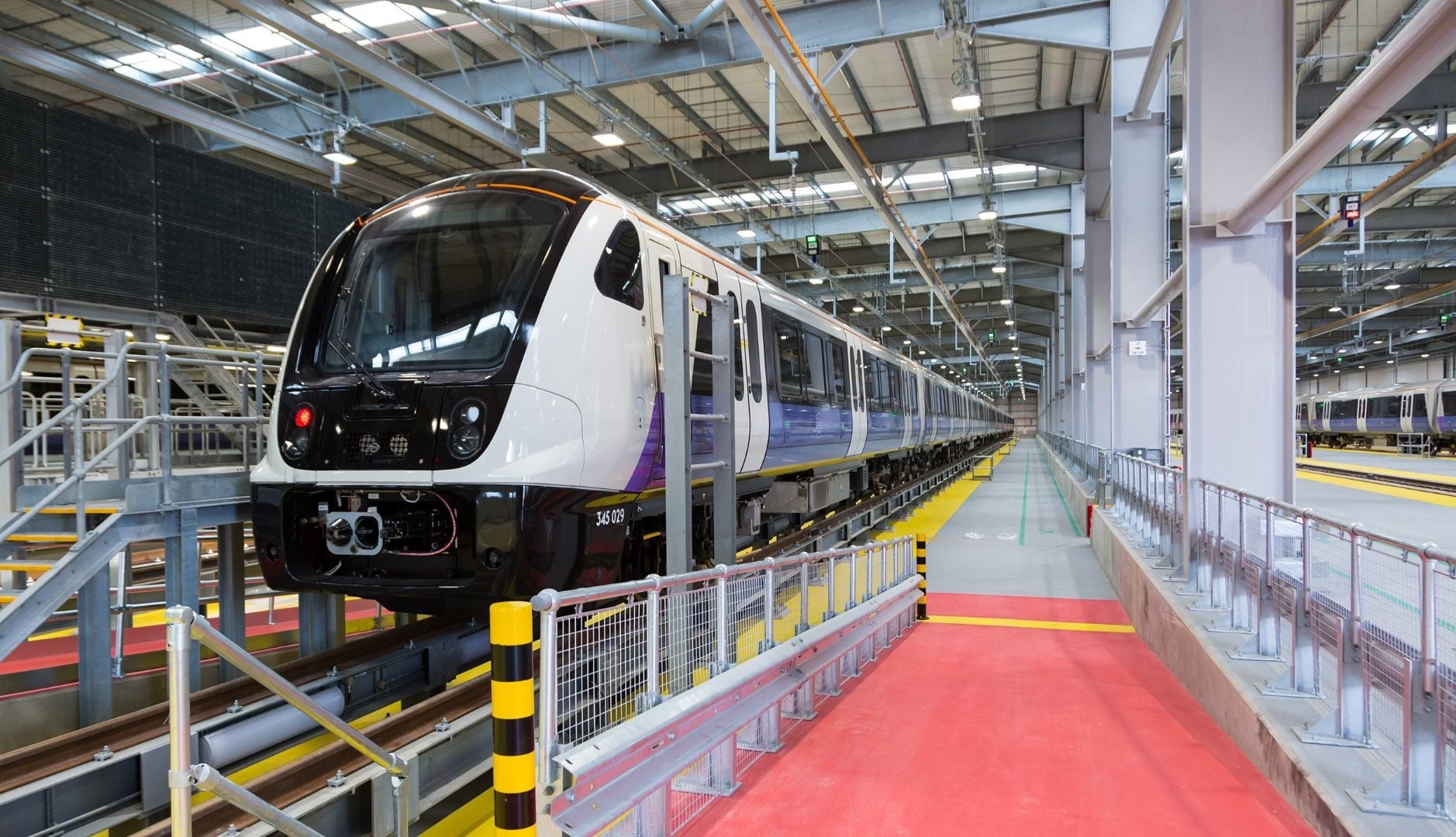
At any one time, it will house and maintain up to 42 of the line’s 70 trains. In east London, additional train stabling has been created at the existing Ilford depot.
We produced the reference design for both depots and provided technical support to Crossrail Ltd throughout the detailed design and construction phases.
We modelled the depot’s operations to ensure trains will arrive, undergo maintenance, and depart within the limited time available in the timetable. Achieving this objective required a well-planned layout for plant and equipment, with room for future expansion.
Realising Australia's high-speed rail ambitions will require the certainty to move from business case to operation with clarity and confidence.
Simon MacMull and Jon Lancaster set out five principles for successful CBTC projects that manage technical improvements alongside organisational change.
Over the past two decades, cities have embraced new solutions in surface flood management that deliver environmental and social value alongside flood mitigation.
The infrastructure industry is aligned on ambition but the real question is how to turn that ambition into delivery at pace. Mott MacDonald Fellow Clare Wildfire reflects on three themes that emerged on this point during UKREiiF 2026.
With ever-changing and increasingly complex contractual model interfaces, proper understanding and allocation of the responsibility for construction impact assessments, risks, and instrumentation and monitoring is essential.
Data gaps are one of the most significant, and underestimated, risks in PFI handback. Mott MacDonald commercial director Katherine Jackson explains in this third part of her blogs on PFI handback challenges.
Late mobilisation remains one of the most consistent drivers of cost, risk and tension in PFI handback, explains Mott MacDonald commercial director Katherine Jackson.
As the first wave of UK PFI contracts approaches expiry, handback is proving to be far more than a contractual milestone. It is where years of decisions, assumptions and asset performance are tested - often all at once.
Senior project engineer Amanda Wachenfeld discusses her approach to improving processes that allow for increased efficiency across her teams and projects.
Paul's career spans more than four decades and multiple continents, with hands‑on experience across roads, rail, aviation and major infrastructure delivery, shaped by some of the world’s most demanding projects.
Mott MacDonald and One Million Mentors are expanding their partnership in 2026, bringing mentoring opportunities to young people in London and the West Midlands.
The CPS2 framework will be used by central government departments, arm’s length bodies and the wider public sector to procure professional services across infrastructure, the built environment and defence.
Over the past decade Mott MacDonald has revolutionised the approach to stakeholder consultation through the creation of an engagement tool hosted on its Consents Management platform.
The Ohio River Tunnel is the first of three combined sewer overflow (CSO) tunnels at the core of ALCOSAN’s Clean Water Plan.