




Riding the current instead of waiting for the tide to change
Carbon Crunch 2025 Auckland brought together sustainability leaders across water, transport, and energy, highlighting the infrastructure and organisational resilience and purpose driving Aotearoa New Zealand’s climate transition.
Despite political and operational uncertainty, the infrastructure sector shows collective determination to move, adapt, and innovate for the long-term, prioritising progress over perfection.
The event’s core message: mindset and collective action will shape New Zealand’s climate future.
Article
Staying the course on Aotearoa’s climate transition
Aotearoa New Zealand’s climate transition is unfolding in an uncertain political and business landscape. But the mood among sustainability leaders suggests something more constructive: an infrastructure sector that is moving ahead with purpose, despite the uncertainty.
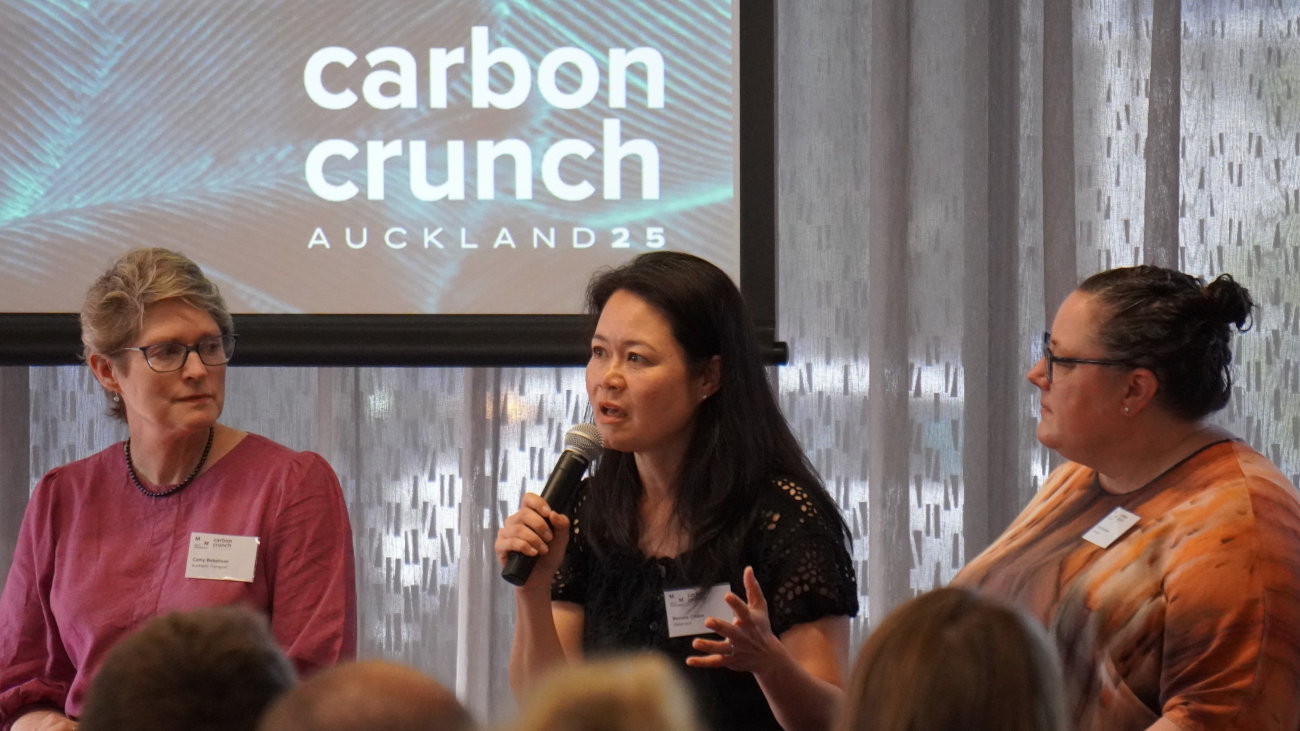
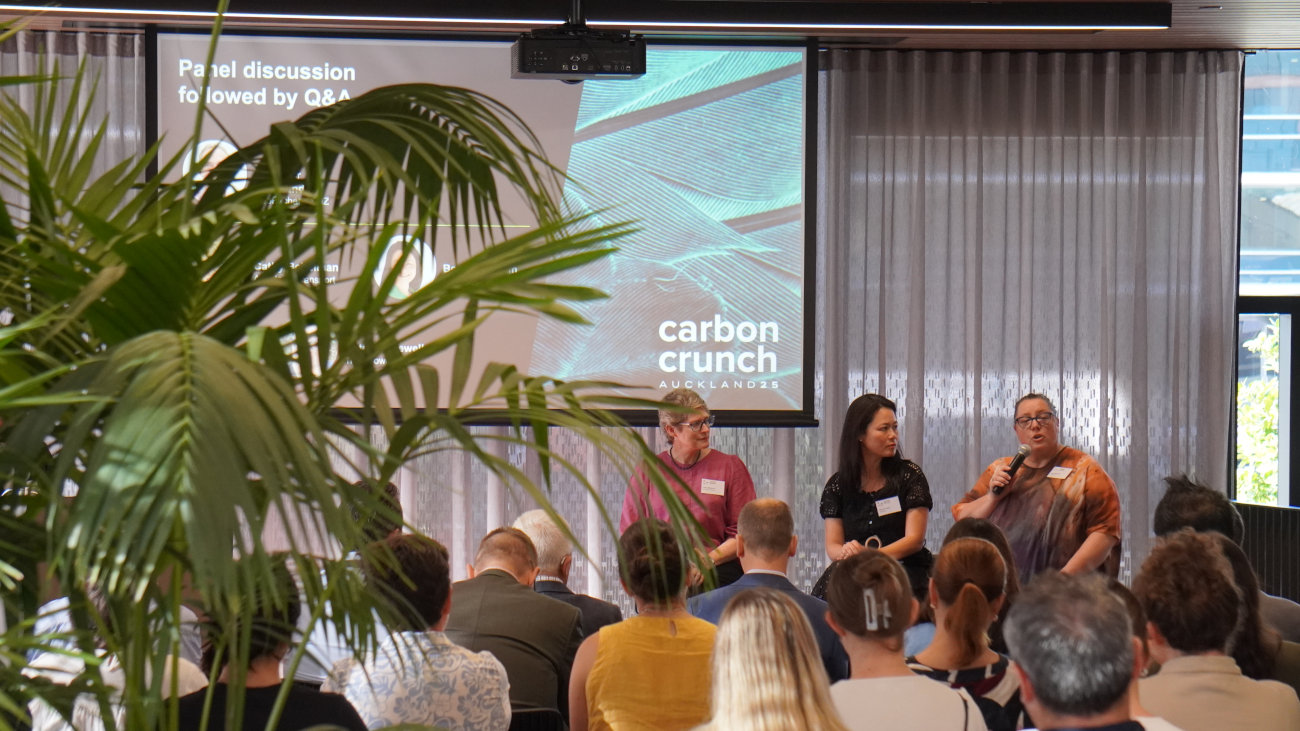
This was evident at Carbon Crunch Auckland held on 2 December 2025. Designed to keep the climate conversation alive at a time when long-term environmental goals are being outweighed by short-term operational goals, the event brought together speakers from an infrastructure ecosystem that sustains modern life ‒ water, transport and energy ‒ and offered attendees a powerful reminder to stay the course.
The key message was that mindset will determine the pace of change. The organisations leading this work are choosing to move, to adapt and to innovate even when conditions aren’t perfect. That willingness to act collectively and consistently is what will shape Aotearoa’s next chapter.
A country moving faster than its policies
Across transport, water, and energy, the people steering Aotearoa’s climate transition aren’t waiting for perfect conditions. They’re making progress in the midst of competing priorities, balancing optimism with pragmatism, and redefining what resilience needs to look like in practice. The transition is happening in real time, and the people responsible for delivering it understand that momentum matters.
These organisations are working to horizons measured in decades, not terms, and they are doing so with a steady confidence that the long‑term vision matters more than the short-term turbulence we’re currently seeing.
In this environment, perspective becomes a strategic tool. When conditions are uncertain, we can either be pulled under by the churn or rise above it and keep moving forward.
Transport: progress without perfection
Resilience is becoming a non-negotiable amongst transport systems. Chief scientist for Auckland Transport, Dr Cathy Bebelman, and her team have delivered Auckland’s first Climate Transition Plan and achieved certified Scope 3 emissions reporting three years running ‒ a rarity in the infrastructure space. Scope 3 emissions are third-party assured, indirect greenhouse gas emissions that occur upstream and downstream of an organisations value chain.
But what stands out isn’t the reporting. It’s the proactive engagement with the supply chain, and the deliberate effort to first understand what data is actually needed and then work through how to consistently and credibly obtain it – well before industry is mandated to do so. By being prepared early, Auckland Transport is creating the conditions for meaningful change across its network and partners alike.
Ultimately, it’s the mindset driving this work that matters most.
Perfection can be the enemy of progress. This is not a catchphrase, but a practical approach to decision-making. Electrifying ferries is hard. Making roads resilient before they fail is expensive. Yet delaying action only compounds the risk. That’s why investing early in resilience avoids far greater costs later.
This approach is less about ticking off climate actions and more about building a system that can bend without breaking. A system that can adapt when the political winds shift. A system that keeps New Zealanders moving.
Let’s not wait till the road falls down the hill. For 15% of the cost, we can make it climate resilient now.Dr Cathy Bebelman
Chief scientist at Auckland Transport
Water: leadership as a collective act
If transport is about movement, water is about depth. The long view, the buried infrastructure, the unseen systems that keep a city alive.
Bernice Chiam, strategic programme planning manager for Watercare, spoke with the clarity of someone who has seen the cycles of ambition and hesitation in infrastructure planning. To her, sustainability isn’t something you wait to be told to do.
Watercare’s $1.6bn Central Interceptor project has already proven that sustainability can be embedded into legacy infrastructure. Their next decade and $13.8bn investment pipeline will test whether whole of life thinking, carbon and resource efficiency can become the norm rather than the exception.
The challenge facing the industry is to bring innovation, bring a sustainable mindset, and bring a sense of social responsibility. Because the transition won’t be led by a single organisation, it will be led by everyone.
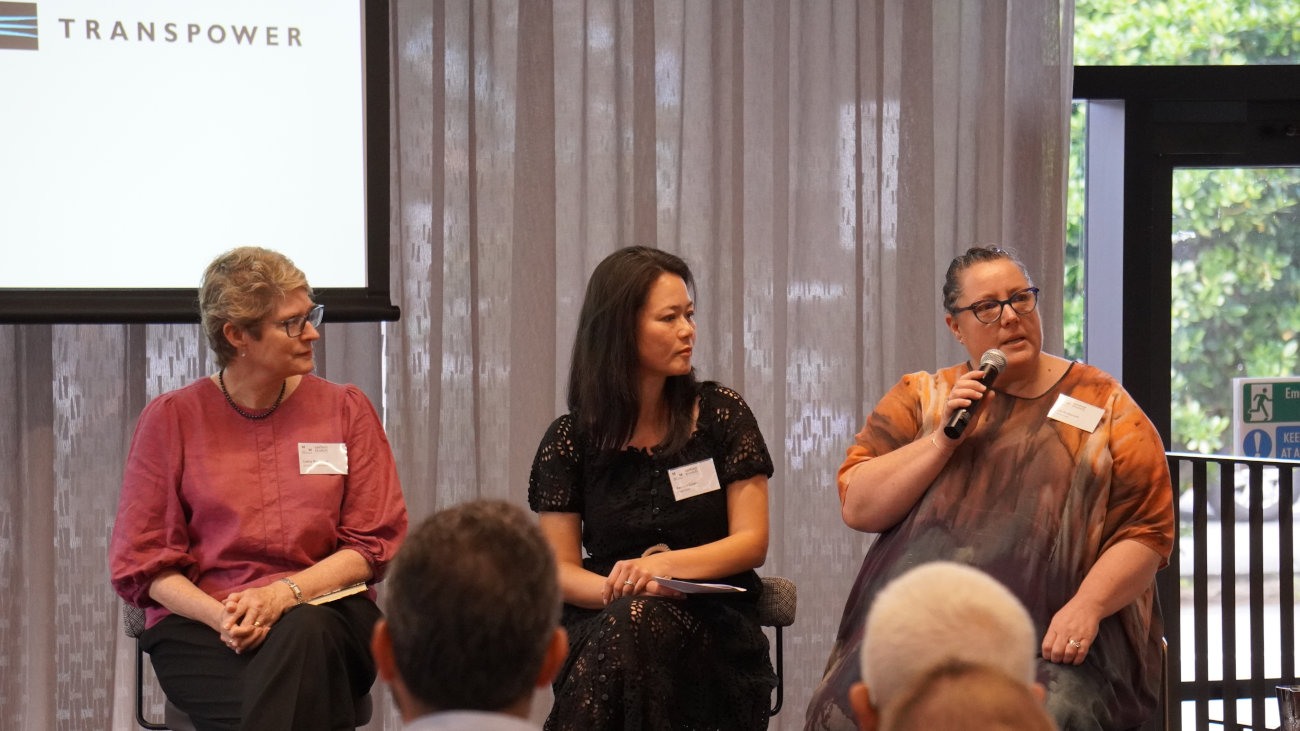
We will not get there if we are waiting for our leaders to tell us what to do. When done well, leadership can be contagious.Bernice Chiam
Strategic programme planning manager at Watercare
Energy: managing the pressures of electrification
The energy market sits at the centre of New Zealand’s decarbonisation effort, carrying much of the responsibility for enabling electrification across both infrastructure and households. Electrification also provides an opportunity for national productivity growth in a low-emissions environment.
The energy transition means New Zealand’s transmission system needs to grow to deliver the required electricity highway, with support from non-transmission solutions. As the owner and operator of the national grid, and operator of the power system, Transpower knows the path forward is defined by a constant balancing act: affordability, reliability, security and sustainability. There is a need for timely investment.
The question that emerged was one the entire market will need to grapple with: how to deliver the outcomes the transition demands without placing unsustainable costs on consumers. Through its Te Kanapu initiative, Transpower is focused on creating a future grid blueprint for Aotearoa, with a key focus on affordability, which will help enable a thriving economy and drive towards net zero 2050.
Transpower is an organisation where sustainability is woven through how it plans, invests and manages risk.
Transpower is also tackling amongst other things its climate-related risks and opportunities, climate adaptation, sulphur hexafluoride (SF6) gas emissions, wrestling with rising Scope 3 emissions driven by a growing work programme and building resilience as it delivers appropriate investments.
This thinking will shape the next decade of energy planning.
Sustainability is woven through into our business, not a side activity.Kate Redgewell
Head of governance, sustainability and executive office at Transpower
Resilience is key
Across all three markets, a pattern emerged: resilience is no longer a defensive concept. It is about being creative in building capacity to adapt, recover and move forward with confidence.
Resilience means designing for whole of life value, not just upfront cost. It means collaborating beyond funding cycles. It means embedding circularity, rethinking materials, planning for end of life. It means accepting that Scope 3 emissions are rising and tackling them anyway.
It also means integrating mana whenua knowledge and intergenerational thinking into design. By partnering meaningfully with mana whenua from the outset, projects can draw on deep place-based knowledge, strengthen cultural outcomes and ensure decisions reflect the needs of future generations, not just current users. Through regenerative design, resilience emerges as the outcome. It is a state of being grounded in place, deep cultural connection steeped in mātauranga Māori and long-term stewardship.
The quick wins are real: better design, smarter procurement, material innovation. But the deeper shift is cultural and social. Sustainability professionals are learning finance. Engineers are learning climate science. Organisations are learning to share data, not guard it.
The transition is no longer about who leads. It’s about how many people choose to.
The way forward
The question now turns to what comes next for Aotearoa’s infrastructure and sustainability journey.
The transport, water and energy markets have demonstrated that embedding sustainability and resilience is possible. Scaling these ambitions, however, will require continued innovation, open collaboration, and a willingness to act decisively even amidst uncertainty.
A clear takeaway was that the responsibility, and the opportunity, rests with everyone, not just a handful of leaders or organisations. Building resilience into our infrastructure is no longer about putting a band-aid on recovery. It is building in outcomes that adapt to adversity, recovery and withstand the impacts of climate change.
This requires long-term, creative thinking: partnering with mana whenua, applying whole-systems and intergenerational perspectives, designing for whole-of-life outcomes, collaborating beyond funding cycles and embedding circularity from the outset.
Despite the pressures facing the infrastructure sector, the prevailing mood was one of determination rather than hesitation. The transition is underway, the work is substantial and the appetite for progress is real.
Now is the time to translate optimism and strategy into action.
Acknowledgements
Thank you to our wonderful Carbon Crunch Auckland 2025 speakers Dr Cathy Bebelman from Auckland Transport, Bernice Chiam from Watercare and Kate Redgewell from Transport, as well as our facilitator, Tom Land from GeoExchange New Zealand.
Subscribe for exclusive updates
Receive our expert insights on issues that transform business, increase sustainability and improve lives.