




Sydney Fish Market’s hard-working roof

Project overview
Project
Reimagining a waterfront icon
Since 1966, Sydney Fish Market has been Australia’s home of seafood and one of the city’s most visited destinations. With visitation forecast to exceed six million people each year, the original facility was no longer fit for purpose. In 2016, the New South Wales Government announced a major redevelopment as part of the Blackwattle Bay renewal.
Described as Sydney’s most significant harbourside building since the Opera House, the new market brings together upgraded auction and supply chain facilities, vibrant retail and dining, open public spaces and a seafood cooking school. These diverse functions are unified beneath a single defining element: the largest timber roof by mass in the southern hemisphere.
When most people think about a roof, they think of shelter: something that keeps the weather out and, at best, provides a place to mount solar panels. The Sydney Fish Market proves that a roof can do far more.
Designed as a multifunctional system, the roof stores carbon, generates energy, harvests water, shapes thermal comfort and protects ecology. At the same time, it creates a place people feel connected to and gives Sydney an unmistakable new landmark.
Key features:
- Largest timber roof (by mass) in the southern hemisphere
- Complex double-curve gridshell roof with innovative articulated joints
- Centralised thermal and water systems optimising performance
- Specialist lighting strategies that interact with the city
- Digital design combined with modern methods of construction and offsite fabrication
Designing the roof as an integrated system
Sydney Fish Market’s iconic wave-shaped canopy integrates structure, services, environmental performance and experience into a single system, which required a fundamental shift in design thinking.
From the outset, the ambition was clear: protect the integrity of the architectural vision while delivering measurable improvements in sustainability, constructability and long-term performance.
“Early design concepts are too often diluted through value engineering,” says Michael Calcoen, technical director for buildings. “From the beginning, we were committed to safeguarding the original architectural intent – using digital innovation and design for manufacture and assembly to solve design problems, de-risk construction and embed sustainable initiatives that strengthen the proposal.”
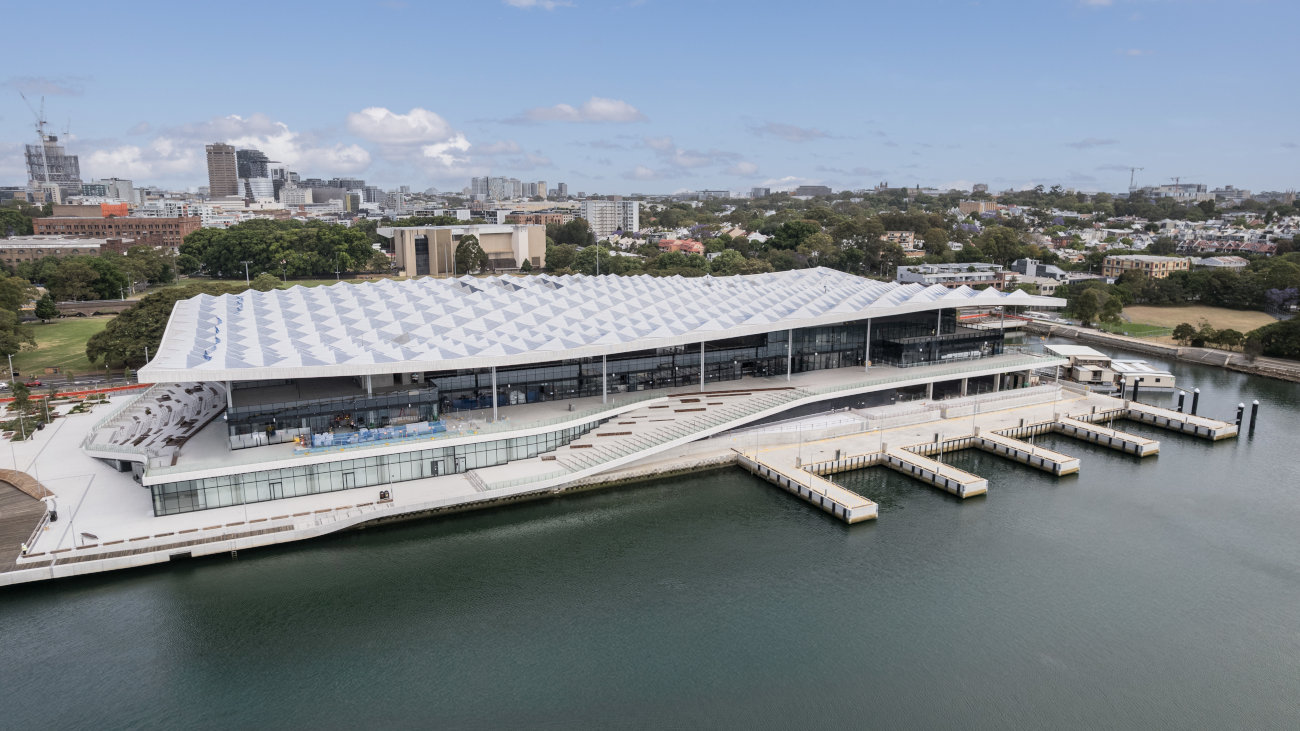
From a distance, the roof appears to float.
Turning ideas into reality
We were engaged in 2017 as structural, civil and marine engineers for the reference design phase and have since supported Infrastructure NSW as technical advisor across all engineering disciplines. Working alongside 3XN (lead architect), BVN and Aspect Studios, our role was to help turn an ambitious architectural idea into reality.
With the building visible and accessible from all sides, this demanded a rigorous, performance-based engineering approach. Working closely with the architectural team, we rationalised and coordinated building services so that the feature roof canopy remains free of exposed sprinklers, fire detection, mechanical reticulation, electrical services and rainwater downpipes. The result is a roof that appears to float – while quietly doing significant work behind the scenes.
Why timber?
Choosing timber as the primary structural material was both an environmental and an engineering decision. Concrete and steel are energy-intensive to manufacture and transport, contributing significantly to embodied carbon. Timber, by contrast, has lower carbon harvesting and manufacturing impacts, and its lighter weight reduces emissions across the supply chain. Crucially, trees absorb carbon dioxide as they grow, storing it within the wood. When timber is used in buildings, that carbon remains locked away for the life of the structure.
As a construction material, timber has a huge carbon sequestration impact. We helped make the case for timber as the primary roof material, sourcing it from sustainable forests and embedding carbon reduction into the structure itself – effectively making it a carbon sink.Graham Babcock
Project director and Australian buildings leader
The Sydney Fish Market roof captures around 1000 tonnes of carbon, substantially reducing the building’s upfront carbon footprint and demonstrating how large-scale public infrastructure can actively contribute to decarbonisation.
Making complexity buildable with modern methods of construction
The roof is a timber gridshell comprising more than 400 individual modules, or “pods”. Each pod consists of eight beams connected at star-shaped junctions, forming a subtly undulating, double-curved surface that gives the canopy its distinctive “floating” quality. Delivering that geometry at scale required a fundamentally different approach to design and construction.
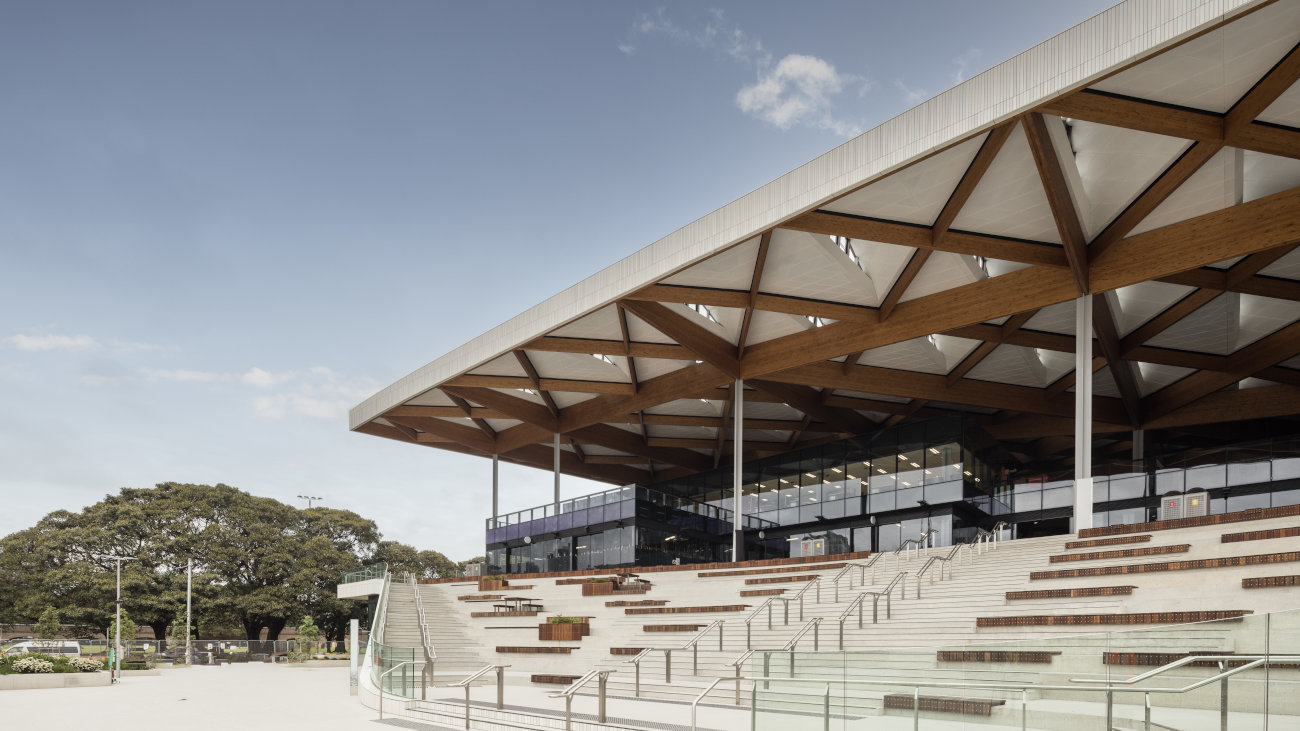
Star‑shaped junctions connect the timber beams, creating the roof’s flowing structural geometry.
Modern methods of construction (MMC) – including offsite fabrication, prefabrication and design for manufacture and assembly (DfMA) – were applied to improve safety, quality and certainty while reducing environmental impact.
Parametric modelling resolved the complex geometry and defined every connection with precision. Innovative articulated joints were developed to accommodate the roof’s curvature, with 3D-printed prototype connections tested and validated before manufacture. Timber beams up to 1.8 metres deep cantilever up to 12 metres from the facade, providing shade and weather protection while maintaining the roof’s lightness.
All modules were fully fabricated and assembled offsite, enabling faster, safer and more predictable installation onsite. This approach reduced labour, minimised waste and lowered emissions associated with construction activities.
“Mott MacDonald’s digital expertise was integral to our workflow,” says Fred Holt from 3XN. “The ability of the digital team to rapidly assess, rationalise and document changing geometry was vital to ensuring the operational feasibility and financial viability of this important feature element.”
We asked ourselves: why stop at floating? "Fish don’t float – they swim." That idea changed how we approached the lighting.Yeon-Woo Cho
Technical director, buildings
Lighting that brings the roof to life
At night, the roof takes on another role: community identity.
The architectural ambition was for the roof to appear to float and appear weightless from a distance. The lighting design builds on this idea, adding movement and subtle animation inspired by marine life.
More than 300 energy-efficient RGBW luminaires are integrated into the roof’s fish-scale geometry, creating gentle wave effects through subtle lighting transitions that interact with the structure.
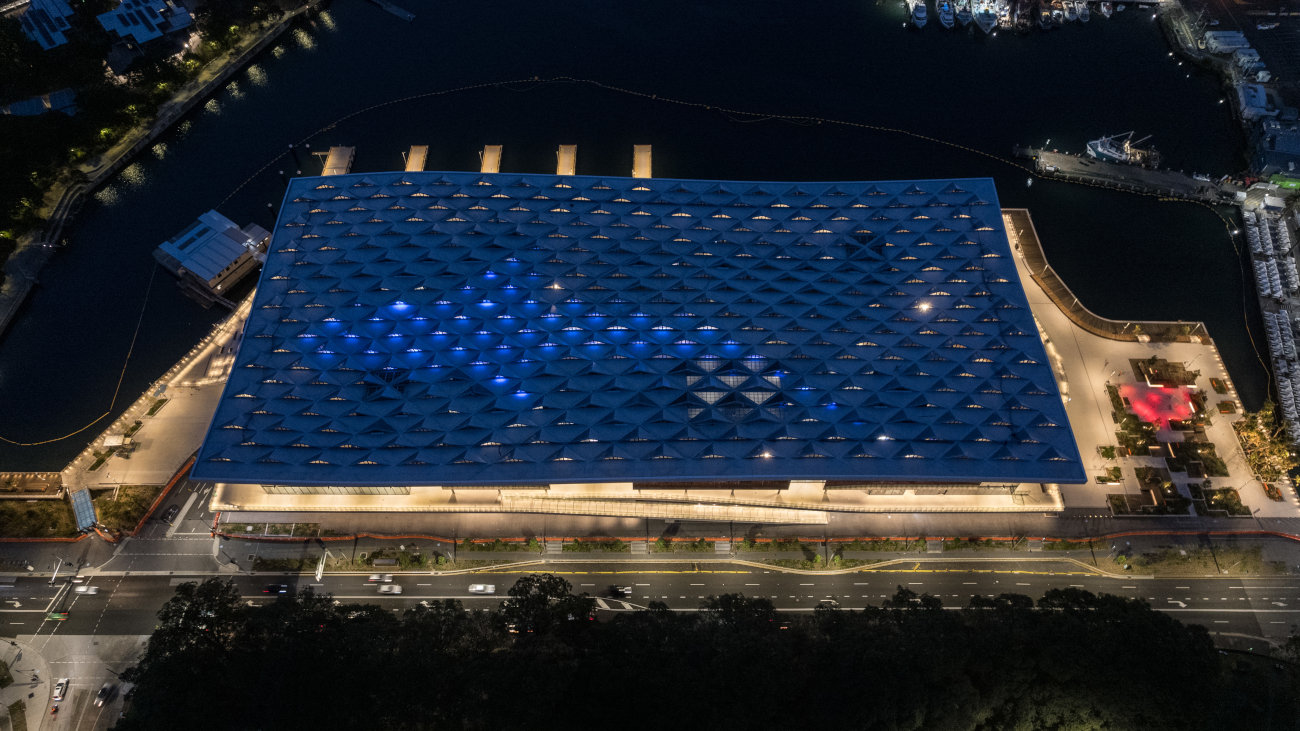
Subtle lighting integrated into the roof creates the impression of fish swimming across the canopy after dark.
“From above, you might see swimming fish. From below, the pyramid form creates a reverse-lit architectural expression, revealing the unique cassette structure through a soft, internal glow,” says Yeon-Woo. “The experience changes depending on your viewpoint and the time of day. It’s something people discover rather than something that demands attention – and once you experience it, it’s deeply resonant.”
Importantly, the lighting respects the bay’s ecology. Uplighting (indirect light under the roof) is tightly controlled within the roof boundary, with glare control, refined optics and limited output to meet Dark Sky principles and prevent light spill over the harbour. The system is never run at full output; it is always dimmed to the minimum required.
Rethinking thermal comfort, cooling and heating
Sydney Fish Market accommodates some of the most diverse and demanding thermal conditions within a single building, from -30°C freezers and ice-making facilities to humidity-controlled spaces, conventionally air-conditioned areas and 65°C hot water systems, with heating and cooling delivered across seven distinct temperature levels.
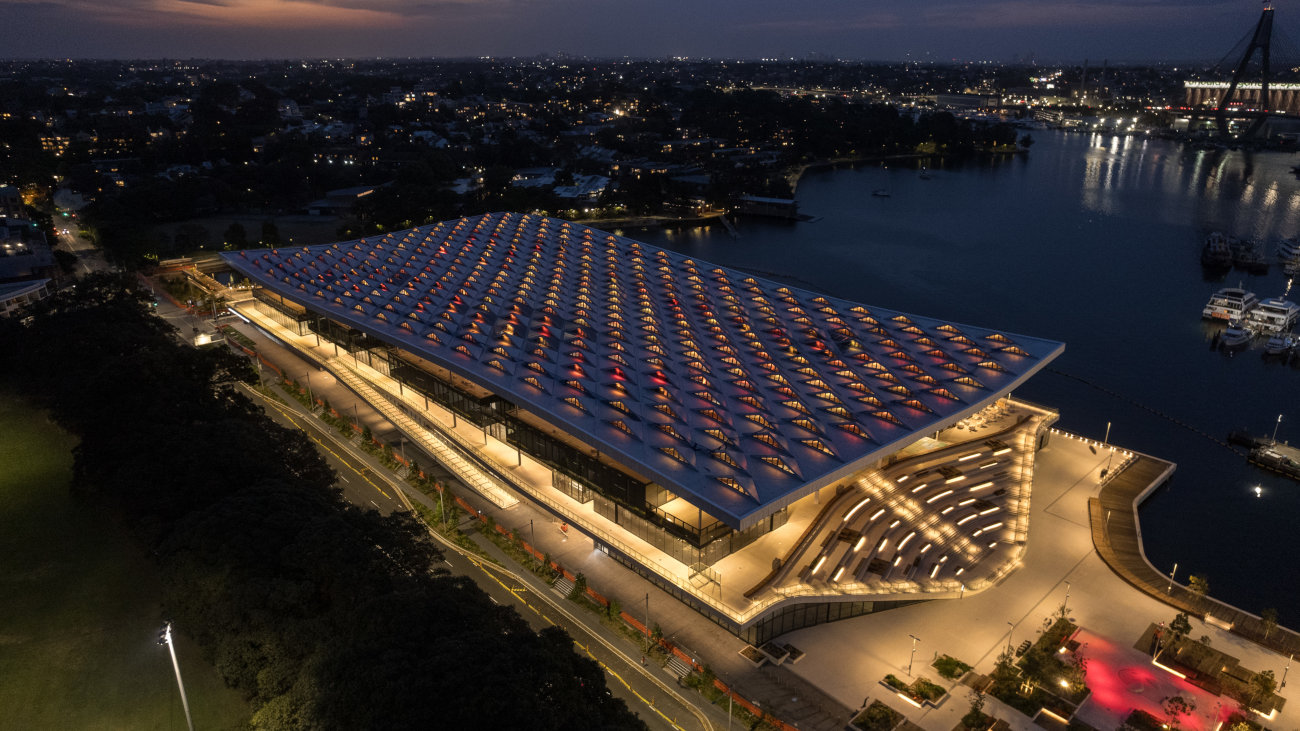
Carefully controlled lighting is contained within the roof and harbour edge, protecting marine ecology and Dark Sky conditions.
The original brief proposed decentralised heating, ventilation and air conditioning (HVAC) and refrigeration systems for individual tenants – a common approach in retail and mixed-use environments. Through stakeholder engagement, that strategy evolved into a centralised solution with far-reaching benefits. The centralised thermal plant uses a natural refrigerant and enables heat recovery and thermal storage, capturing waste heat from 24/7 cooling systems and reusing it for space heating, hot water and refrigeration defrost cycles.
“A key design move was breaking away from enclosed retail typologies,” says Michael. “By opening the building to the bay and wider precinct, we had to rethink comfort beyond temperature control alone.”
Shading from the roof, natural ventilation, sea breezes and the cooling effect of ice used in seafood shops all contribute to comfort and temperature regulation. An intensive. iterative design process optimised the balance between passive and active measures, resulting in a space that seamlessly combines natural, mixed-mode and mechanical HVAC solutions.
Closing the loops on energy and water
The roof supports 10,000 square metres of solar photovoltaic panels, meeting a significant share of the market’s energy demand. Its form also maximises daylight and natural ventilation, reducing reliance on artificial lighting and air conditioning.
Triangular openings are carefully oriented to bring daylight into the building while shielding interior spaces from harsh direct sun. Sensors enable daylight harvesting, preventing artificial lighting from operating when natural light is sufficient.
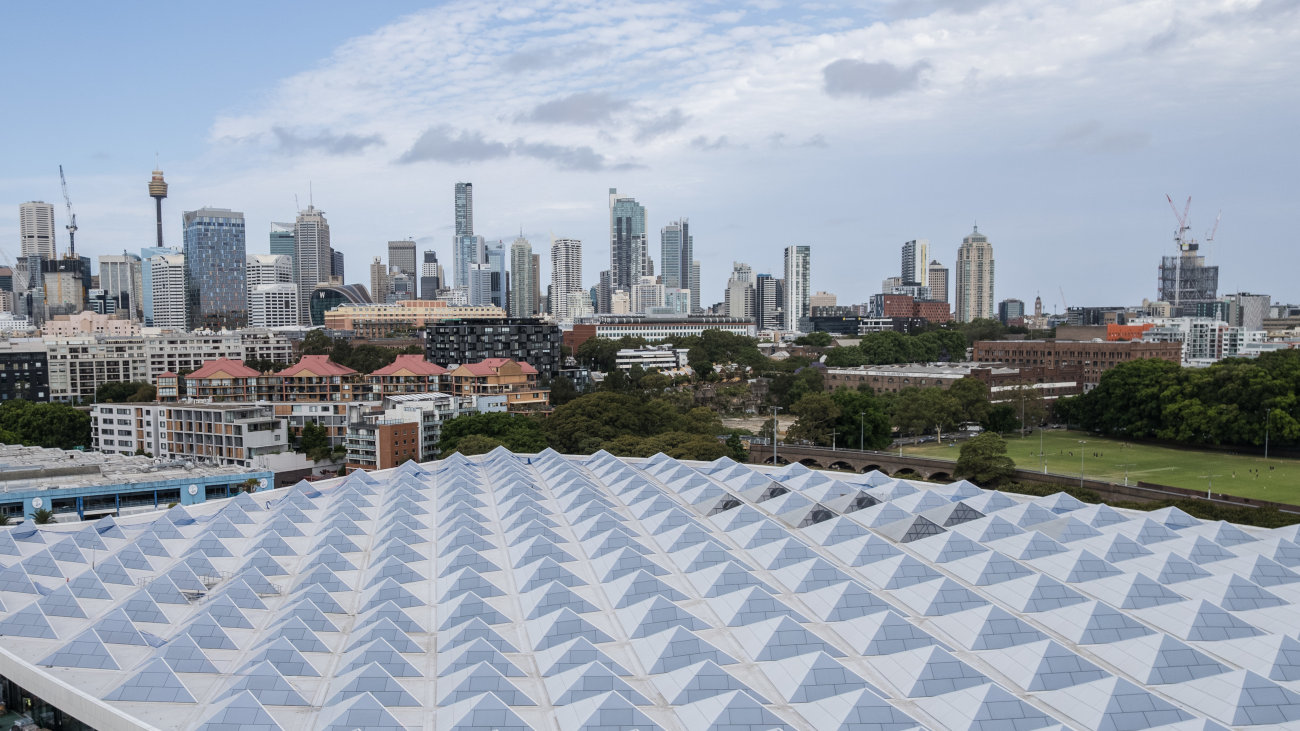
Triangular roof openings bring daylight deep into the building while limiting direct sun and supporting natural ventilation.
Water performance is equally integral. The roof drains inward, channelling rainwater into large sumps before directing it to water-sensitive urban design features along the promenade or to an onsite wastewater treatment plant capable of treating up to 150,000 litres per day. Recycled water is reused for cooling towers, wash-downs, irrigation and toilet-flushing.
Managing inward draining at this scale required detailed flood modelling to understand peak water loads, blockage risks and hail build-up. Physical scale modelling with the Manly Hydraulics Laboratory informed minimum roof grades, while iterative coordination ensured plant loads, equipment locations and air discharges were fully resolved.
Together, these measures deliver a 50% reduction in potable water consumption – an exceptional outcome for a facility as water-intensive as a fish market.
A building that talks back to the city
More than a place of commerce, Sydney Fish Market serves as a community hub where people gather, work, meet and play.
The roof lighting is fully programmable, allowing the building to respond to events throughout the year, from NAIDOC Week to New Year’s Eve. Scenes can be selected or adjusted remotely, enabling the market to acknowledge moments of celebration, reflection or solidarity.
“The idea was for the building to ‘talk back’ to the city – to say, we’re part of you, and you’re part of us,” says Yeon-Woo. “Lighting is a powerful way to create that connection.”
Behind the scenes, equal attention was given to back-of-house spaces. Fishermen arriving in the early hours need lighting that allows them to assess the quality of their catch accurately, as if under natural daylight. High-quality, full-spectrum lighting ensures colour and condition are clearly visible, supporting safety, fairness and confidence in daily operations.
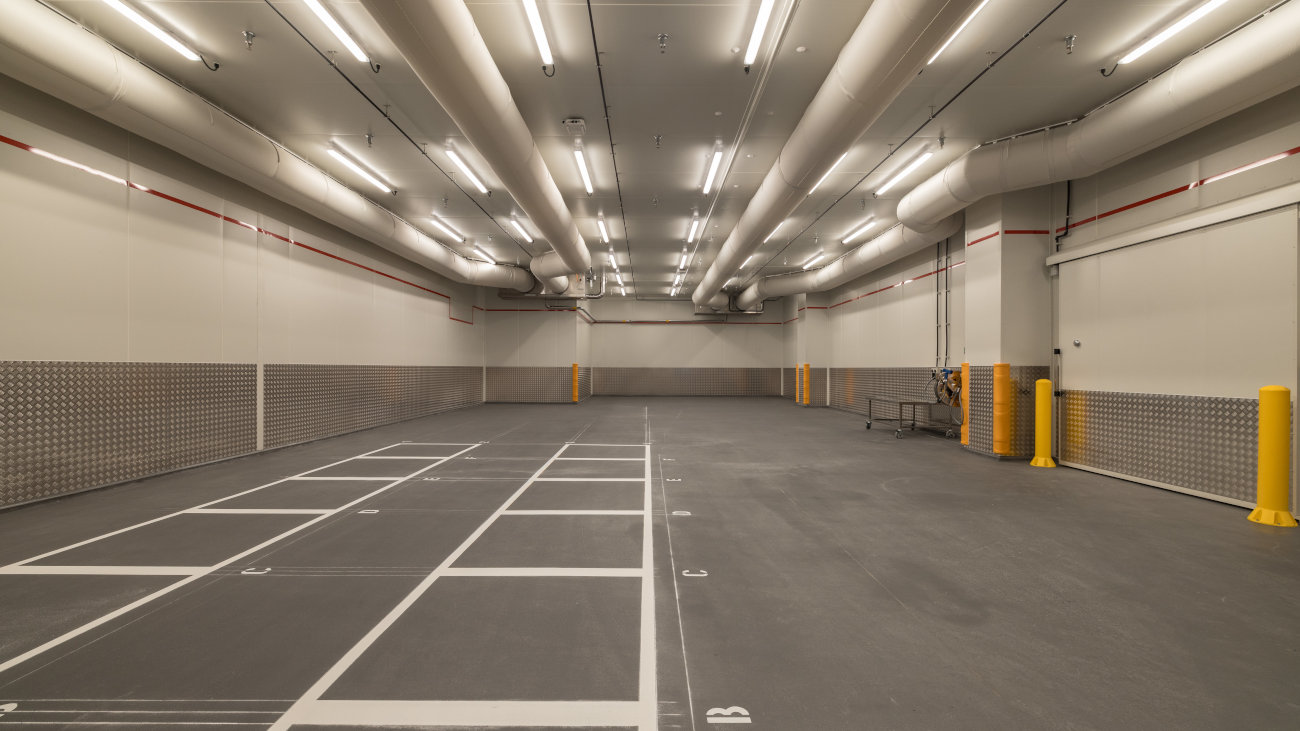
Back‑of‑house lighting provides high‑quality, full‑spectrum illumination, allowing fishermen to accurately assess the colour and condition of their catch.
“Most people will never notice the engineering behind the lighting,” says Yeon-Woo. “And that’s exactly the goal. It should feel effortless – supporting everyday work while creating a memorable experience for visitors.”
Redefining what a roof can be
“If you look at how everything comes together, it really is a hard-working roof,” says Michael Calcoen.
Sydney Fish Market’s roof is a convergence of systems: structure, energy, water, comfort, ecology and identity working together as one. It demonstrates how engineering can amplify architectural intent, how sustainability can be embedded rather than added on, and how infrastructure can contribute meaningfully to public life. The outcome is proof that even the most familiar building elements can be reimagined to do extraordinary work.

Subscribe for exclusive updates
Receive our expert insights on issues that transform business, increase sustainability and improve lives.