




Driving certainty and building confidence in Australia’s high-speed rail future
Article
Turning high-speed rail ambition into national infrastructure confidence
Australia's high-speed rail ambitions could reshape how people live, work and move between cities. More than a faster way to travel, high-speed rail offers an opportunity to rethink how Australia connects people, places and opportunity – from homes, schools and hospitals to workplaces and regional economies.
By shrinking the practical effects of distance, high-speed rail can bring communities closer together and give more people access to services, jobs and opportunities that may otherwise sit beyond reach. But realising that ambition will require the certainty to move from business case to operation with clarity and confidence.
The proposed east coast high-speed rail network would represent one of the most ambitious infrastructure programmes ever undertaken in Australia, connecting major population centres over approximately 1800km and supporting significant economic growth, job creation and regional development.
For a project of this scale, certainty is not a by-product of delivery; it's what makes delivery possible. It comes from disciplined planning, early risk identification, programme-wide thinking and systems integration, all focused on how the programme will perform safely and reliably in the real world.
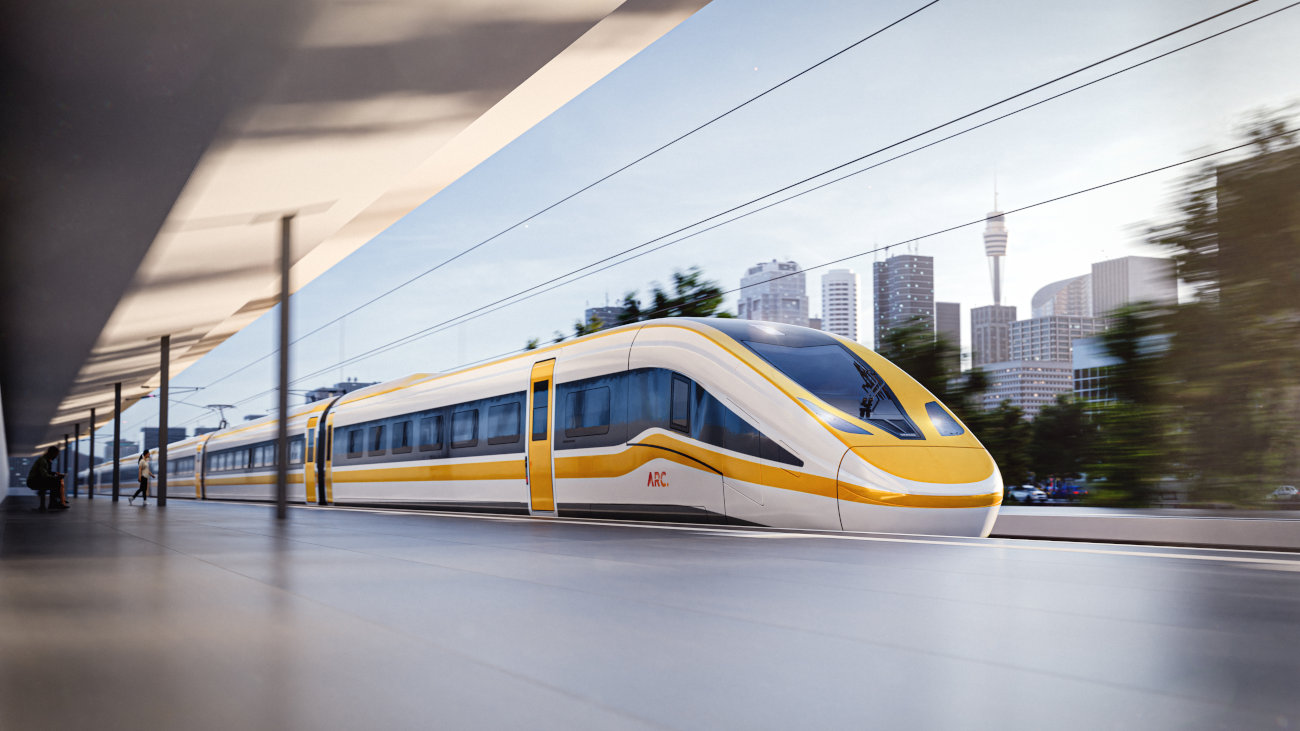
Image credit: Siemens
Why momentum starts before construction
That certainty is created long before construction begins. Early project development is not just a precursor to delivery; it's where the conditions for successful delivery are established.
This is where assumptions are tested, requirements clarified, delivery models assessed and risks better understood. It is where programmes can identify interfaces, simplify delivery, standardise solutions and reduce unnecessary complexity before it becomes embedded risk.
For high-speed rail, early clarity is what turns ambition into an investable programme. It gives governments, investors, operators and delivery partners confidence that objectives are achievable, risks are understood and the path to delivery is credible.
Early contractor involvement plays an important role in that process. By bringing delivery expertise into the conversation sooner, programmes can test assumptions, challenge complexity and understand risks before major decisions are locked in. This early engagement creates more informed decisions, strengthens investment confidence, builds greater certainty around the cost of delivery and helps establish the conditions for better programme outcomes.
The programmes that move fastest are often the ones that do the slow, disciplined work early.
Optimise the programme, not the package
Once delivery is divided into packages, maintaining that early clarity becomes even more critical. Packages make delivery manageable, but without a best-for-programme mindset, decisions that work for an individual package can weaken overall programme performance.
The biggest opportunities for value – and the greatest risks – often sit between packages rather than within them. A decision that appears efficient in one area can affect cost, constructability, operations, maintenance or risk elsewhere.
That is why teams need to look beyond individual scopes, understand the needs of adjacent teams, share ideas early and test decisions against programme-wide outcomes. The best solution for one package is not always the best solution overall.
A railway is more than the sum of its assets
This is where systems integration becomes critical. The same best-for-programme thinking that keeps packages aligned must also connect the physical railway – rolling stock, civil infrastructure, power, signalling, communications, operations, maintenance, emergency response and customer experience – into one functioning system.
The greatest uncertainties often sit at the interfaces: between civil infrastructure and rail systems, design and operations, construction and maintenance, and decisions made years apart by different organisations. Managing those interfaces from the beginning is essential because they are where risk accumulates, operational performance is shaped and confidence is either created or lost.
Delivering successfully means recognising that interfaces are not the gaps between the work – they are the work. It means understanding not only how individual components perform, but how decisions made in one area influence outcomes elsewhere. Systems integration is the discipline that turns infrastructure into a reliable, safe and high-performing railway designed for delivery, operation and long-term resilience.
Designing tunnels as operating environments
Very long tunnels show why this integrated approach matters. They are among the most complex operating environments in transport, where decisions about geometry, ventilation, fire-life-safety, emergency response and maintenance directly influence safety, passenger comfort, operational performance and long-term resilience.
For clients and government decision-makers, the issue is not whether very long tunnels can be engineered, but whether the safety case, operating model and emergency response strategy are credible from the outset.
Mott MacDonald's experience on complex underground rail environments – from metro systems across Australia’s major cities to internationally significant assets such as the Channel Tunnel – reinforces the same lesson: long-term performance depends on understanding safety, operations and maintainability from the earliest stages of design.
Aerodynamic effects such as pressure transients influence tunnel dimensions, train performance and passenger comfort. Ventilation affects smoke control and incident response. Evacuation provisions shape infrastructure requirements and operational constraints. For clients, these are risk, cost and confidence decisions, not isolated technical choices.
Emerging technologies add another layer of complexity. As lithium-ion batteries become more common in rail operations and freight movements, designers must account for new fire and safety considerations, particularly in very long tunnels where evacuation and incident response are more constrained.
Delivering with confidence means taking a systemic approach and refusing to let package boundaries define programme outcomes.
Certainty is the foundation of delivery
From Sydney Metro to the Channel Tunnel, our experience shows that long-term performance is shaped by thousands of interconnected decisions made early. The strongest outcomes emerge when infrastructure, systems, operations and safety are developed together, and when critical risks are understood before they become delivery constraints.
For Australia, high-speed rail is more than a transport project. It's a nation-building framework that can change access, influence settlement patterns and reshape how the country plans infrastructure – from homes, schools and hospitals to workplaces and regional economies.
Delivering that vision will depend on approaching high-speed rail as an integrated programme from the outset: one where risks are explored early, interfaces are actively managed and decisions are tested against long-term performance. That is what creates confidence that the programme is investable, that risks are understood and managed, and that it can operate safely and efficiently for generations.
That is how high-speed rail can be delivered with confidence.
About the author

Subscribe for exclusive updates
Receive our expert insights on issues that transform business, increase sustainability and improve lives.