



Safeswim: revolutionising water quality monitoring in Auckland, New Zealand

Project overview
Project
Safer beaches through smarter water quality insights
Improving infrastructure to prevent pollution and create safer spaces for the community is a key objective for infrastructure owners across the globe. In Auckland, New Zealand, both locals and visitors are using the Safeswim insights to understand when and where the water is safe to swim.
From retrospective to predictive
Originally implemented in 1995, the Safeswim programme aimed to communicate swimming water quality to the public based on retrospective water quality sampling. Following a 2016 programme review, we were approached to assist in the redesign of the Safeswim programme, leveraging advancements in data management, modelling analytics, and communication technology to take it into the digital age. Drawing on our experience in water networks and smart infrastructure, we developed a system capable of forecasting public health risk rather than reporting historical water quality results.
Our water network engineers, developers and data scientists leveraged our Smart Water platform, hosted within our Moata digital solutions ecosystem, which enables the integration of existing technologies into a single common digital environment, providing real-time analytics and predictive modelling. Through Smart Water, we created a digital twin of Auckland’s swimming spots, using rainfall radar data, forecasts for weather, tide, wind, and solar radiation, laboratory water quality data, real-time network performance, hydraulic models, hydrodynamic models of the Waitematā Harbour, Manukau Harbour and Tamaki Estuary, predictive models for 154 beaches, and surf lifesaving knowledge on local marine hazards.
Unlike traditional methods that rely on retrospective sampling, Safeswim uses predictive analytics to offer a simple risk indicator to swimmers. This approach has significantly improved the accuracy of water quality and public health risk predictions from less than 20% to over 80%. Safeswim has now been endorsed by the World Health Organisation as a world leading example of how digital technologies can be used for public health risk prediction of water quality.
Safeswim is a water quality digital twin using advanced technology to turn data into useful information, helping to keep Tāmaki Makaurau water users safe by providing real-time insights to communities.Nasrine Tomasi
Head of artificial intelligence
Public health and community engagement
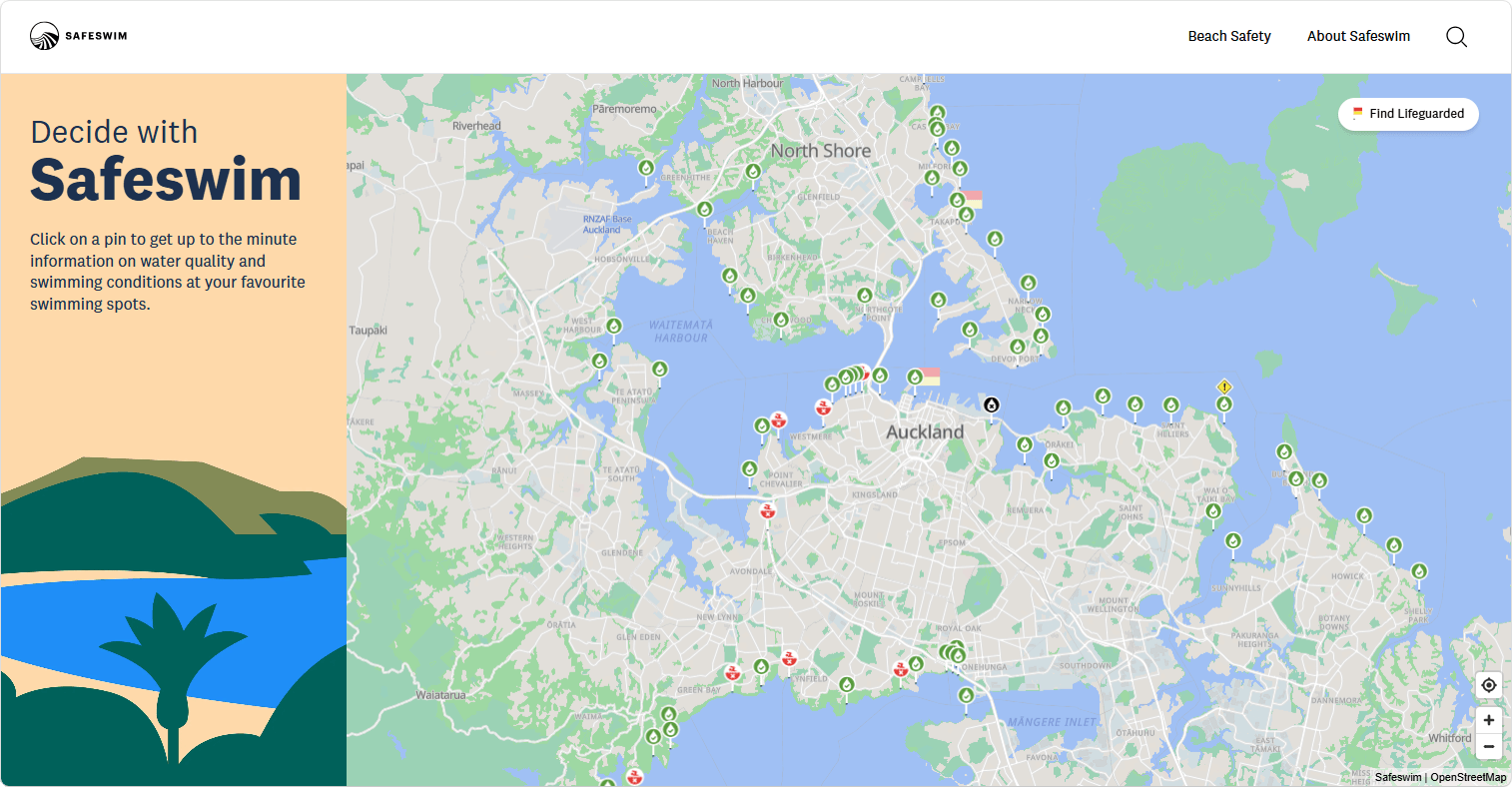
One of the most remarkable aspects of Safeswim is its focus on community engagement. The public-facing web platform presents a risk assessment based on water quality predictions and New Zealand public health guidelines using enterococci as the indicator organism. This risk assessment is forecasted for a three-day period and includes weather, climatic, and other local safety and hazard information. The platform also provides details about the beach environment, including photos and information about facilities, making it an effective communication portal for the public.
The success of Safeswim is evident in its widespread adoption and positive public reception. The programme now boasts over half a million users, a significant increase from the less than 10,000 users it had previously. The seamless integration of data and real-time analytics has led to strong customer engagement and improved public understanding of the challenges facing Auckland's infrastructure improvement programme. The public's trust in the system is a testament to its reliability and the effectiveness of the communication strategies employed.
Safeswim is more than just a water quality monitoring programme; it is a model of how technology and community engagement can come together to address environmental and public health challenges. In 2023, Safeswim was recognised by the World Economic Forum as a winner of the Digital Twin Cities Global Pioneer Project. By leveraging advanced predictive analytics and real-time data integration, Safeswim provides Auckland's residents with the information they need to make safe and informed decisions about their recreational water activities. As Auckland continues to grow and evolve, initiatives like Safeswim will play a crucial role in ensuring the city's sustainability and the well-being of its residents.

Subscribe for exclusive updates
Receive our expert insights on issues that transform business, increase sustainability and improve lives.