
Expert insights on issues that transform business, increase sustainability and improve lives
Here’s a snapshot of what we’re thinking about. Explore these highlights or view the full library to dive deeper into the ideas shaping our work.
Meet some of our passionate problem-solvers, constructive creatives and inspiring innovators
The key message that Nick Dempsey, technical director for water at Mott MacDonald, demonstrated in his presentation at our Auckland Carbon Crunch event was that we all must play our part in reducing carbon.
As we aim to reduce carbon emissions in infrastructure, setting ambitious goals is essential, but action from all stakeholders is crucial to achieve meaningful change. This concept is vividly illustrated by the value chain members diagram from PAS 2080, which highlights the necessary push and pull from all parties involved in infrastructure delivery.
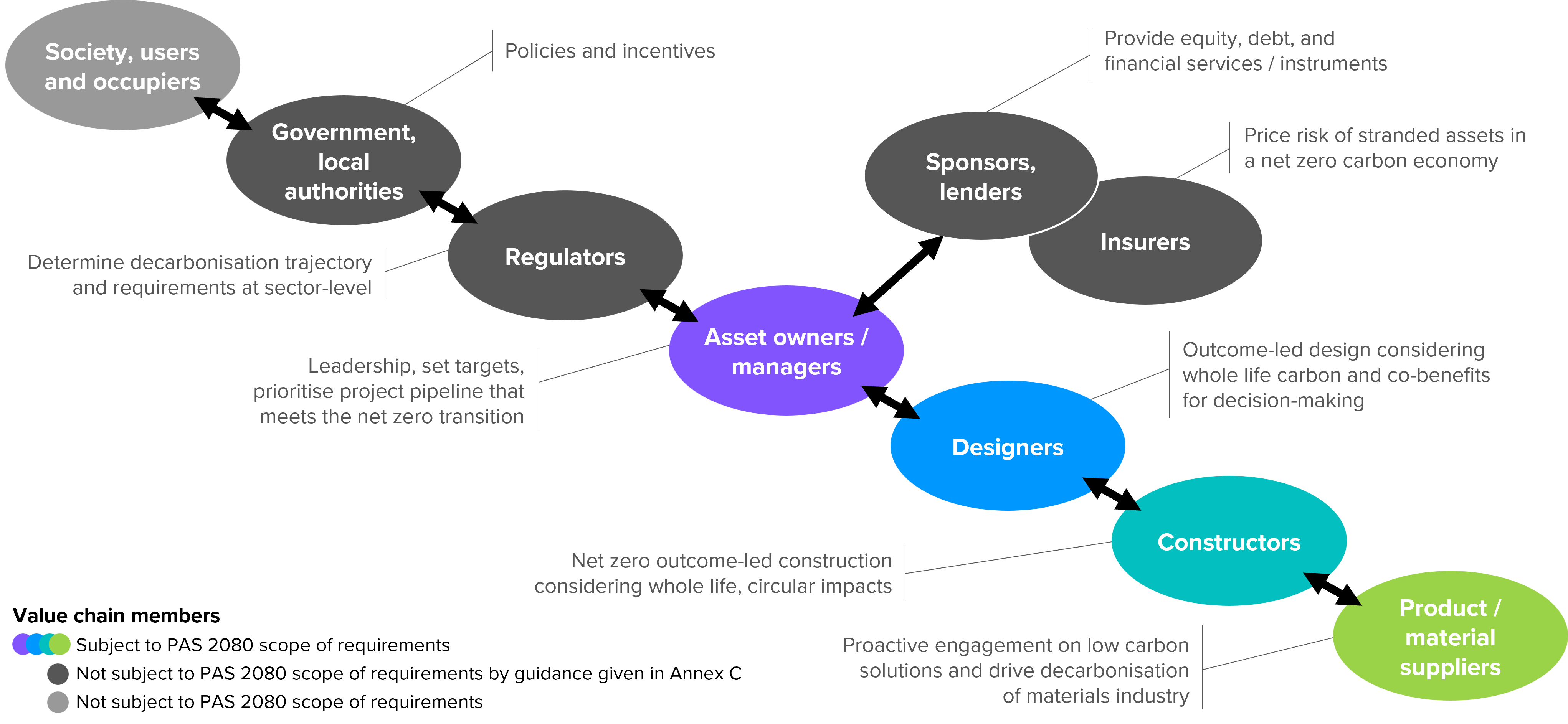
Regulators must set stringent goals and requirements, while asset owners need to provide leadership and set clear targets. Designers play a pivotal role by specifying outcomes and solutions that minimise whole-life carbon. Meanwhile, constructors must consider their impacts and demand low-carbon products, and the supply chain must respond by investing in innovative technologies.
While operational carbon emissions are important, New Zealand's renewable energy supply, while not perfect, increases the importance for us to focus on embodied carbon in construction. In some baselined programmes of work, the contribution of embodied carbon equates to 50% of emissions.
Designers must challenge traditional approaches and consider alternatives that avoid unnecessary construction. For example, instead of building a new stormwater pipeline, we could explore options like daylighting streams or reusing existing assets.
It's also crucial to work closely with the supply chain to understand and implement the latest low-carbon technologies. Continuing to specify products that were business as usual on the last project is not enough; new low carbon solutions must continue to permeate through projects.
The push and pull dynamic is evident throughout the process; from setting goals to implementing solutions, every link in the chain must be engaged and proactive. This also extends to asset owners, which may be required to take bold steps when adopting new technologies and materials.
Overseas experience and local New Zealand capital carbon baselines using the Carbon Portal have identified concrete and steel as key emission hotspots in delivering infrastructure. Addressing these areas is a vital first step for reducing overall emissions.
As we continue to innovate and collaborate, we must encourage each other to challenge the status quo. By doing so, we can collectively drive down emissions and create a more sustainable future for our infrastructure.
Civil engineer Sally Russell combines her industry expertise and people leadership capabilities as she takes on the role of leading Mott MacDonald’s water and environment business.
The infrastructure industry is aligned on ambition but the real question is how to turn that ambition into delivery at pace. Mott MacDonald Fellow Clare Wildfire reflects on three themes that emerged on this point during UKREiiF 2026.
With ever-changing and increasingly complex contractual model interfaces, proper understanding and allocation of the responsibility for construction impact assessments, risks, and instrumentation and monitoring is essential.
Urban development and climate change present intertwined challenges for our economies and society – challenges that must be urgently addressed if we are to thrive in a changing climate.
The Climate Change Committee’s CCRA4‑IA provides an independent, evidence-based foundation for UK climate adaptation, with Mott MacDonald contributing infrastructure expertise to support more effective resilience action.
Business development expert Niraj explains why listening to clients is more important than explaining what services you can provide.
Jacqueline reflects on leading environmental and social work in Singapore, managing complex projects and field-based challenges, and creating a collaborative team culture that supports sustainable development.
The CPS2 framework will be used by central government departments, arm’s length bodies and the wider public sector to procure professional services across infrastructure, the built environment and defence.
The ENDS Power List is an annual compilation by the UK’s ENDS Report celebrating the 100 most influential and impactful environmental professionals.
Mott MacDonald has secured a leading role on Scotland Excel’s £160M national framework, supporting local authorities across Scotland with sustainable infrastructure and engineering services.
Mott MacDonald will play a key role in delivering England’s £4.2bn flood and coastal erosion risk management programme, following its appointment to the Environment Agency’s Flood Risk and Asset Management (FRAM) Lots.
In his role, Randy will lead business growth across the energy sector, partnering with teams throughout the region to bring the best of our capabilities to our clients in Canada and the United States.
Mott MacDonald is supporting TerraPower on the Generic Design Assessment (GDA) of its Natrium advanced reactor.
The National Park Service engaged the Cianbro-Mott MacDonald design-build team to address critical issues along Washington, D.C.’s Tidal Basin and Potomac River.
Mott MacDonald is supporting National Grid Electricity Transmission by deploying Carbon Portal to enable consistent, faster whole‑life carbon assessment across its supply chain.
The vision for the Milldale Infrastructure Projects began in 2016 as part of Auckland Council's strategic plan to enable growth in the area west of State Highway 1 (SH1) near Wainui.
New Zealand
Amanda Bryan
Technical director, environment and society
The 2024 Carbon Crunch report highlights key speeches and insights from our Manchester event on how to deliver broader environmental and societal benefits in tandem with carbon reduction.
Greater collaboration and knowledge sharing is vital as organisations across the Middle East strive to make progress on decarbonisation.
For our second annual Aotearoa Carbon Crunch event, partnering with we took a holistic approach to decarbonising infrastructure, connecting with the supply chain on meaningful action.
Brisbane's first Carbon Crunch event focussed on the transport sector and its hugely important role in sectoral resilience as well as in reaching local and national decarbonisation objectives.